

BALI, Indonesia — For years, Bali has been seen as a place of escape—an island of distance, calm, and anonymity. But for one of Europe’s most wanted men, that illusion ended the moment he landed.
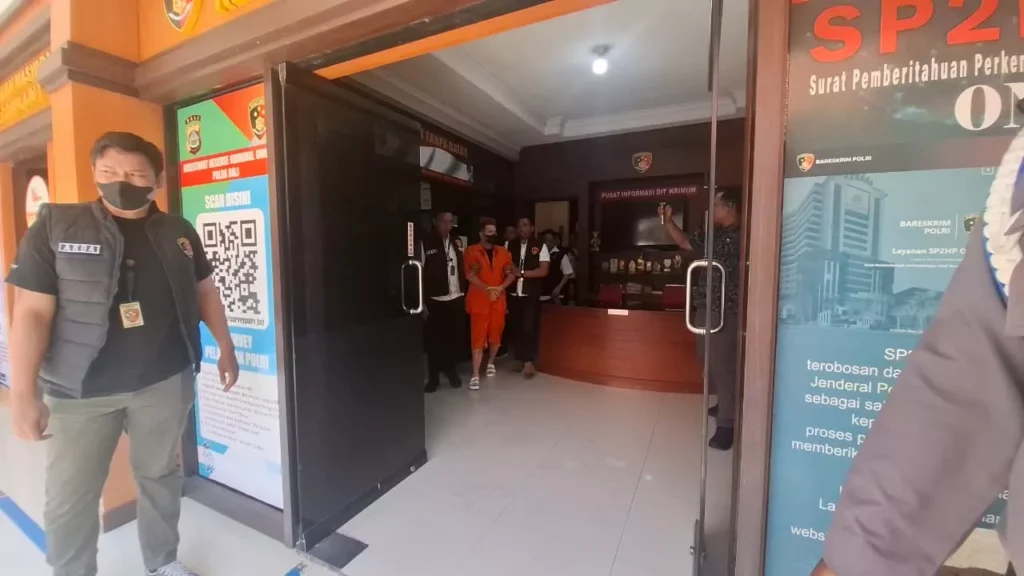
Steven Lyons, a Scottish national identified as a senior figure in a transnational criminal network, was arrested at Bali’s I Gusti Ngurah Rai International Airport shortly after arriving from Singapore on March 28. He had been on the run for two years, wanted by Spanish authorities in connection with murders in Málaga and Madrid.
His name had only recently been formalized on Interpol’s Red Notice list—issued on March 26. But by then, the net had already begun to tighten.
A Coordinated Global Pursuit
The arrest was not accidental. It was the result of coordinated intelligence shared across borders.
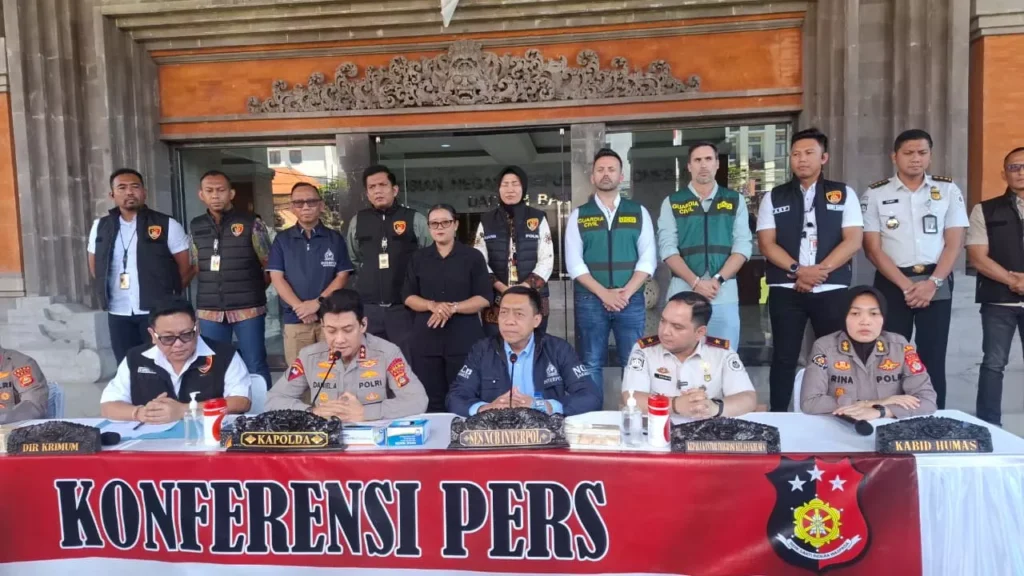
According to Indonesian authorities, the breakthrough came after Interpol’s National Central Bureau (NCB) in Abu Dhabi alerted Indonesian counterparts about Lyons’ movement toward Southeast Asia. What followed was a rapid, multi-agency response involving Indonesia’s international police division, Bali Police, airport authorities, and immigration officers.
When Lyons stepped into the arrivals area, officers were already waiting.
“He was secured at the location without resistance,” said Brig. Gen. Untung Widyatmoko, Secretary of NCB Interpol Indonesia.


More Than a Fugitive
Authorities describe Lyons not as a lone suspect, but as a central figure in a broader criminal ecosystem.
He is alleged to have led a network operating across multiple regions—from Spain and Scotland to the Middle East—facilitating drug trafficking and money laundering on a significant scale.
The organization, officials say, maintained operational bases in Scotland and Spain while extending its reach into cities such as Dubai, Qatar, Bahrain, and Turkey.
It was also reportedly entangled in a long-running and violent rivalry with another criminal group known as the Daniels network.
Part of a Larger Operation
Lyons’ arrest forms part of a wider international investigation known as Operation ARMORUM, a joint effort between Spain’s Guardia Civil and Police Scotland.
Just one day before his detention in Bali, coordinated raids across Europe led to 33 arrests in Scotland and 12 in Spain—an indication of the scale and urgency of the operation.
In that context, Bali was not the center of the story—but it became a critical point in its final chapter.
Bali’s Message: Not a Safe Haven
For Indonesian authorities, the arrest carries a broader signal.
Bali, a global tourism hub, sits at the intersection of openness and enforcement. Millions pass through its airport each year, making vigilance at entry points essential.
“We ensure that Bali will never become a blind spot or a safe haven for transnational criminals,” said Bali Police Chief Inspector General Daniel Adityajaya.
That message has become increasingly relevant as international mobility rebounds—and with it, the movement of individuals not only seeking leisure, but sometimes evasion.
What Comes Next
Lyons is expected to be deported to face legal proceedings, with Spanish law enforcement officials already present in Bali to coordinate the process.
His journey—spanning multiple countries, networks, and alleged crimes—now shifts from evasion to accountability.
A Reminder Beyond the Arrest
For visitors and residents in Bali, the incident may pass quickly, overshadowed by the island’s daily rhythm.
But for authorities, it reinforces a quieter reality: in an era of global movement, even remote destinations are not beyond the reach of international crime—or international justice.
And for those attempting to disappear, Bali is not as distant as it once seemed.