
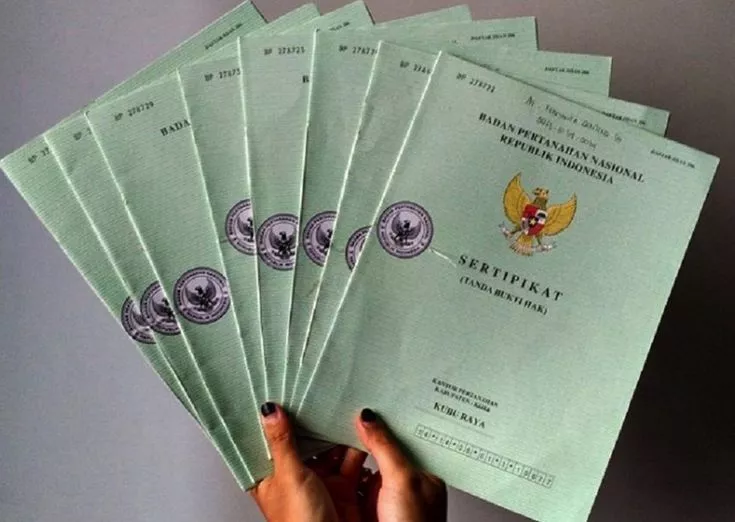
BADUNG, Bali — In Bali’s fast-moving property market, owning land is only the beginning. For many investors, the real complexity starts later—when a single land certificate needs to be divided into multiple parcels for development, resale, or restructuring.
What appears to be a routine administrative process—known in Indonesia as pemisahan sertifikat—can quietly shape the success or failure of a property investment. Done correctly, it unlocks value. Done poorly, it can delay projects, complicate ownership, or trigger legal disputes.
For foreign investors navigating Indonesia’s land system, understanding how to split a land certificate in Bali is not optional. It is essential.
What It Means to Split a Land Certificate
Certificate division refers to breaking up a single registered land title into two or more legally recognized parcels. Each resulting certificate carries the same legal status as the original—whether freehold (Hak Milik), right to build (Hak Guna Bangunan), or right to use (Hak Pakai).
The process is regulated under Article 48 of Government Regulation No. 24 of 1997 on Land Registration.
According to Ana Anida, Director of Land and Spatial Registration at Indonesia’s Ministry of Agrarian Affairs and Spatial Planning (ATR/BPN), the service applies to dividing all or part of a certified land parcel into new legal units.
In practice, this is a critical step for:
- Developers splitting land into villa plots
- Families dividing inherited land
- Investors restructuring ownership for resale or joint ventures
The Cost of Splitting Land in Bali
The cost structure is governed by Government Regulation No. 128 of 2015, which sets non-tax state revenue tariffs for land services.
While the official framework is standardized, actual costs vary depending on land size, location, and survey complexity.
1. Survey and Measurement Fees
Survey costs are calculated using a formula based on land area:
- Up to 10 hectares
Tu = (L / 500 × HSBKu) + Rp 100,000 - 10–1,000 hectares
Tu = (L / 4,000 × HSBKu) + Rp 14,000,000 - Above 1,000 hectares
Tu = (L / 10,000 × HSBKu) + Rp 134,000,000
Where:
- Tu = service tariff
- L = land area (m²)
- HSBKu = regional cost unit (varies by province and land type)
For most Bali investors—typically dealing with plots between 200 and 2,000 square meters—the first category applies.
2. Registration Fees
A fixed fee of Rp 50,000 per newly created parcel applies.
3. Field Survey Costs
Applicants must also cover operational costs for survey officers, including:
- Transport
- Accommodation
- Meals
These are not fixed and vary depending on location and site accessibility.


A Realistic Cost Example
Consider a 300-square-meter plot being divided into two certificates:
| Component | Estimated Cost |
|---|---|
| Survey & measurement | Rp 320,000 |
| Registration (2 parcels) | Rp 100,000 |
| Total | Rp 420,000 |
This estimate does not include field logistics, which can add several hundred thousand rupiah.
For larger development projects, costs scale with land size and the number of parcels created.
Requirements: What Documents You Need
For Individual Applicants
- Signed application form (with stamp duty)
- Power of attorney (if applicable)
- ID documents (KTP, Family Card)
- Original land certificate
- Land use change permit (if required)
- Tax payment proof (SSP/PPh)
- Site plan from the land office
For Corporate Applicants
- Signed application form
- Power of attorney
- ID of authorized representative
- Company establishment deed
- Legal entity approval
- Original land certificate
- Official site plan
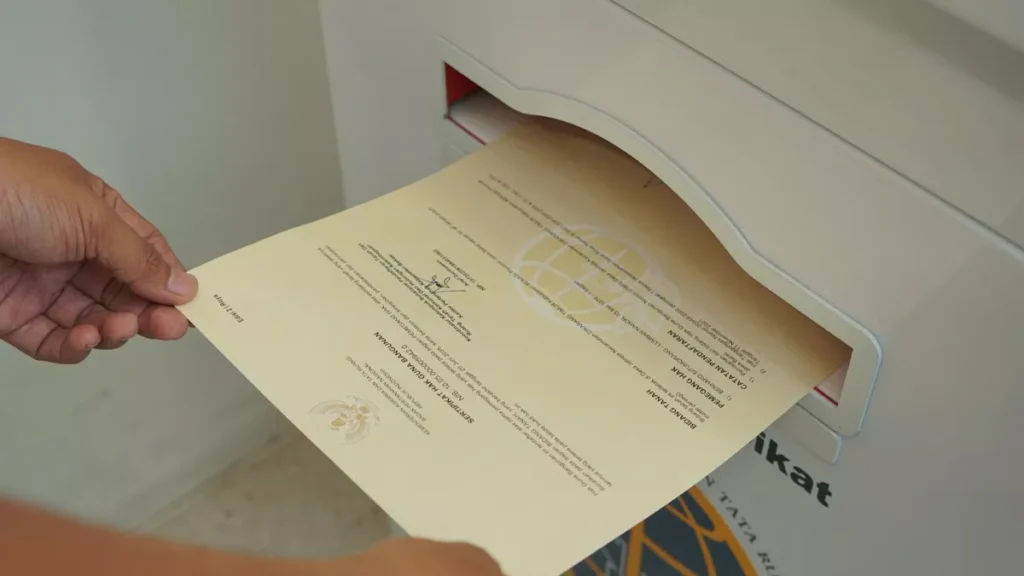
Common Mistakes Investors Make
In Bali, the biggest risks are not in the fees—but in the process.
Frequent issues include:
- Buying land that has not been properly subdivided
- Relying on incomplete or unofficial site plans
- Underestimating processing time at local land offices
- Failing to verify boundaries before development
These mistakes can lead to:
- Delayed construction permits
- Disputes with neighbors
- Complications during resale
Timing: The Hidden Variable
While official costs are relatively modest, timelines are less predictable.
In high-demand regions like Badung, processing can take significantly longer due to:
- High transaction volume
- Administrative backlog
- Field survey scheduling
Investors should factor in additional time for:
- Measurement
- Verification
- Final certificate issuance
Why This Matters for Bali Investors
In Bali’s evolving property market, value is no longer just about location—it is about legal clarity and execution.
For developers, certificate division determines whether land can be sold unit by unit.
For investors, it affects liquidity and resale potential.
For expatriates, it determines whether ownership is clean and enforceable.
In short, this is not paperwork. It is strategy.
The Bottom Line
Splitting land certificates in Bali is a regulated, relatively affordable process—but one that demands precision.
For small parcels, costs may stay under Rp 1 million.
For larger projects, complexity—not price—becomes the real challenge.
The difference between a smooth investment and a stalled one often comes down to how well this process is handled.
In Bali, land represents opportunity—but only when it is clearly defined, legally structured, and properly divided.
Hey Bali News advises all prospective property buyers and investors to consult with qualified legal and land professionals familiar with Indonesian land registration procedures before initiating any certificate division.