

GIANYAR, Bali — Investigators in Bali have identified a villa in Gianyar as a suspected execution site in the killing of a Ukrainian national, whose dismembered remains were discovered earlier this month in a river estuary.
The finding marks a significant development in a case that has drawn international attention for both its brutality and its cross-border implications.
Police say the conclusion is based on a convergence of forensic analysis, vehicle tracking data, digital evidence, and the discovery of blood traces across multiple locations.
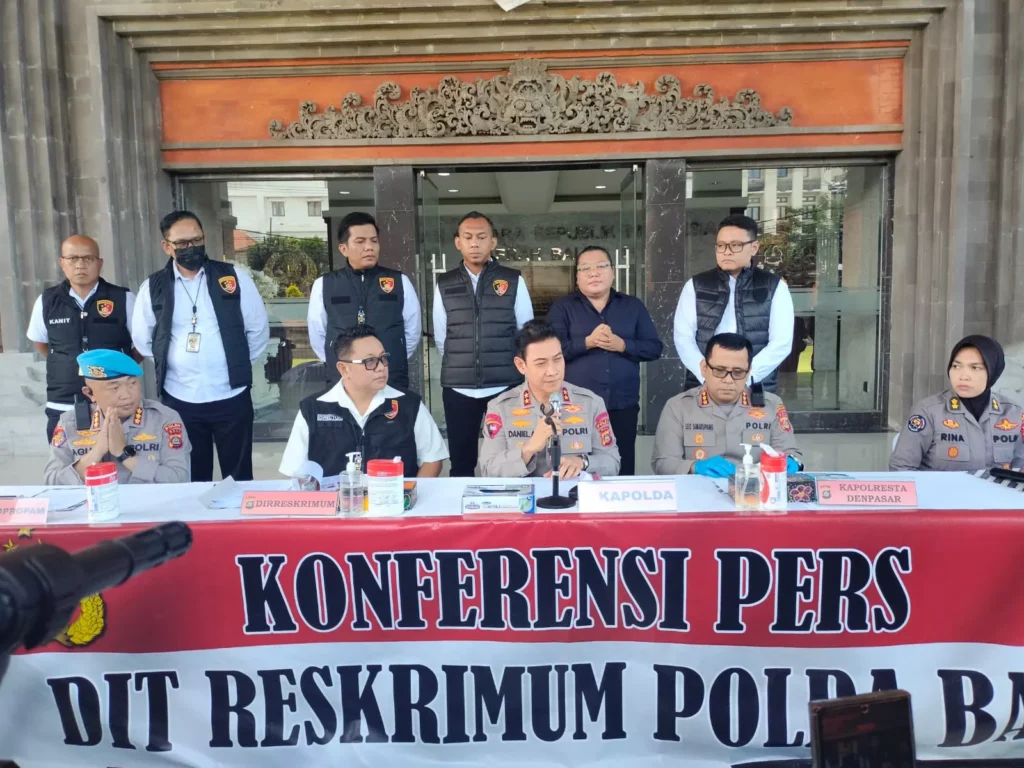
“We have aligned forensic findings with GPS data, vehicle movements, and IT analysis, as well as blood evidence found at several points,” said I Gede Adhi Mulyawarman, director of general crimes at Bali Police, during a press briefing on Monday. “Based on this, the location in Gianyar is strongly suspected to be one of the execution sites.”
A Crime That Moved Across Locations
Authorities have emphasized that the killing likely did not occur in a single place.
Instead, investigators believe the victim was moved through multiple locations—each playing a role in the sequence of events that led to his death.
Blood traces were found in more than one site, suggesting a chain of activity rather than a single, contained crime scene.
Earlier in the investigation, police had identified a villa in Tabanan as another key location. Blood found there was later confirmed through DNA testing to match the victim.
From there, the victim is believed to have been transported again—this time to Gianyar—where further forensic matches were established.
“The evidence shows movement,” Adhi said. “There are indications that the victim was transferred between locations, including a change of vehicles, before arriving at the final site.”

From Abduction to Discovery
The case began with reports that the Ukrainian national had been abducted in Jimbaran, in Bali’s south.
Days later, human remains were discovered at the Wos Teben River estuary in Ketewel, Gianyar. Forensic testing conducted at Indonesia’s national police laboratory later confirmed that the remains belonged to the missing victim.
Six bone samples—including teeth and major skeletal fragments—were matched through DNA analysis with the victim’s family, providing definitive identification.
A Case Still Unfolding
While the identification of a suspected execution site adds clarity to the timeline, key questions remain.
Police are continuing to map the role of each location involved in the case, including how long the victim was held, what occurred at each site, and the sequence of movements between them.
At the same time, investigators are pursuing six suspects who remain at large and are believed to have fled Indonesia.
The case is now extending beyond Bali’s borders, with authorities working through international channels to locate and apprehend those involved.
What It Signals
For Bali—a destination defined by openness and global movement—the case underscores the complexity of investigating crimes that cross both geographic and jurisdictional lines.
It is also a reminder that while the island remains broadly safe, serious incidents involving international actors can unfold in ways that require coordination far beyond local enforcement.
For now, the focus remains on evidence.
A villa. Blood traces. A trail of movement.
And a case that, piece by piece, is being reconstructed.