






























DENPASAR—As torrential rains return to flood-risk zones across Bali, authorities have conceded the island lacks a crucial safeguard for its residents and millions of annual visitors: a public early-warning siren system for flash floods.
Despite increasingly volatile weather, Bali’s primary flood alert remains informal and starkly low-tech. “Early warning for extreme weather is always updated, disseminated through various media,” said I Gede Teja, head of the Bali Regional Disaster Management Agency (BPBD), in an interview with IDN Times Bali. However, when pressed on the absence of physical warning sirens, Teja confirmed, “No, not yet.”
This gap leaves tourists and short-term expats—often unfamiliar with local government social media channels—particularly vulnerable during sudden crises.
A Promise for Tomorrow, But Rain Today
The responsibility for river flood warnings falls to the Bali Penida River Basin Office (BWS). Its head, Gunawan Suntoro, acknowledged the necessity of an Early Warning System (EWS) but cited planning complexities. “Installation requires mature hydrological calculations,” Suntoro told IDN Times Bali. His agency is targeting installations in key river basins like Tukad Badung, but the timeline stretches to “the end of 2026 or 2027.”
For now, the promised infrastructure offers no protection. BPBD’s Teja relayed the uncertain schedule from BWS: “I have suggested… The answer was next year.”
A Systemic Hurdle: Overlapping Authority

The delay is emblematic of deeper bureaucratic challenges. Oka Agastya, a geologist with the Indonesian Association of Geologists (IAGI) Bali, highlights a critical flaw: overlapping jurisdiction. River basins are managed by the central government, while disaster response is a local mandate.
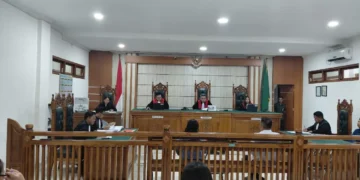
“That overlapping authority will certainly become a difficulty in providing an early warning system,” Agastya stated in a recent press conference. This systemic issue is now a focal point in a citizen lawsuit against multiple government agencies.
For now, as the rainy season intensifies, the situation leaves residents, businesses, and visitors in a precarious position. The promised sirens of 2026 or 2027 offer little solace during the downpours of today.
In the absence of a piercing mechanical wail, the island’s most immediate flood warning remains the very sound of the hazard itself—a sobering testament to the lag between Bali’s rapid development as a destination and the maturation of its essential public safety frameworks.
Hey Bali News provides independent reporting on public safety and governance for Bali’s international community.