























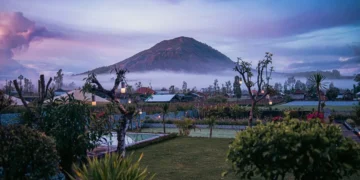








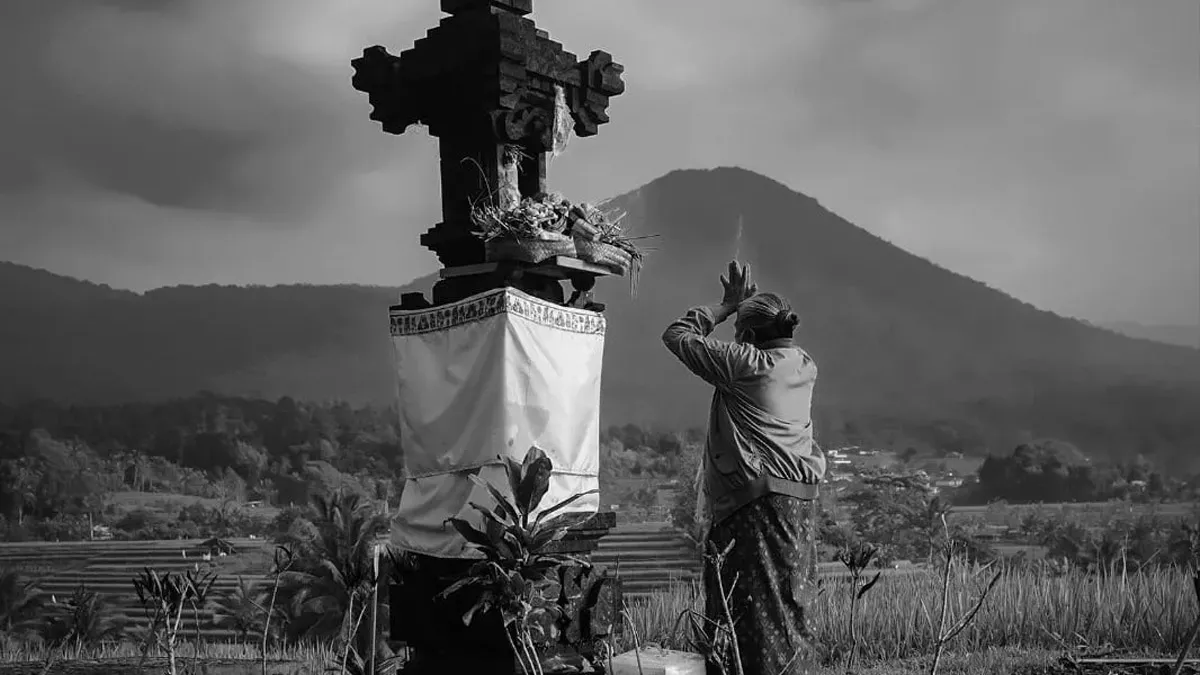
For the global traveler or expatriate settling into Bali’s vibrant rhythm, a profound truth quickly becomes apparent: the island’s breathtaking landscapes are not merely a scenic backdrop. They are a living, breathing dimension of daily worship. The deep reverence the Balinese Hindu community holds for nature is neither a quaint cultural artifact nor a simple environmental ethos. It is the bedrock of their cosmology—a sophisticated, theologically-grounded framework that dictates harmony with the environment as a sacred duty.
This ecological devotion, known locally as Ibadah Ekologis, stems from ancient philosophies that see the divine in every leaf, stone, and wave. Below, we explore the foundational principles that make this relationship so intrinsic.
The Philosophical Pillars of Balinese Environmentalism
At the heart of Balinese life is the principle of Tri Hita Karana, or “the three causes of happiness.” This doctrine teaches that true well-being is a triad of harmonious relationships:
- Parhyangan: Harmony with the Divine.
- Pawongan: Harmony among people.
- Palemahan: Harmony with the natural environment.
To neglect or damage the land is to sever a critical link in this chain, destabilizing cosmic and personal equilibrium. This is not metaphor; it is a lived reality guiding everything from village layout to agricultural policy.
This is reinforced by the concept of Bhuana Agung (macrocosmos) and Bhuana Alit (microcosmos). Balinese theology posits that the same five elemental forces—the Panca Maha Bhuta (earth, water, fire, air, and ether)—that constitute the universe also form the human body. Thus, the self and the environment are mirrors. Injuring one directly harms the other, making environmental care an act of self-preservation.
Furthermore, nature is understood as a direct manifestation of the divine. The Sanskrit teaching Sarvam Khalvidam Brahman (“All of this is indeed Brahman”) imbues the material world with sacredness. The island’s dramatic topography is itself a theological statement: the mountains (Purusa, the masculine spirit) and the sea (Pradana, the feminine material) exist in a dynamic, sacred balance known as Rwa Bhineda. Their confluence is where life emerges, explaining why both are sites of major purification rituals.
Ritual as Environmental Stewardship
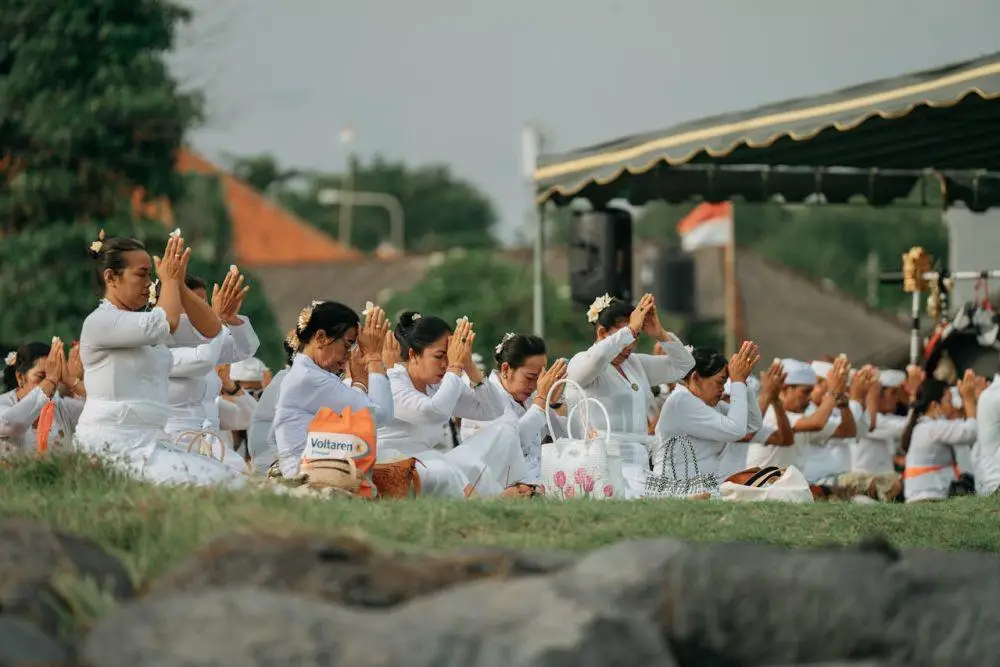
Theology is enacted through a precise ritual calendar, ensuring reverence is active, not abstract. Key observances include:
- The Tumpek series of rituals: Tumpek Wariga honors plants and trees, while Tumpek Kandang is dedicated to animals, offering thanks and asking forgiveness for their use.
- Danu Kertih & Segara Kertih: Elaborate ceremonies to purify and honor lakes and the ocean, vital for maintaining the health of aquatic ecosystems.
- Nyepi, the Day of Silence: A profound 24-hour cessation of all activity island-wide, allowing nature to “breathe” and reset—a practice with measurable environmental impact.
Ancient Wisdom in Modern Practice: The Subak and Beyond
This reverence translates into sophisticated, community-led governance systems that predate modern environmental science. The most renowned is Subak, the democratic, water temple-managed irrigation system, a UNESCO World Heritage site. Based entirely on Tri Hita Karana, it ensures equitable water distribution and sustainable terrace farming.
Equally important is the concept of Wana Kertih, or forest conservation. Certain forests are designated as hutan tutupan (sacred protected forests), preserved to safeguard the spiritual and physical well-being of water sources and the communities that depend on them.
A Living Dialogue in a Changing World

For the discerning observer, it is clear this relationship is not a static relic. It is a living dialogue facing modern pressures. As one local scholar and priest we spoke to noted, “The philosophy is eternal, but the test is in its application today. When traditional homes with earth-respecting gardens are replaced by non-porous stone, or when ceremonial offerings of biodegradable leaves end up in plastic waste, we see a disconnect between ritual form and ecological essence.”
The ideal of Tri Hita Karana—where respect for others (Pawongan), the environment (Palemahan), and the divine (Parhyangan) are inseparable—presents a continuous challenge.
In an era of rapid development and globalized capital, the Balinese engagement with nature is a complex tapestry of unwavering devotion, adaptation, and at times, poignant struggle. The land is revered as Ibu Pertiwi (Mother Earth), and protecting her is a dharma, a sacred duty. Understanding this is to look beyond Bali’s beauty and begin to comprehend its soul—a perspective crucial for any resident or visitor who wishes to engage with the island in a meaningful, respectful way.
Written by Giostanovlatto, Founder of Hey Bali and Observer of Tourism & Sustainability