


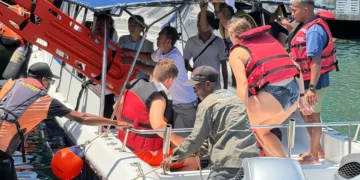



























LABUAN BAJO, Indonesia — The search for four missing Spanish tourists entered a sobering phase on Saturday after Indonesian rescue teams located debris believed to belong to the sunken pinisi vessel Putri Sakinah in the waters of Komodo National Park.
The wooden sailing ship went down Friday night in the strait off Padar Island, one of Indonesia’s most celebrated marine landscapes. While seven people were rescued shortly after the accident, four members of a single Spanish family remain unaccounted for, underscoring the mounting human toll of a tragedy unfolding amid worsening weather conditions in eastern Indonesia.
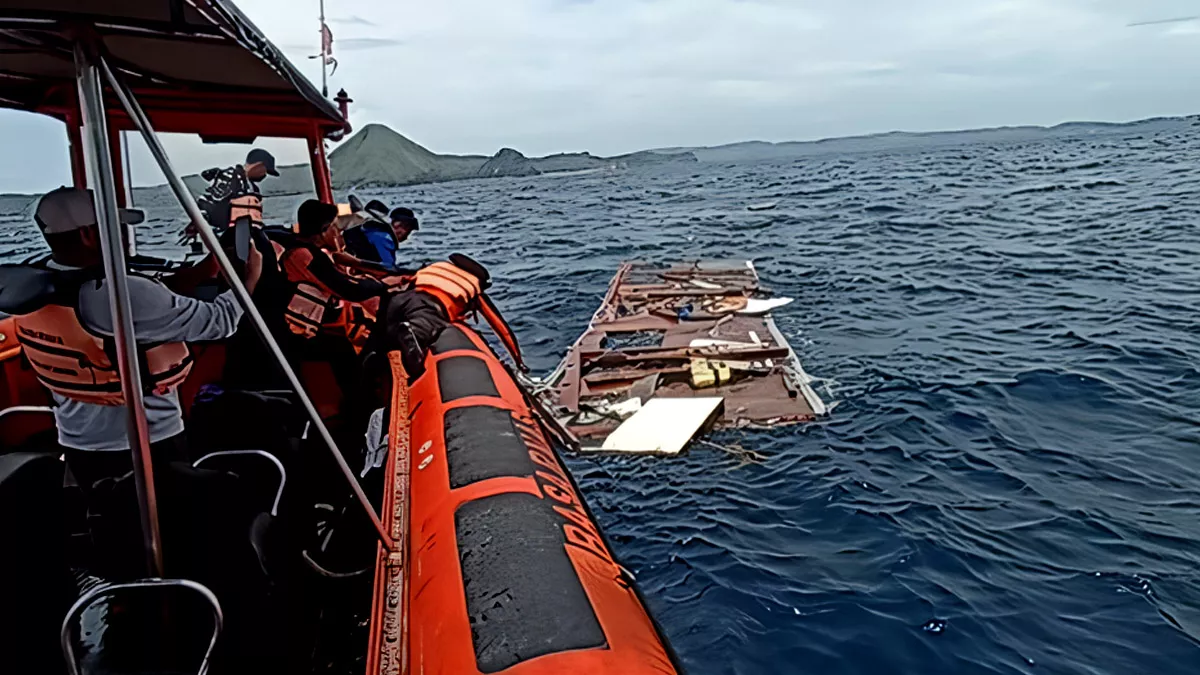
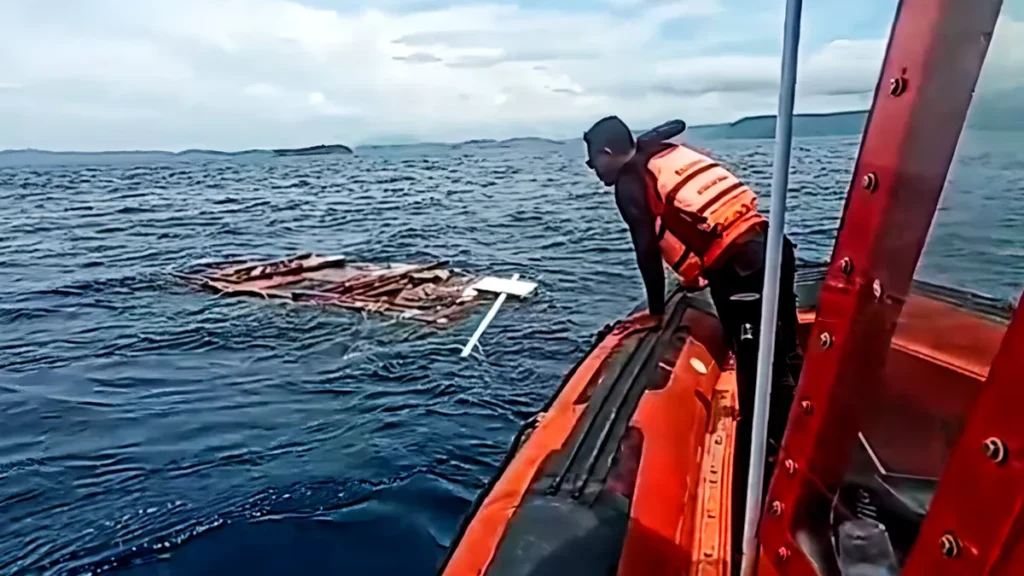
According to Edy Suryono, coordinator of the West Manggarai Search and Rescue Post, fragments of the vessel were found floating roughly three nautical miles from the site where the Putri Sakinah was last seen. The discoveries included parts of the hull, a gas cylinder, and later, a section identified as the captain’s cabin.
“These findings confirm the vessel’s breakup,” Mr. Suryono said Saturday evening, adding that search efforts had expanded to a 10-nautical-mile radius. Heavy rain, strong currents, and reduced visibility, however, forced teams to suspend operations by late afternoon.
A Night Voyage Turns Catastrophic
The Putri Sakinah, a traditional pinisi adapted for tourism, had departed from Komodo Island en route to Padar Island on Friday evening. About 30 minutes into the journey, the vessel reportedly lost engine power. Shortly afterward, it was struck by high waves and sank.
On board were 11 people: six Spanish tourists traveling as one extended family, four Indonesian crew members, and one local tour guide. Seven were rescued that night, including two Spanish nationals. The remaining four — a married couple and their two children — have not been found.
Authorities identified the missing family members as Martin Carreras Fernando, his wife Martines Ortuno Maria Lia, and their children, Martin Garcia Mateo and Martines Ortuno Enriquejavier.
An Expanding Search in Difficult Conditions
The second day of search operations involved a coordinated effort by multiple agencies, including the National Search and Rescue Agency (Basarnas), the Indonesian Navy, the marine police, and the Komodo National Park Authority. Fast rescue boats and patrol vessels combed the northern waters of Padar Island from early morning until 6 p.m. local time.
Fathur Rahman, head of the Maumere Search and Rescue Office and mission coordinator, said debris was found in several locations, all within five nautical miles of the sinking site. Sea conditions remained challenging, with waves reaching up to 1.5 meters, strong currents, and intermittent heavy rain complicating efforts.
Despite the obstacles, Mr. Rahman emphasized that the search would continue.
“We will proceed into the third day by mobilizing all available resources,” he said, noting that rescue teams were temporarily stationed overnight at a ranger post operated by Komodo National Park on Padar Island.
Questions of Safety and Oversight

The incident has renewed attention on maritime safety in Indonesia’s tourism-heavy waters, particularly during the peak rainy season, when sudden weather changes can turn routine voyages perilous.
Pinisi vessels, while iconic and deeply rooted in Indonesian maritime heritage, are increasingly used for tourism across eastern Indonesia. Experts have long warned that mechanical reliability, weather monitoring, and enforcement of safety standards vary widely across operators.
For now, the focus remains on the missing family.
As rescue teams prepare to resume their search at first light, the turquoise waters surrounding Padar Island — usually associated with serenity and wonder — have become the setting of a tense and painful vigil, watched closely by local communities and an international audience awaiting news that has yet to arrive.














Comments 1