




























DENPASAR, Bali – Living in Bali became a little more expensive in May.
Not dramatically. Not enough to trigger alarm.
But enough for residents, business owners, and frequent visitors to start noticing.
According to data released by Bali’s Central Statistics Agency (BPS) on Tuesday, the island recorded monthly inflation of 0.42 percent in May compared with April. The biggest drivers came from two very different corners of everyday life: chili peppers and airline tickets.
One affects dinner.
The other affects whether you can afford to get here in the first place.
For an island whose economy depends heavily on tourism, both matter.
The Price of Sambal Is Rising
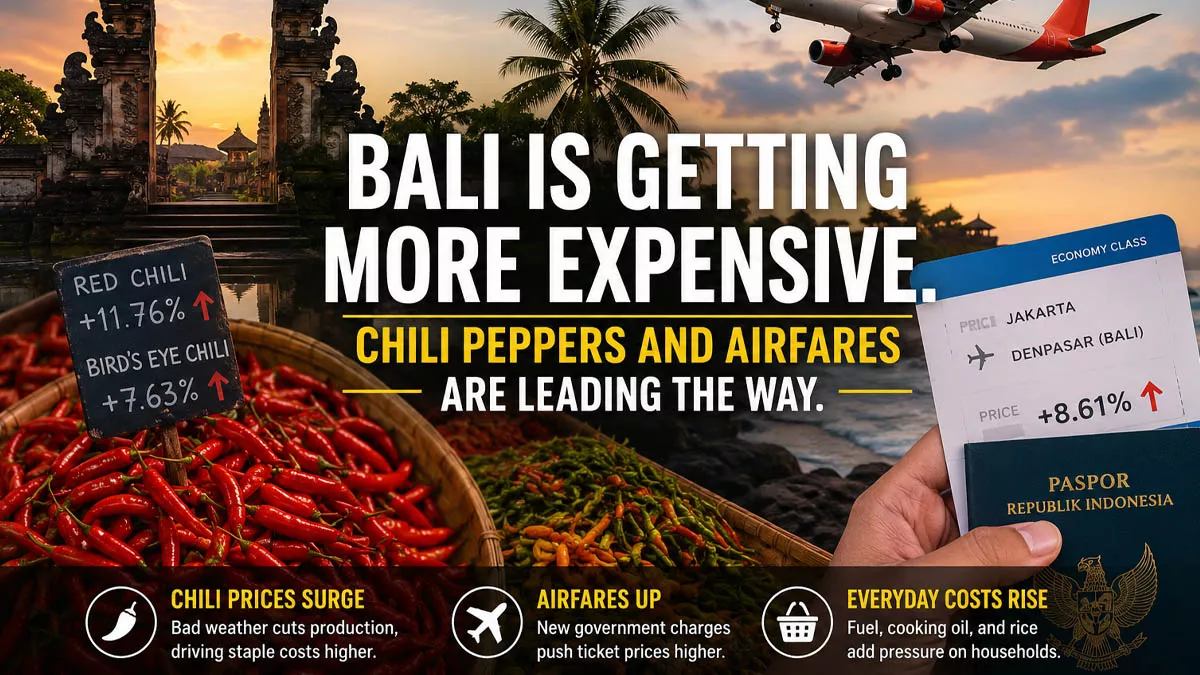
The single largest contributor to inflation was red chili.
Prices jumped 11.76 percent during the month.
Bird’s eye chili, another staple ingredient in Indonesian and Balinese cooking, increased by 7.63 percent.
For many households, that is not a minor inconvenience.
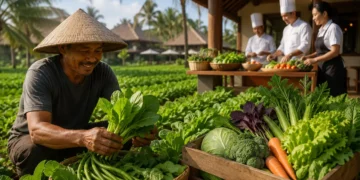
Chili is woven into daily life across Indonesia. It is used in sambal, traditional dishes, and restaurant kitchens ranging from roadside warungs to upscale dining venues.
According to Agus Gede Hendrayana Hermawan, Head of BPS Bali, unusually persistent rainfall has disrupted production and increased pest attacks in agricultural areas.
“High rainfall has led to decreased production and increased pest attacks on chili plants,” he said.
The result is simple economics: lower supply, steady demand, higher prices.
For travelers, the impact may not be immediately visible. But for restaurant operators and local food businesses, rising ingredient costs eventually find their way onto menus.
Flying to Bali Is Also Becoming More Expensive
Food was not the only factor pushing prices higher.
Air transport recorded inflation of 8.61 percent in May, making it one of the largest contributors to the overall increase.
Unlike chili prices, which are influenced by weather, airfare increases stem largely from policy.
The Indonesian government recently implemented additional charges on domestic economy-class flights through Transportation Ministry Decree No. KM 1041 of 2026. Airlines have begun passing those costs on to consumers.
For Bali, the implications are significant.
The island is one of Indonesia’s most aviation-dependent destinations. Nearly every visitor arrives by air.
Higher ticket prices do not necessarily reduce demand immediately. Bali remains one of Asia’s most desirable leisure destinations.
But they do increase the overall cost of travel.
For domestic tourists, especially families, the difference can be substantial.
Everyday Essentials Are Climbing Too
Beyond chili and airfares, several other basic goods recorded price increases.
Household fuel rose 2.07 percent.
Cooking oil increased 2.14 percent.
Rice climbed 0.91 percent.
Individually, those numbers may appear modest.
Collectively, they matter.
When the price of transportation, fuel, cooking oil, and staple foods rises at the same time, lower-income households feel the pressure first.
The continued impact of adjustments to non-subsidized LPG prices is also filtering through the local economy.
Not Every Part of Bali Felt It Equally
Inflation varied across the island.
Tabanan recorded the highest monthly inflation at 0.54 percent, followed by Denpasar at 0.50 percent.
Singaraja registered 0.37 percent, while Badung posted the lowest increase at 0.25 percent.
The differences reflect the diverse economic realities across Bali.
Agricultural regions are more exposed to food-price shocks, while urban areas often experience stronger pressure from transportation and service costs.
What It Means for Visitors
Bali remains affordable by international standards.
A cup of coffee in Canggu still costs less than one in Sydney. A beachfront dinner in Jimbaran remains cheaper than in many Western destinations.
But affordability is not static.
The latest inflation figures suggest that the cost of experiencing Bali is slowly moving upward.
Flights are becoming more expensive.
Food costs are rising.
Operating expenses for local businesses are increasing.
None of this amounts to a crisis.
But it is a reminder that even paradise is not immune to economic pressures.
And in May, those pressures arrived in the form of two things almost nobody would normally connect:
A chili pepper.
And a plane ticket.