























BULELENG, Bali — For more than half a century, she may have navigated some of Indonesia’s most challenging waters.
She survived powerful currents, predators, fishing nets, and an ocean increasingly crowded with plastic.
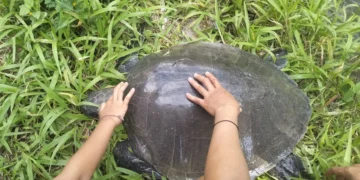
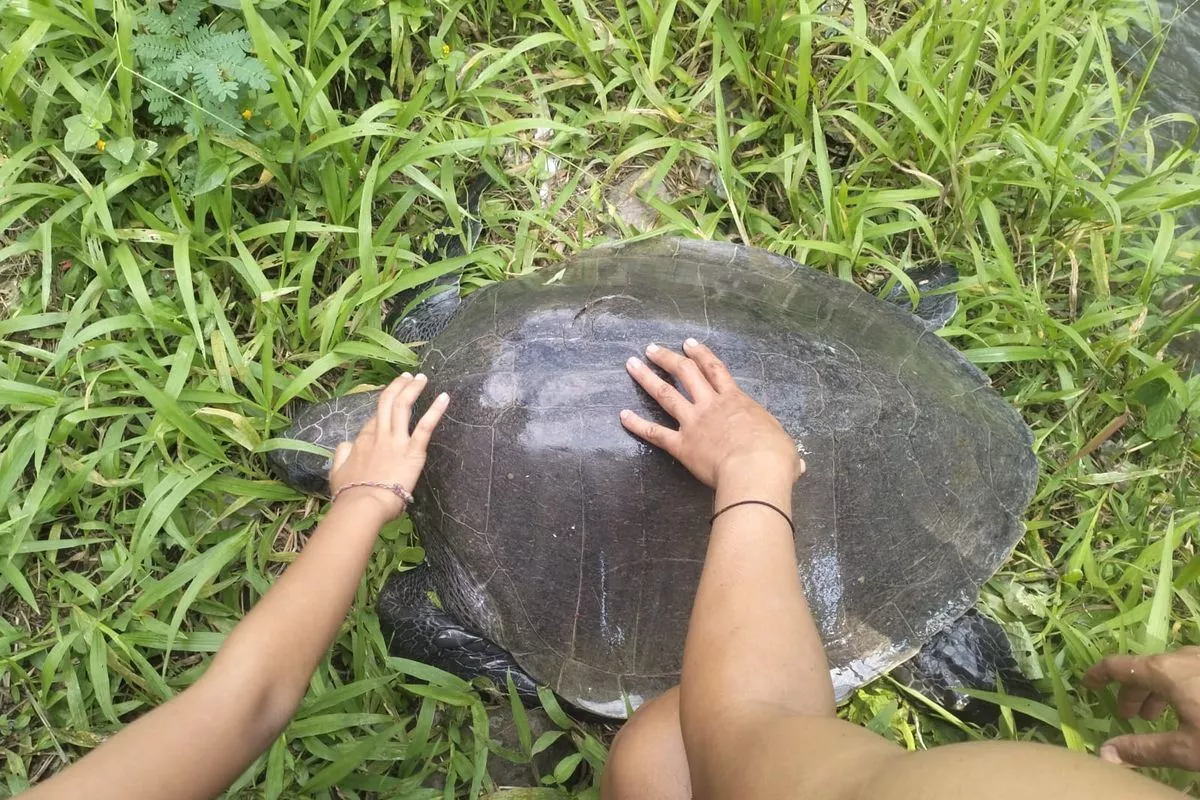
Yet this week, a female olive ridley sea turtle was found not in the sea, but floating weakly in a river in northern Bali, her shell cracked and her body injured.
The discovery has raised troubling questions among conservationists who say the protected animal was found in a place she was highly unlikely to have reached on her own.
Residents first spotted the turtle in a river in Baktiseraga Village, Buleleng, on Thursday afternoon.
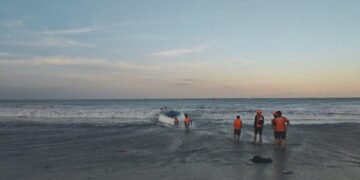
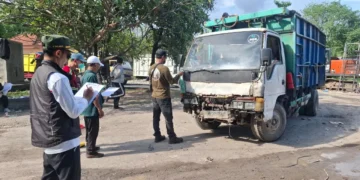
By the time officers from the Buleleng Water Police Unit and local conservation volunteers arrived, the turtle was still alive but visibly weakened.
“When we arrived, we found an olive ridley turtle in a weak condition,” said Iptu Yohana Rosalin Diaz, spokesperson for Buleleng Police. “The upper part of the shell was cracked, so the animal was immediately evacuated for treatment.”
The turtle was transferred to the conservation facility operated by Pokmaswas Penimbangan Lestari, a community-based marine protection group that works closely with authorities on wildlife monitoring and rescue efforts.
A Place No Sea Turtle Should Be
What concerns conservationists most is not only the turtle’s injuries but where she was found.
The river lies well inland and a considerable distance from the coastline.
According to Gede Wiadnyana, chairman of Pokmaswas Penimbangan Lestari, the location makes a natural stranding highly unlikely.
“Our suspicion is that someone caught the turtle and later abandoned it in the river,” Wiadnyana said. “The site is far from the beach. It is very unlikely that the turtle entered the river naturally, became stranded, or was searching for a nesting area.”
Authorities have not confirmed what happened to the animal, and no arrests have been made.
However, the circumstances surrounding the discovery have prompted further coordination with the Bali Natural Resources Conservation Agency (BKSDA), which is now involved in the case.
A Survivor of the Deep
The turtle has been identified as an olive ridley (Lepidochelys olivacea), a protected marine species found throughout tropical oceans.
Although olive ridleys are among the world’s most widespread sea turtles, their populations continue to face pressure from accidental capture, habitat loss, illegal harvesting, and marine pollution.
Wiadnyana estimates the turtle may be more than 50 years old based on her physical characteristics.
The animal measures approximately 80 centimeters in length and 60 centimeters in width.
“This species is rarely seen because it generally spends much of its life in deeper waters,” he explained.
The turtle’s injuries include a damaged carapace, or upper shell, as well as wounds on one of its front flippers believed to have been caused by friction or dragging.
Veterinarians are currently monitoring the animal’s condition.
Conservationists say it is still too early to determine whether she can eventually be returned to the wild.
A Reminder of Bali’s Hidden Wildlife Struggles
For many visitors, Bali is known for its beaches, coral reefs, and sea turtle conservation programs.
But wildlife experts say cases like this highlight a less visible reality.
Despite decades of conservation efforts and strict legal protections, threats to marine wildlife remain.
Whether this turtle was the victim of illegal capture, accidental injury, or another form of human activity remains under investigation.
For now, she remains under observation in Buleleng.
After surviving an estimated five decades in the open ocean, her future depends not on the sea she knows so well, but on whether rescuers can help her recover from whatever happened before she was left injured in a river where she never should have been.