


































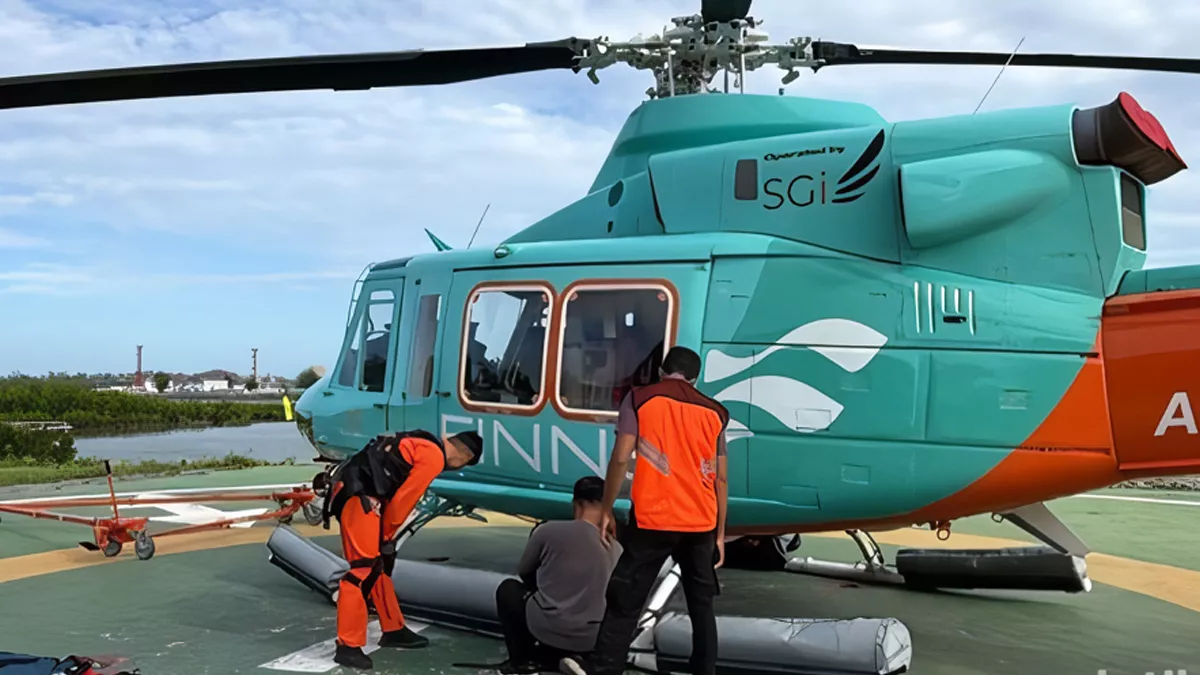
A Malaysian tourist is trapped on Mount Rinjani with a spinal injury, unable to be evacuated because the weather will not cooperate.
Chye Connsynn, a female tourist from Malaysia, fell during a climb on Monday afternoon, May 25, 2026, at approximately 3:39 PM local time. She is currently stranded at Pelawangan Sembalun, a rest area along one of the mountain’s main trekking routes.
She is conscious and able to communicate. But her spine is injured. And the helicopter that was supposed to extract her cannot fly.
“Until now, the weather has not been supportive,” said Iptu Lalu Subadri, chief of Sembalun Police, on Monday evening. “Evacuation will be carried out tomorrow morning.”
A Waiting Game
Rinjani is one of Indonesia’s most challenging and popular trekking destinations. At 3,726 meters, it attracts thousands of international climbers each year — many of whom come from Malaysia, Singapore, Australia, and Europe.
But the mountain’s weather is notoriously unpredictable. Afternoon storms roll in quickly. Wind speeds rise. Clouds obscure visibility. For helicopters attempting rescue missions, these conditions are not merely inconvenient. They are dangerous.
Subadri confirmed that once the weather clears and the evacuation is complete, the injured tourist will be flown directly to a hospital in Bali for intensive treatment.
For now, she waits on the mountain.
What We Don’t Know
Police have not yet released a full chronology of how the tourist fell. Communication with the team on the mountain remains limited due to poor network coverage.
Her exact condition, the severity of her spinal injury, and whether she was climbing alone or with a group are still unclear.
What is clear is that every hour of bad weather increases the risk — not only for the injured climber but also for the rescue team waiting to reach her.
What This Means for Travelers
Mount Rinjani is not a casual hike. It is a two-to-three-day expedition requiring physical preparation, proper guides, and a tolerance for rapidly changing conditions. International tourists have died on its slopes before — from altitude sickness, falls, and hypothermia.
This incident is a reminder that even non-fatal accidents carry serious consequences when evacuation depends on helicopters and weather windows.
For travelers planning a Rinjani climb, the lesson is simple: build buffer days into your itinerary. A fall on Monday does not guarantee a rescue on Monday. The mountain operates on its own schedule.
So does the sky above it.
Awaiting Morning Light
The injured Malaysian tourist is alive. She can speak. She is not alone on the mountain. But she is stuck.
And until the weather clears over Rinjani’s rugged ridges, there is nothing more anyone can do.
Tomorrow morning, if the wind drops and the clouds lift, the helicopter will fly.
Until then, Pelawangan Sembalun is not a rest stop. It is a waiting room.