


















Investigators say there is a “disconnect” between what visitors pay and the safety conditions at the Labuan Bajo waterfall attraction.
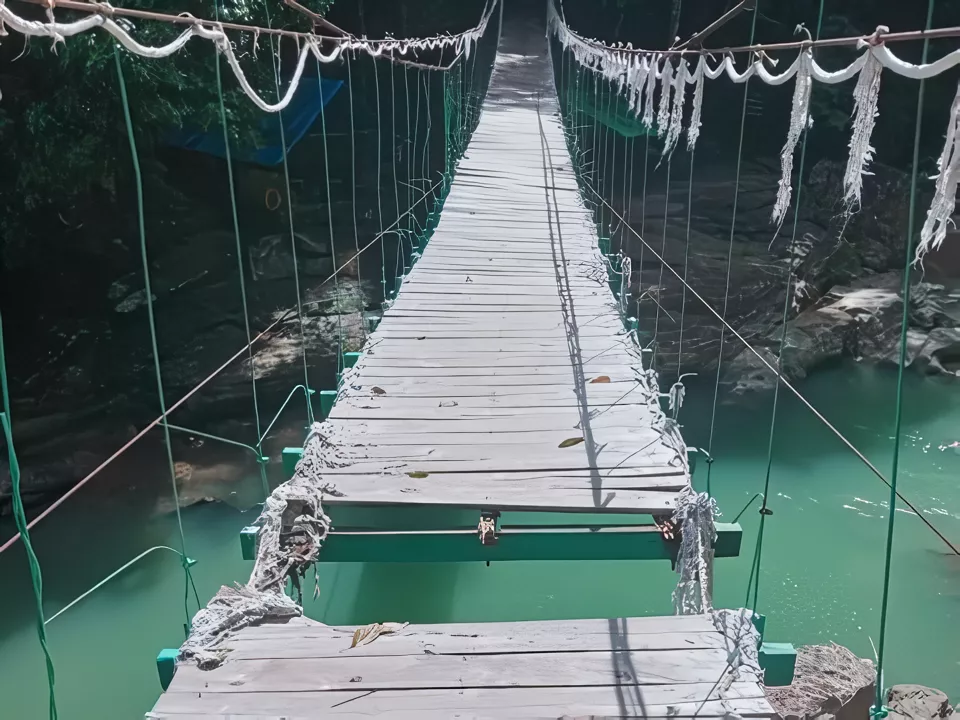
LABUAN BAJO, Indonesia – Investigators in eastern Indonesia are now tracing the flow of tourist retribution fees after two Austrian visitors fell to their deaths from a rotten suspension bridge at Cunca Wulang Waterfall.
The couple, identified as Jurgen Perjul, 55, and Astrid Perjul, 57, were crossing a bridge approximately 20 meters above the ground on May 24 when the structure collapsed. Both were killed.
Police say the bridge was in a state of severe decay.
Now, the investigation has widened beyond the bridge itself.
“We have detected an imbalance between the collection of retribution fees from tourists and the maintenance of safety facilities,” said AKBP Christian Kadang, Chief of Manggarai Barat Police, in a statement on Friday.
Where the Money Goes
At the waterfall entrance, police found evidence of official fees collected from every visitor.
Those fees, according to investigators, flow to two destinations: the treasury of the Manggarai Barat Tourism Office and the village government of Cunca Wulang.
What tourists received in return, police say, fell dangerously short.
“Ironically, basic safety facilities have been neglected,” Christian said.
“There are no warning signs at dangerous points. Management also does not provide accident insurance for tourists.”
Documents Seized
Police have confiscated documents including visitor registration books and files related to the management of the tourism area.
Investigators are now examining whether criminal negligence played a role in the deaths.
Five witnesses have already been questioned:
- The head of Cunca Wulang Village
- The ticket retribution officer
- The local tour guide who was accompanying the victims
- The driver of the victims’ rental car
- A local police officer who first secured the scene
Investigators have also scheduled clarifications with government agencies at the regency level responsible for the management and safety oversight of Cunca Wulang Waterfall.
“We will not stop at examining witnesses in the field,” Christian said.
“We have scheduled clarifications from the relevant agencies in the Manggarai Barat regency government.”
A Premier Destination With Deadly Gaps
Cunca Wulang Waterfall is one of the mainland’s premier attractions near Labuan Bajo, the town best known as the gateway to Komodo National Park.
The journey from Labuan Bajo takes approximately 90 minutes by road.
The site is managed by the Manggarai Barat Tourism, Creative Economy, and Culture Office.
But according to police, the safety infrastructure at this official destination was missing basic elements: warning signs, accident insurance, and a bridge that was safe to cross.
What This Means for Travelers
For international tourists visiting Labuan Bajo, the investigation raises questions that extend beyond a single incident.
If a premier waterfall attraction can charge official fees while failing to maintain a suspension bridge, what other sites face similar gaps?
If warning signs are absent and accident insurance is not provided, what recourse do visitors have when something goes wrong?
The investigation is still active. No charges have been filed. But police are now examining not just the bridge, but the system that allowed tourists to keep crossing it.
The Victims
Jurgen and Astrid Perjul were a married couple from Austria.
They arrived at Cunca Wulang Waterfall on May 24, likely expecting a day of sightseeing at one of Labuan Bajo’s recommended attractions.
Instead, they crossed a bridge that should not have been standing.
Moments later, both were dead.
As of Friday, their bodies remained at Komodo General Hospital in Labuan Bajo, awaiting repatriation coordinated through the Austrian Embassy in Jakarta.
The Investigation Continues
Police have not announced a timeline for completing their investigation.
But the direction is clear.
Investigators are no longer just asking what caused the bridge to collapse.
They are asking who collected the fees, where the money went, and why basic safety measures were never provided.
For travelers planning visits to Labuan Bajo, the answers to those questions may determine whether other bridges are safe to cross.