
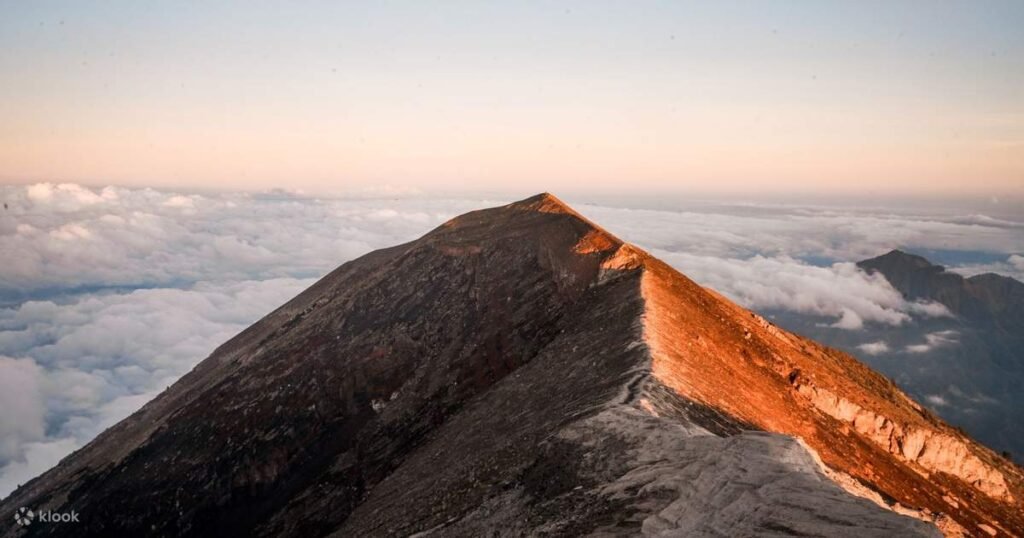
Travelers planning to climb Mount Agung next week will need to adjust their itineraries as Bali’s most sacred mountain pauses for a centuries-old religious tradition.
KARANGASEM, Bali — For many travelers, Mount Agung is Bali’s ultimate challenge.
Rising 3,031 meters above sea level, the island’s highest volcano attracts hikers from around the world seeking sunrise views, spiritual experiences, and a glimpse into the dramatic landscape that has shaped Balinese culture for centuries.
But from June 26 to July 2, 2026, the mountain will fall silent.
Authorities and local communities have announced a temporary closure of all hiking routes on Mount Agung to coincide with a series of religious ceremonies taking place at Besakih Temple, Bali’s largest and most important Hindu temple complex located on the volcano’s slopes.
The decision reflects a reality that often surprises first-time visitors to Bali: on the Island of the Gods, spirituality can take precedence over tourism.
More Than a Mountain
Unlike many of the world’s famous trekking destinations, Mount Agung is not viewed solely as a natural attraction.
For Balinese Hindus, the volcano is considered the most sacred point on the island, a spiritual axis connecting the human world with the divine.
When major ceremonies are held at Besakih Temple, known locally as Bali’s “Mother Temple,” access to the mountain is traditionally restricted out of respect for religious activities.
“It is a collective agreement between climbing operators, traditional villages, and related authorities,” said Mangku Komang Kayun, chairman of the Mount Agung Hiking Association.
According to Kayun, all nine official hiking routes will be closed throughout the ceremonial period.
The affected routes include several of the mountain’s most popular access points, including Pucang, Telaga Maya, Pengubengan, and Pasar Agung.
“There are nine routes on Mount Agung, and all of them will be closed during the ceremonies,” he said.
A Time for Reflection and Restoration
The closure will serve another purpose beyond religious observance.
Local hiking organizations plan to use the week-long pause to conduct environmental clean-up efforts and carry out maintenance work along the trails.
Volunteers and guides will collect plastic waste, repair damaged sections of paths, and help preserve the mountain’s fragile ecosystem.
The effort reflects a growing movement across Bali to balance tourism with environmental stewardship and cultural preservation.
For many local communities, keeping Mount Agung clean is not only a matter of sustainability but also an expression of respect for a place regarded as sacred.
What Travelers Should Know
The closure applies to all hiking activities between June 26 and July 2, regardless of the route or tour operator.
Guides have already been informed, while authorities from East Bali’s Forest Management Unit and surrounding traditional villages have coordinated the restrictions.
Travelers planning to summit Mount Agung during that period are advised to reschedule their trek for after July 2.
For visitors unfamiliar with Bali’s traditions, the temporary closure offers a reminder that the island’s cultural and spiritual calendar continues to shape daily life in ways that few modern destinations can match.
In Bali, even the busiest tourism attractions occasionally step aside for something older, deeper, and far more enduring than travel itself.