





























For travelers seeking a deeper connection, the island’s calendar is marked by unique annual events that offer a vivid window into Balinese Hindu philosophy and community spirit.
BALI — While renowned for its landscapes, Bali’s true soul resides in its living culture. A complex tapestry of Hindu rituals and community traditions unfolds across the island’s calendar, offering visitors a chance to witness philosophy in motion. For culturally curious travelers planning a 2026 visit, here are five distinctive experiences that go far beyond the typical tourist trail.
1. The Clash of the Pandan Leaves: Mekare-Kare
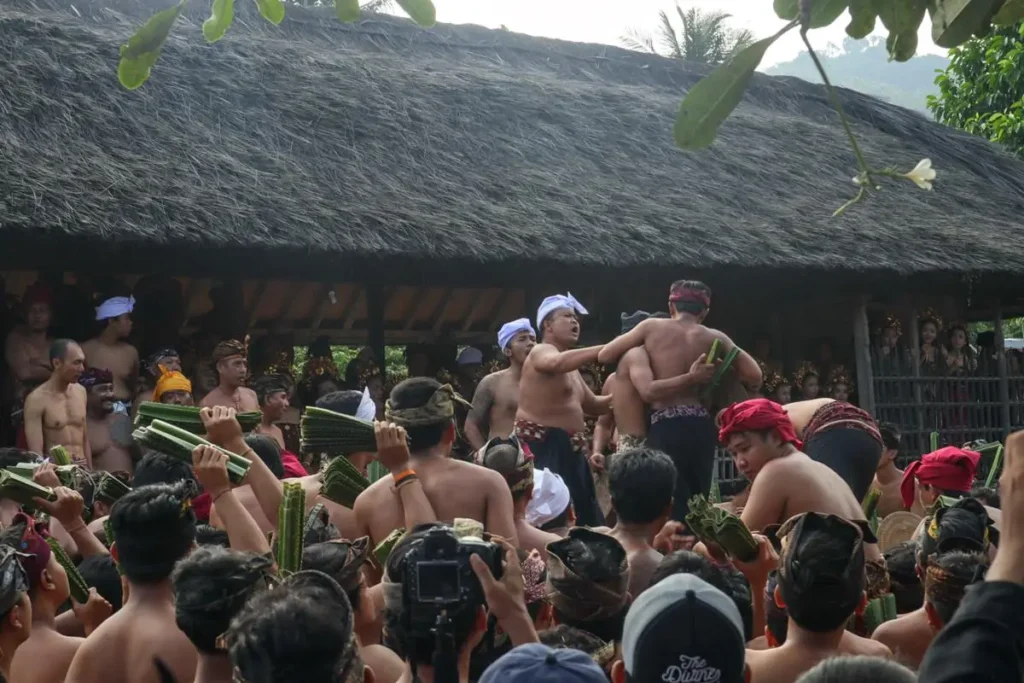
In the ancient village of Tenganan Pegringsingan in Karangasem, the Mekare-Kare or Pandan War is held annually around June as an offering to the god Indra and village ancestors.
Men engage in ritualistic duels, armed only with thorny pandan leaf bundles and a rattan shield, while gamelan music fuels the intensity. It is a visceral display of courage and devotion, followed by mutual treatment of wounds with traditional herbs, symbolizing community harmony restored.
2. Purification by the Sea: Upacara Melasti
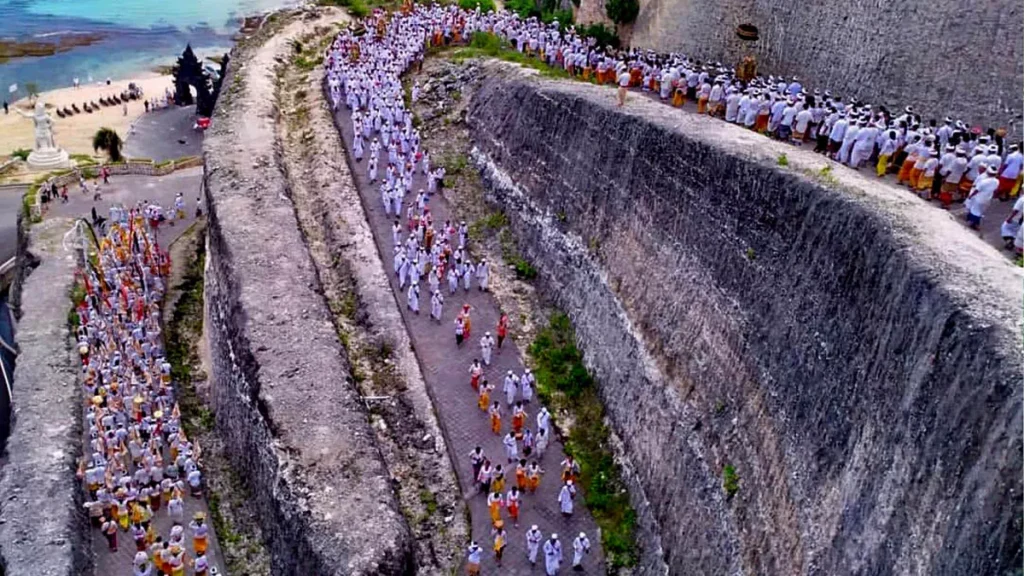
Held several days before the Day of Silence (Nyepi, falling in March), Melasti is a profound purification ceremony. Communities from every village undertake processions to the sea, lakes, or other water sources.
Dressed in white, they carry sacred temple effigies (pratima) to be cleansed by the water’s essence, symbolically washing away impurities to spiritually prepare for the new Saka year. Key coastal spots like Petitenget or Sanur Beach become moving scenes of devotion.
3. A Ritual of Youthful Bonding: Omed-Omedan
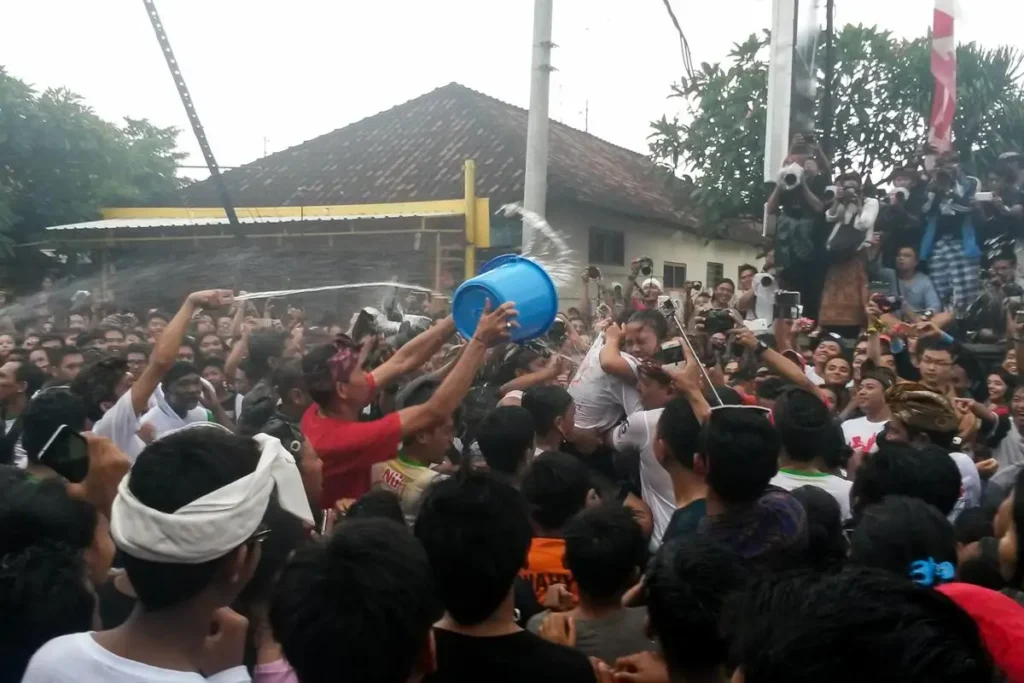
Unique to Banjar Kaja in Sesetan, Denpasar, the playful Omed-Omedan or “ritual kiss” takes place the day after Nyepi. Young, unmarried men and women from the community are playfully paired to hug and engage in a lighthearted tug-of-war amidst cheers and water splashing.
Far from romantic, it’s a tradition reinforcing social bonds, solidarity, and marking the joyful restart of activities after the solemn silence.
4. The Spectacle Before Silence: Pengerupukan
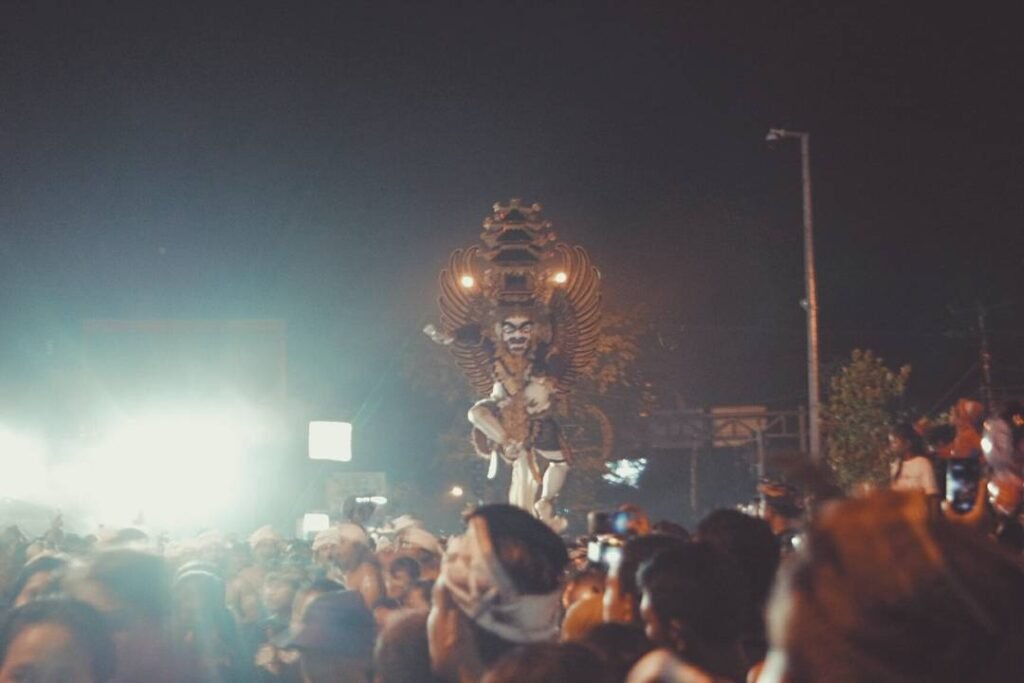
The eve of Nyepi, known as Pengerupukan, transforms the island with a cacophony meant to drive away negative forces. The highlight is the evening parade of fantastical, towering papier-mâché monsters called ogoh-ogoh, representing malevolent spirits.
Carried by spirited youths through village streets to the thunder of gamelan, these creations are later burned in a symbolic victory of good over chaos, clearing the way for a day of introspection.
5. The Triumphant Pole Ceremony: Mekotek
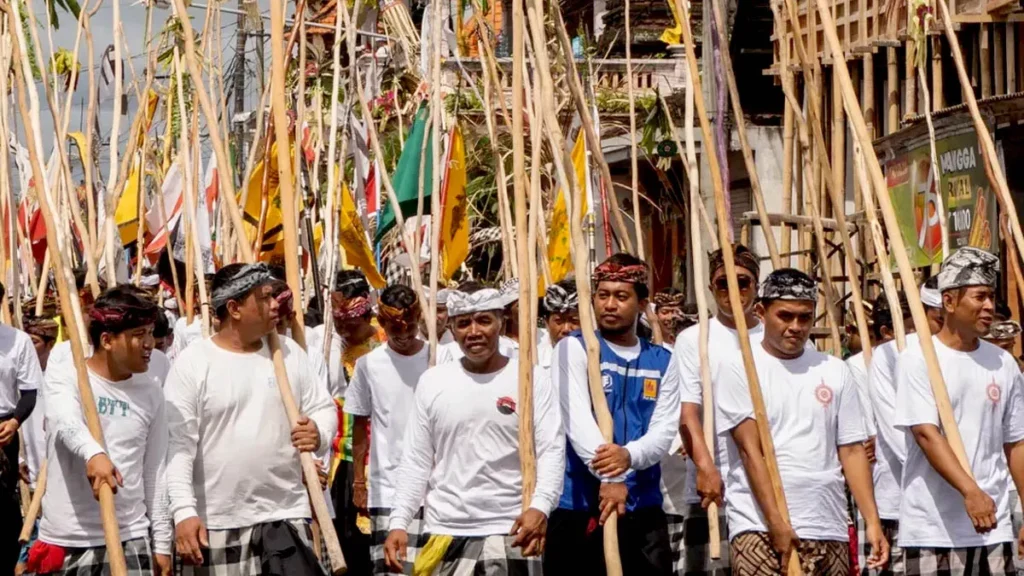
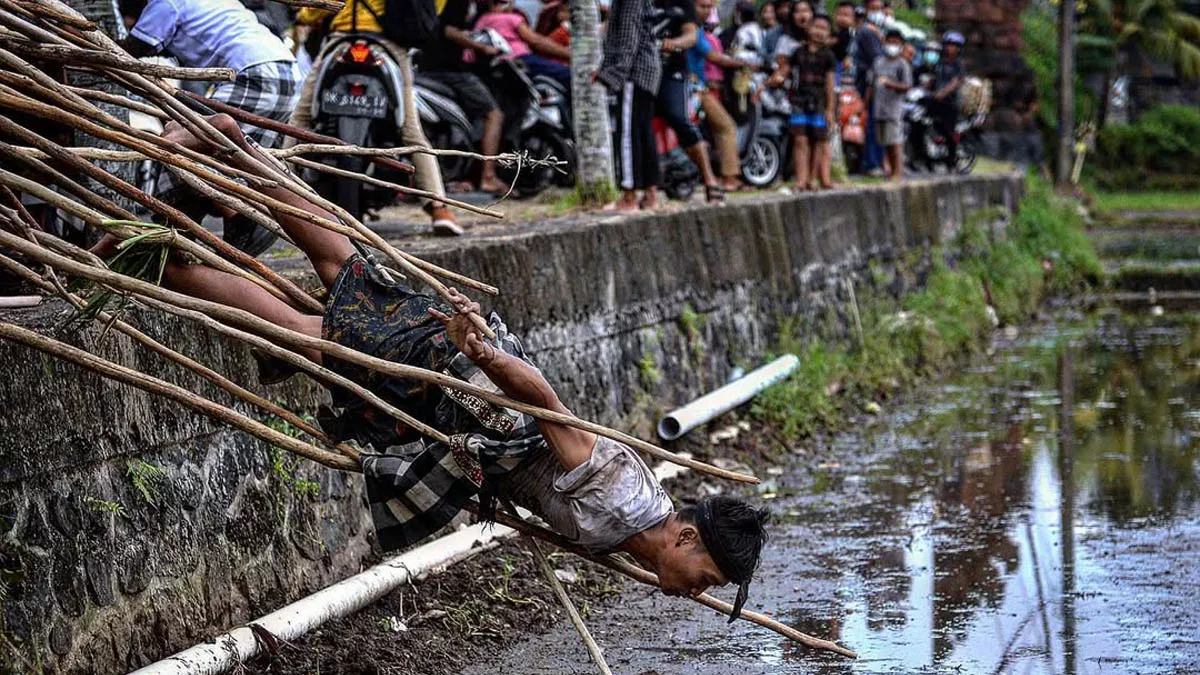
In the village of Munggu, Mengwi, the Mekotek ritual takes place on Kuningan (scheduled for June 26-27, 2026). Following prayers at the temple, hundreds of men gather with long wooden poles.
They form massive triangular structures, lift participants high into the air, and march jousting between groups. This dynamic, noisy spectacle is believed to invoke strength, ward off misfortune, and commemorate a historic village victory.
These traditions are not performances but integral parts of Balinese life. For visitors, they offer an unparalleled opportunity to witness the island’s profound spiritual depth and vibrant communal identity.
For the culturally curious traveler, witnessing these events requires mindful planning. While the traditions are anchored to the Balinese Pawukon calendar and Hindu holy days, their exact public dates for 2026 should be confirmed closer to time through local sources or your accommodation.
This is not mere formality—it reflects the living, adaptive nature of Balinese culture, where spiritual readiness and community consensus can fine-tune the timing of these profound ceremonies.
Hey Bali News provides insights to help travelers engage with Bali’s culture respectfully and meaningfully.