

































BADUNG, Bali — Australia is not running out of fuel. But it is, for the first time in years, being forced to confront how fragile its energy system can be.
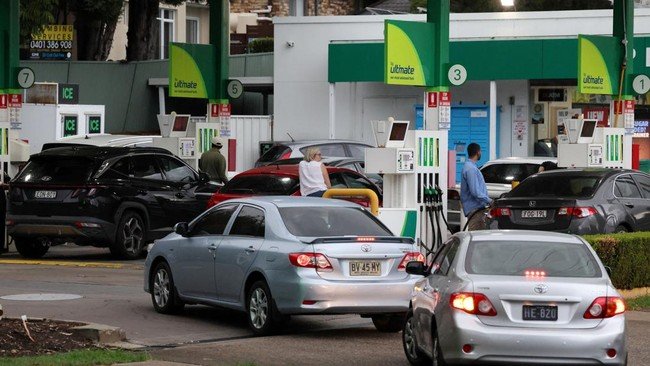
Nearly 500 fuel stations across the country have reported shortages of at least one type of fuel, according to official data cited by local media. What began as localized disruptions—225 stations on Wednesday—quickly spread to 470 within a day, affecting key regions including Victoria, Queensland, and New South Wales.
The cause is not singular. Rising global oil prices linked to tensions in the Middle East, logistical strain in distribution, and a surge in consumer demand have combined to expose vulnerabilities in a system long assumed to be stable.
Prime Minister Anthony Albanese has called for emergency coordination between federal and state leaders. The message is clear: this is not yet a crisis—but it is no longer routine.
For Bali, that distinction matters.
A Distant Disruption, A Nearby Exposure
Australia is Bali’s largest tourism market. More than 1.6 million Australians travel to the island annually, forming a backbone of its visitor economy.
When conditions shift in Australia—even subtly—the effects tend to travel.
A fuel shortage does not automatically reduce outbound travel. In some cases, it can do the opposite: domestic mobility becomes more expensive or uncertain, making international destinations relatively more attractive.
But the opposite scenario is just as plausible. Higher energy costs can translate into higher airfares, reduced airline capacity, and more cautious household spending.
The immediate outcome is not a collapse. It is uncertainty.
And uncertainty, more than any single shock, is what reshapes travel behavior.
The Risk Bali Already Carries
What the current situation reveals is not a sudden threat, but an existing dependency.
Bali’s tourism model is deeply concentrated. A handful of markets—Australia chief among them—account for a disproportionate share of arrivals. That concentration has long been efficient. It is now a point of exposure.
If disruptions in Australia remain short-lived, Bali will likely absorb the impact with minimal difficulty.
But if volatility persists—through sustained fuel price increases, logistical disruptions, or broader economic pressure—the effects may begin to surface more clearly: softer bookings, shorter stays, or shifts in traveler profiles.
None of this is immediate. All of it is possible.
A Subtle Shift Already Underway
There is, however, a second-order effect worth watching more closely: behavioral change.
Australia has already been experiencing rising living costs, housing pressure, and a gradual normalization of remote work. Energy disruptions, even temporary ones, can amplify these pressures—not by forcing change, but by accelerating decisions already in motion.
Bali, with its proximity, lower cost base, and established expatriate infrastructure, sits within that equation.
Not as a replacement for Australia. But as an alternative for those with flexibility.
This is not a surge. It is a drift.
And drifts, over time, reshape patterns.
What Bali Should—and Should Not—Do
The instinct in moments like this is to react quickly. But overreaction can be as risky as inaction.
Bali does not need to redesign its economy in response to a short-term disruption abroad. What it does need is awareness—and preparation.
That means:
- Continuing to diversify source markets, reducing overreliance on any single country
- Maintaining stability in domestic fuel and transport systems
- Strengthening digital and service infrastructure that supports longer-stay visitors
- Monitoring shifts in traveler behavior, rather than assuming them
The goal is not to chase opportunity. It is to remain adaptable if opportunity emerges.
The Real Lesson
Australia’s fuel strain is not, in itself, a turning point.
But it is a reminder.
In a tightly connected region, shocks do not stay contained. They move—through prices, through behavior, through perception.
For Bali, the question is not whether this particular disruption will have lasting effects.
It is whether the island is prepared for the next one that does.
The Bottom Line
Australia is adjusting to a moment of strain. Bali is observing it from close range.
There is no immediate crisis. No dramatic shift.
But there is a signal—quiet, but clear:
Reliance works until it doesn’t.
And resilience is built long before it is needed.
#heybalinews / Giostanovlatto