
































KOMODO NATIONAL PARK, Indonesia — There is a moment on Komodo Island when tourism disappears.
The boat engines fade behind you. The souvenir stalls are out of sight. The ocean breeze gives way to dry savanna air.
Then the landscape falls strangely quiet.
A deer lifts its head.
A monkey freezes in a tamarind tree.
And somewhere ahead, hidden in the yellow grass, waits the animal you crossed oceans to see.
Not a myth.
Not a movie monster.
Not a zoo exhibit.
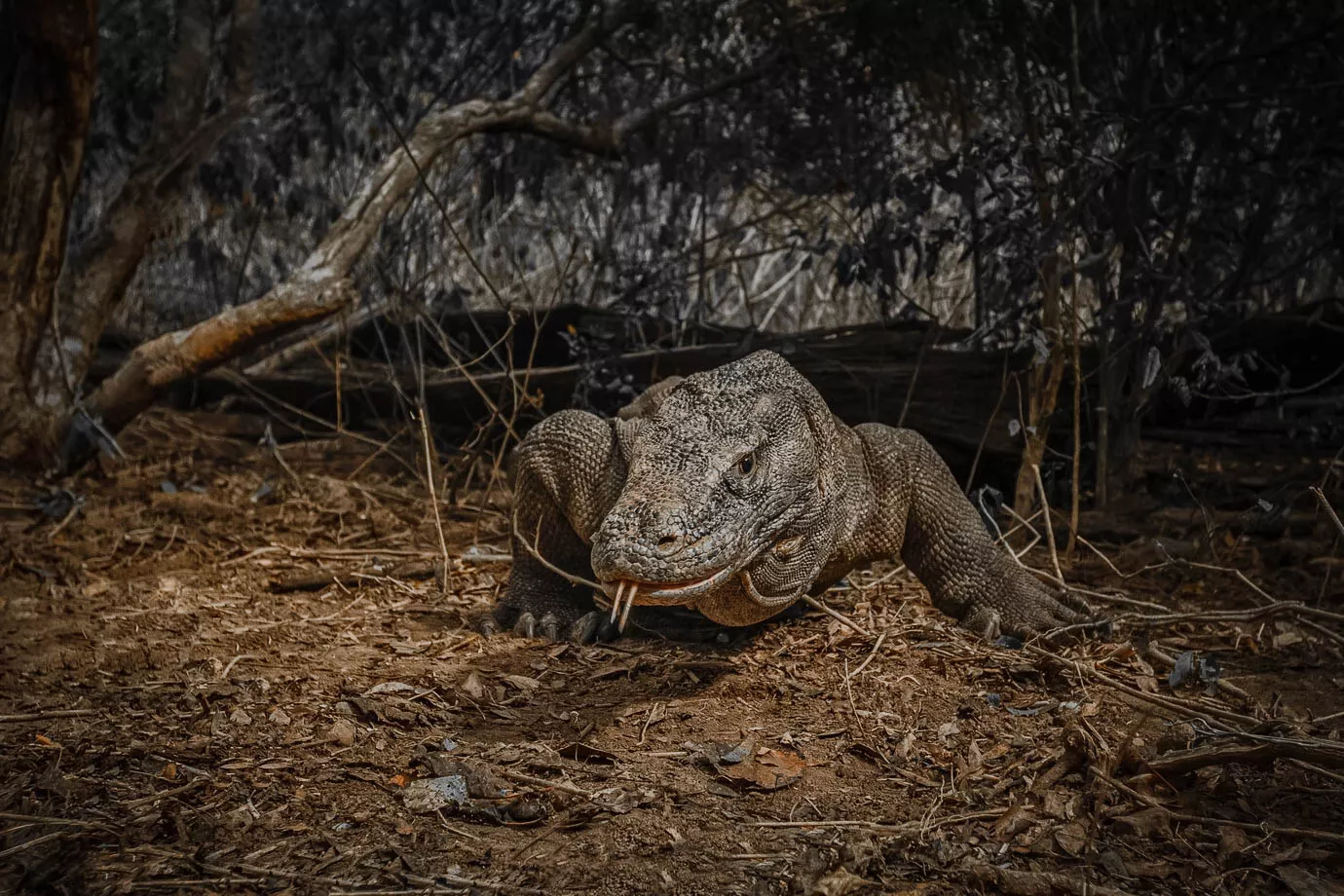
A Komodo dragon.
The largest living lizard on Earth.
For millions of years, long before airports, ferries, dive resorts, and Instagram influencers arrived in eastern Indonesia, Komodo dragons ruled these islands. They remain the undisputed apex predators of Komodo National Park today.
Yet many visitors arrive knowing surprisingly little about the animal they are about to encounter.
Before you step onto Komodo or Rinca Island, here are five truths every traveler should understand.
1. This Is the Last Giant Lizard on Earth
Komodo dragons (Varanus komodoensis) are living relics from another age.
Adult males can grow to nearly three meters (10 feet) long and weigh more than 68 kilograms (150 pounds), making them the largest lizards on the planet.
Scientists believe giant monitor lizards once roamed across much of Southeast Asia and Australia. Today, the Komodo dragon is the last survivor of that ancient lineage.
Seeing one in the wild is not simply wildlife tourism.
It is a rare opportunity to stand face-to-face with a species found nowhere else on Earth.
2. They Are Faster Than Most Visitors Realize
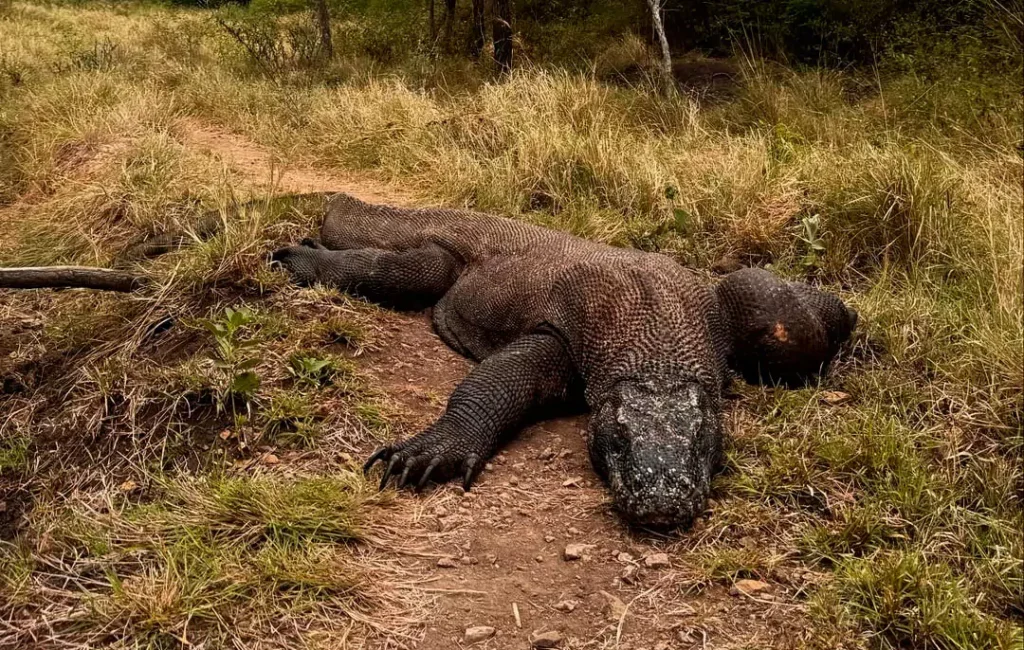
At first glance, a Komodo dragon looks slow.
It often lies motionless beneath trees, conserving energy under the tropical sun.
That illusion can be dangerous.
When necessary, a Komodo can sprint at speeds approaching 20 kilometers per hour (12 mph), faster than many people can run over short distances.
Park rangers routinely remind visitors that these animals are predators, not attractions.
The safest distance is always the one recommended by your guide.
Every ranger in Komodo National Park carries a forked wooden stick. It is not a prop for photographs.
It is a precaution developed through decades of working alongside one of the world’s most formidable reptiles.
3. The Famous ‘Bacteria Story’ Is Only Half True
For years, popular travel guides repeated the same explanation: Komodo dragons kill because their mouths are full of deadly bacteria.
Modern research tells a more complex story.
Scientists have discovered venom glands in the dragons’ lower jaws. The venom contains compounds that reduce blood clotting and lower blood pressure, causing severe blood loss and shock in prey animals.
The bacteria are real.
The venom is real too.
Together, they make the Komodo one of the most effective hunters in the reptile world.
It is one reason park authorities take visitor safety so seriously.
4. A Komodo Dragon Can Smell Death From Miles Away
A Komodo does not need exceptional eyesight to find food.
Instead, it relies on one of the most sophisticated chemical detection systems in the animal kingdom.
The dragon’s iconic forked tongue constantly samples the air, collecting microscopic scent particles and delivering them to a specialized sensory organ inside its mouth.
The system is so sensitive that a Komodo can detect carrion or injured prey from several kilometers away.
What appears to be a lazy flick of the tongue is actually a highly evolved tracking mechanism that has helped the species survive for thousands of generations.
For travelers, it is a reminder that the dragon is almost always more aware of your presence than you are of its.
5. There May Be Fewer Than 2,000 Left in the Wild
This is perhaps the most important fact of all.
Despite their legendary status, Komodo dragons exist naturally in only a handful of locations on Earth.
Wild populations are confined primarily to Komodo, Rinca, Gili Motang, Gili Dasami, and parts of Flores.
Scientists estimate the total population at roughly 1,400 to 2,000 individuals.
The species is listed as Vulnerable by the International Union for Conservation of Nature (IUCN).
Climate change, habitat pressures, and declining prey populations all threaten its future.
That means every encounter with a wild Komodo dragon is increasingly precious.
You are not simply observing a famous animal.
You are witnessing one of the rarest large predators left on the planet.

More Than a Tourist Attraction
Many travelers visit Komodo National Park expecting a bucket-list photo.
Most leave with something more meaningful.
The Komodo dragon is a reminder that there are still places on Earth where nature has not surrendered control.
The dragons do not perform for visitors.
They do not exist for tourism.
They are not interested in being photographed.
This is their kingdom.
We are merely guests.
And perhaps that is what makes seeing one in the wild so unforgettable.