
































What went viral wasn’t a goal. It was a projection.
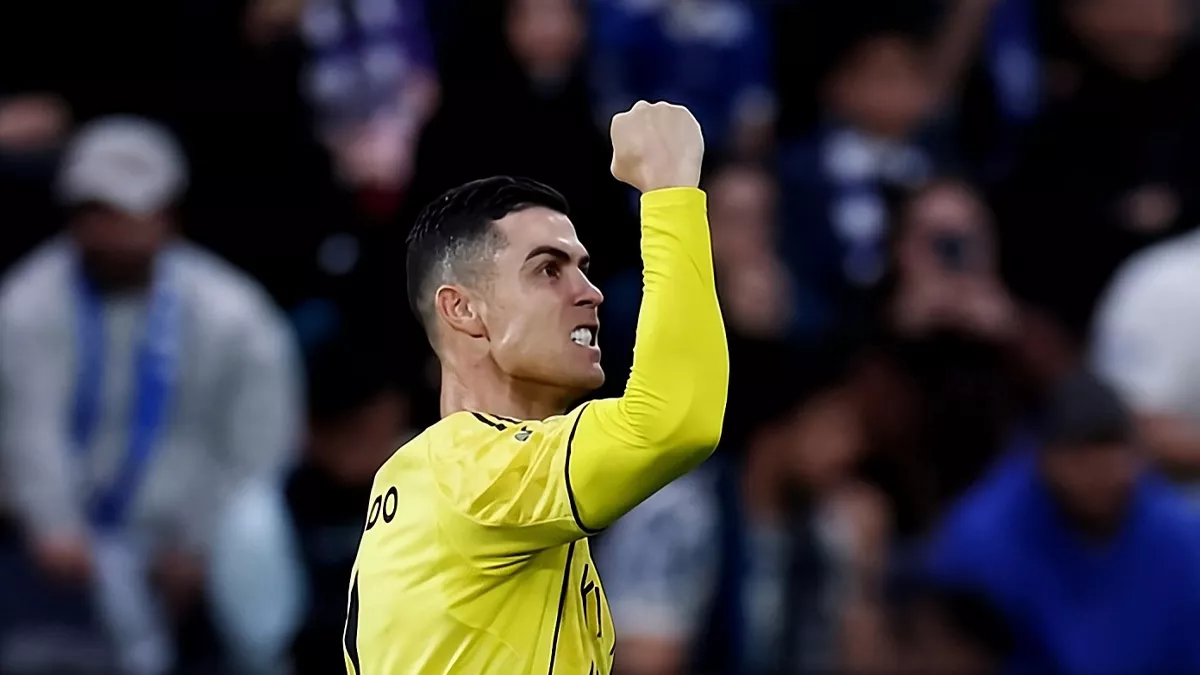
When Cristiano Ronaldo stepped up for a penalty and appeared to say something under his breath, the internet didn’t hear a word. It filled one in. “Bismillah,” many insisted. A quiet moment became a global narrative almost instantly.
What People Think
The story is simple, and that’s why it spreads.
A global football icon, playing in Saudi Arabia, embracing Islamic expressions. Clips circulate. Subtitles get added. Meaning gets assigned. For some, it’s a sign of respect. For others, something bigger. Conversion. Transformation. A legend “finding faith.”
“Ya, dia mengatakannya. Saya harap dia masuk Islam,” one viral comment read.
It’s clean, emotional, and fits a larger storyline people want to believe.
What’s Actually Happening
The evidence is thin.
In the match between Al Nassr and Al Najma, Ronaldo scored twice in a 5–2 win. One goal came from the penalty spot in the 56th minute. The clip in question shows him speaking briefly before striking the ball.
That’s it.
No confirmed audio. No statement. No verification. Just lip-reading guesses.
Another viewer pushed back: “He said ‘Vamos lá’, a common Portuguese phrase meaning “let’s go.”
Both interpretations rely on the same thing: assumption.
Cristiano Ronaldo: "Bismillah." pic.twitter.com/D45FnM28qm
— FutbolArena (@futbolarena) April 3, 2026
So What’s Really Going On?
This isn’t about language. It’s about cultural ownership of global icons.
Ronaldo plays in the Saudi Pro League, a competition actively repositioning itself as a global force. Since his arrival, the league has attracted attention far beyond football. It’s not just sports anymore. It’s soft power.
In that context, every gesture becomes symbolic.
Ronaldo saying “Assalamualaikum” in past appearances. Using “InshaAllah” in interviews. These are small acts of adaptation, common for expatriates anywhere. But online, they’re treated as signals of deeper alignment.
Why? Because people want icons to reflect their identity.
The internet doesn’t just watch celebrities. It recruits them.
This is the same dynamic seen everywhere. Fans projecting beliefs, values, even politics onto public figures who haven’t explicitly claimed them. The less clarity there is, the more room for narrative.
Ambiguity becomes fuel.
Who Wins / Who Loses
Winners:
- The Saudi league, which gains cultural relevance beyond football
- Social media ecosystems that thrive on viral ambiguity
- Fans who feel represented by a global figure
Losers:
- Context and accuracy
- The athlete himself, whose actions get reinterpreted at scale
- Anyone trying to separate performance from projection
Even Ronaldo’s performance gets overshadowed. Two goals, including a decisive penalty, should be the headline. Instead, it’s what he may or may not have whispered.
What This Means for You
If you’re living in Bali, or anywhere shaped by global movement, this dynamic should feel familiar.
Cultural signals get amplified, often beyond intent. A phrase, a gesture, even a way of dressing can be reinterpreted depending on who’s watching.
The Ronaldo moment is a reminder: in a hyper-connected world, perception moves faster than truth.
And once a narrative sticks, it rarely gets corrected.
Ronaldo didn’t need to say “Bismillah” for the story to exist.
The internet said it for him.
That’s the real shift. Not what athletes say, but how quickly the world decides what they mean.