




































DENPASAR, BALI – The decision to name Bali’s top land administration official as a criminal suspect has sent ripples far beyond legal circles, raising broader questions about land governance, legal process, and the fine line between administrative disputes and criminal law in Indonesia.
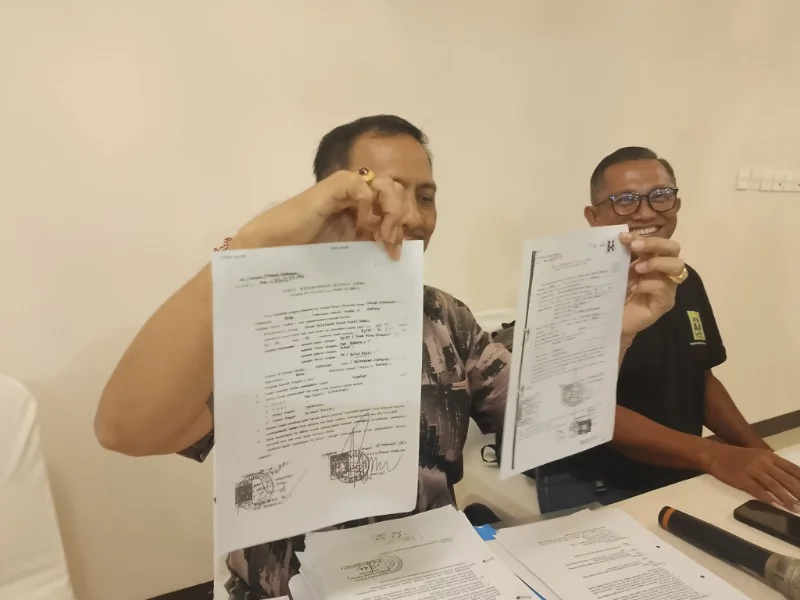
The official at the center of the case is I Made Daging, head of the Bali Regional Office of Indonesia’s National Land Agency (BPN). He is accused of abuse of authority in connection with a decades-old land certificate dispute in Jimbaran, South Kuta, Badung — an area familiar to many tourists but long fraught with complex land histories.
A Dispute Rooted in the 1980s
According to a detailed explanation from Hardiansyah, head of dispute handling at the Bali BPN office, the case traces back to a land ownership certificate issued in 1985.
The certificate, known as SHM No. 725/Jimbaran, originated from the conversion of customary land measuring approximately 80,700 square meters. In 1989, the land was subdivided and legally transferred to Harie Boedi Hartono. It is a portion of this land that later became contested.
In 1999, a separate individual, I Made Tarip Widarta, submitted an application related to the same area. Two land measurement letters were issued that year, covering plots of 2,500 and 4,500 square meters. Subsequent checks by land officials concluded that these measurements lay outside the boundaries of the original SHM No. 725/Jimbaran.
As a result, the Badung Land Office returned the application and declined to proceed with issuing a new certificate.
Years of Court Battles and Administrative Reviews
The disagreement moved into the courts in the early 2000s. Between 2001 and 2003, the matter was litigated through Indonesia’s administrative court system. While the claim initially succeeded at the first level, higher courts ultimately ruled the case inadmissible, citing the fact that the land in question was already covered by a valid ownership certificate.
More than a decade later, in 2013, Bali’s land agency conducted an internal review and advised the claimant to pursue ownership arguments through the courts if they wished to continue.
That advice was followed. In 2018, a civil lawsuit was filed with the Denpasar District Court, only to be dismissed again. Judges ruled that the lawsuit failed to include all necessary parties, including previous landholders.
The same year, Indonesia’s internal land oversight body recommended a boundary re-measurement. The process was monitored by the Inspectorate General of the Ministry of Agrarian Affairs and involved religious custodians of Pura Dalem Balangan, as well as the registered landowner. A formal report issued in April 2019 concluded that the two measurement letters from 1999 were invalid.
From Ombudsman Review to Police Report
In August 2020, Indonesia’s Ombudsman requested a formal report on how the dispute had been handled. The Bali land office forwarded the matter to the ministry’s internal inspectorate. A request to cancel SHM No. 725/Jimbaran was reviewed but not granted, with officials advising that further challenges should be pursued through the courts.
It was this administrative conclusion that later formed the basis of a criminal report filed with Bali Regional Police, naming I Made Daging as a suspect.
Legal Team Questions the Criminal Turn
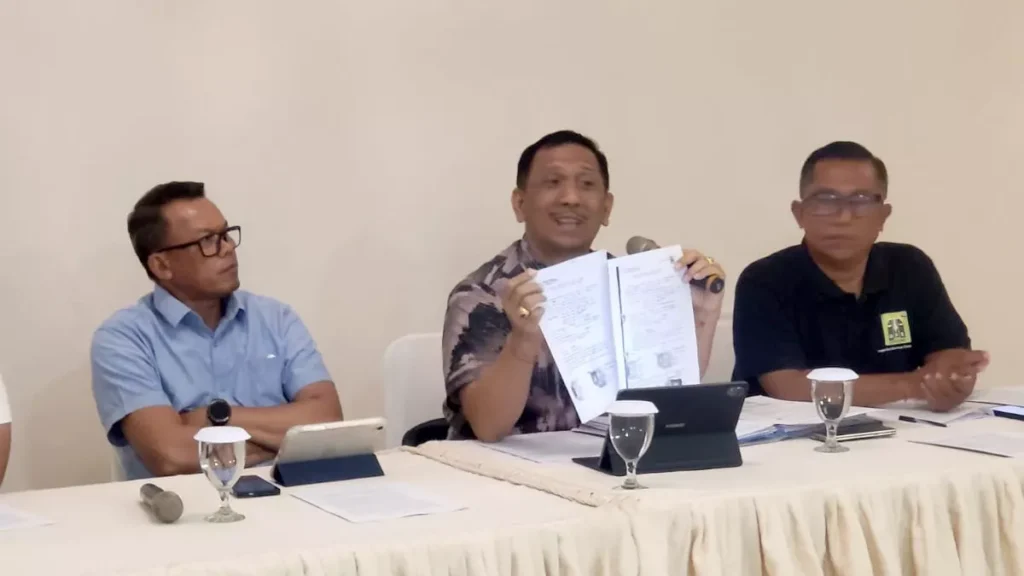
Daging’s legal team, led by Gede Pasek Suardika, argues that the dispute remains fundamentally a civil matter over competing land claims.
Suardika points to events on 5 January 2026, when his client was questioned and reiterated that land certificates could not be forcibly subdivided without a court ruling. On the same day, he says, a new criminal complaint was filed, reusing the same documents under a different legal accusation.
The lawyer also raised concerns about procedural speed. The police report was filed on 5 January, and within two days investigators issued a Letter of Investigation Order, formally opening a preliminary inquiry. Suardika described the pace as unusual for a case still at the investigative stage, suggesting it warranted public scrutiny.
Why This Case Matters Beyond the Courtroom
For many in Bali — including expatriates and foreign investors — land disputes are not abstract legal issues but practical concerns tied to ownership security and trust in institutions. This case underscores how long-running administrative disagreements can escalate into criminal proceedings, blurring legal boundaries in a region where land carries not only economic value but deep cultural meaning.
As the process continues, attention is likely to focus not only on whether wrongdoing occurred, but on how the legal system balances administrative authority, civil remedies, and criminal enforcement. For now, the case stands as a reminder that in Bali, the past often resurfaces — sometimes decades later — in ways that test both law and governance.