


































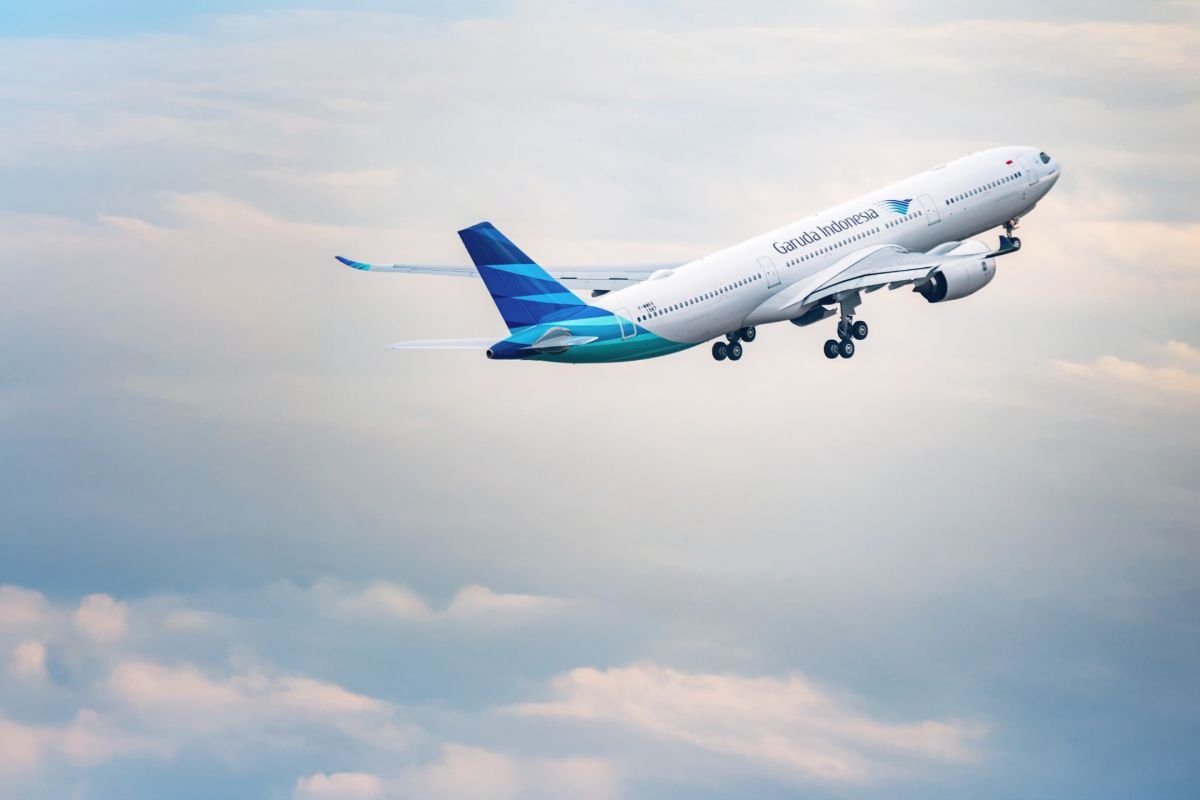
JAKARTA — Indonesia’s national carrier, Garuda Indonesia, is preparing to raise domestic ticket prices after the government approved a fare adjustment of between 9 and 13 percent, a move likely to affect travel costs across the country, including routes to and from Bali.
The policy, reported by detikFinance, is outlined in Transportation Ministry Decree No. 83 of 2026, which allows airlines to adjust fuel surcharge components for domestic economy-class passengers.
For travelers — particularly expatriates and frequent visitors to Bali — the shift signals a broader recalibration of Indonesia’s aviation sector, where rising operational costs are increasingly being passed on to consumers.
Balancing Costs and Accessibility
Garuda Indonesia’s chief executive, Glenny Kairupan, said the airline would implement the increase in a “measured and proportional” manner, emphasizing compliance with regulatory guidelines.
“We will adjust ticket prices carefully, while maintaining transparency and adhering to existing regulations,” he said in a written statement on April 8.
The airline is also expected to review fares regularly, reflecting ongoing fluctuations in global fuel prices — a key driver of airline operating costs.
Behind the policy lies a significant rise in fuel surcharge rates, which have increased by up to 38 percent for both jet and propeller aircraft. This adjustment forms part of a broader effort to stabilize airline operations in a volatile global energy environment.
Government Measures to Offset the Impact
To cushion the effect on passengers, the Indonesian government has introduced several countermeasures.
Among them is a value-added tax incentive, with the 11 percent VAT on domestic economy-class tickets being temporarily covered by the state. The policy aims to keep fares within reach for the public, even as underlying costs increase.
In addition, import duties on aircraft spare parts have been reduced to zero percent — a move designed to strengthen Indonesia’s maintenance, repair, and overhaul (MRO) industry and improve long-term efficiency in the aviation sector.
What It Means for Bali Travelers
For Bali, one of Indonesia’s busiest air travel hubs, the adjustment is unlikely to disrupt connectivity but may subtly reshape travel behavior.
Short-haul domestic routes — often used by tourists connecting from Jakarta or Surabaya — could become marginally more expensive, particularly during peak travel periods. For expatriates and long-stay visitors, the changes may translate into higher routine travel costs across the archipelago.
At the same time, Garuda Indonesia said it is exploring operational adjustments, including optimizing flight frequencies and schedules on selected routes, in an effort to maintain capacity and service reliability.
A Wider Industry Shift
The fare adjustment reflects a broader trend across the global aviation industry, where airlines are navigating a complex mix of rising fuel prices, geopolitical uncertainty, and shifting demand patterns.
Indonesian authorities describe the policy as a strategic step — one that seeks to balance business sustainability with public access to air travel.
For passengers, the message is more immediate: ticket prices may be rising, but the system around them is being recalibrated to keep the skies — and destinations like Bali — within reach.