









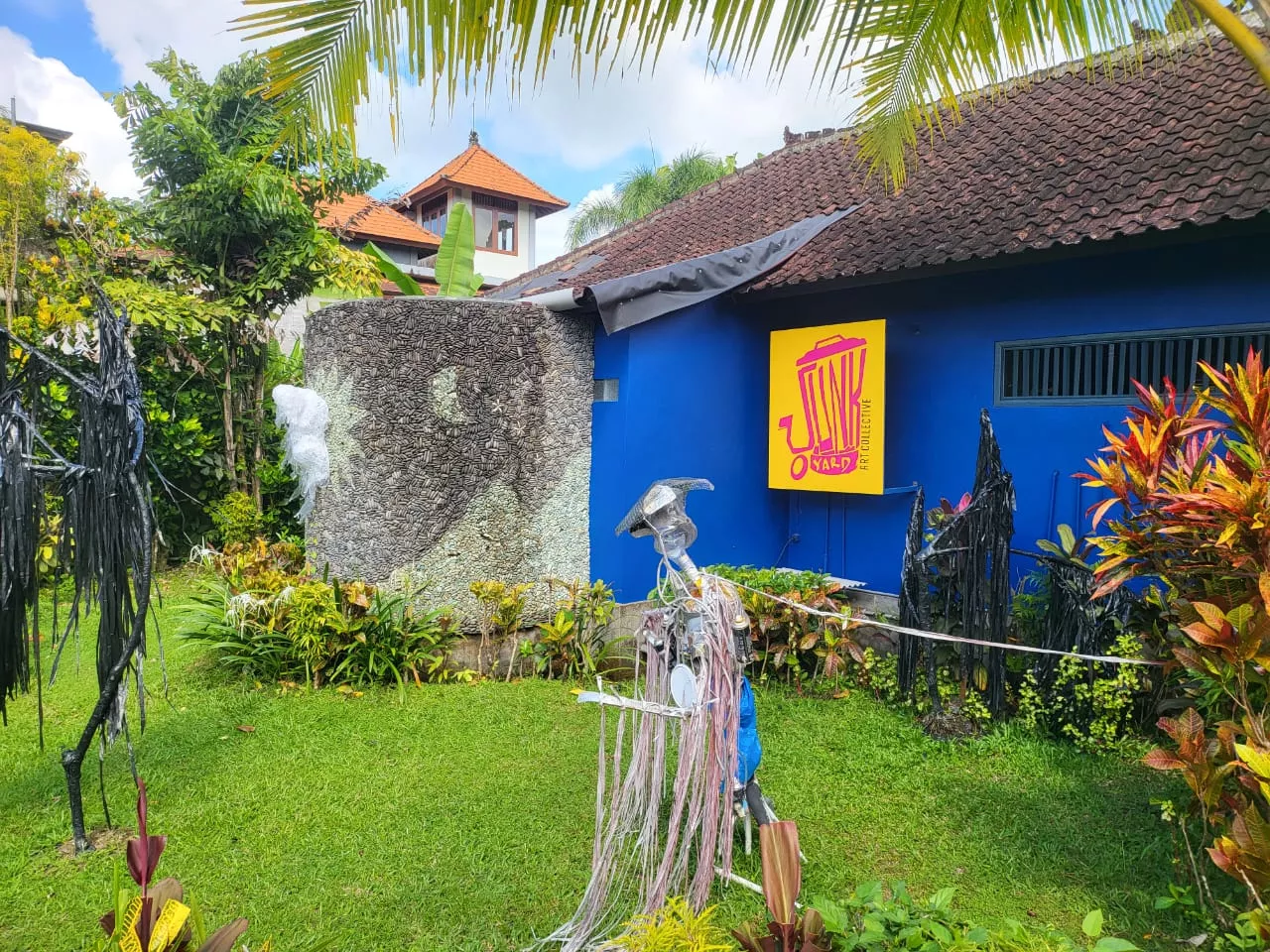
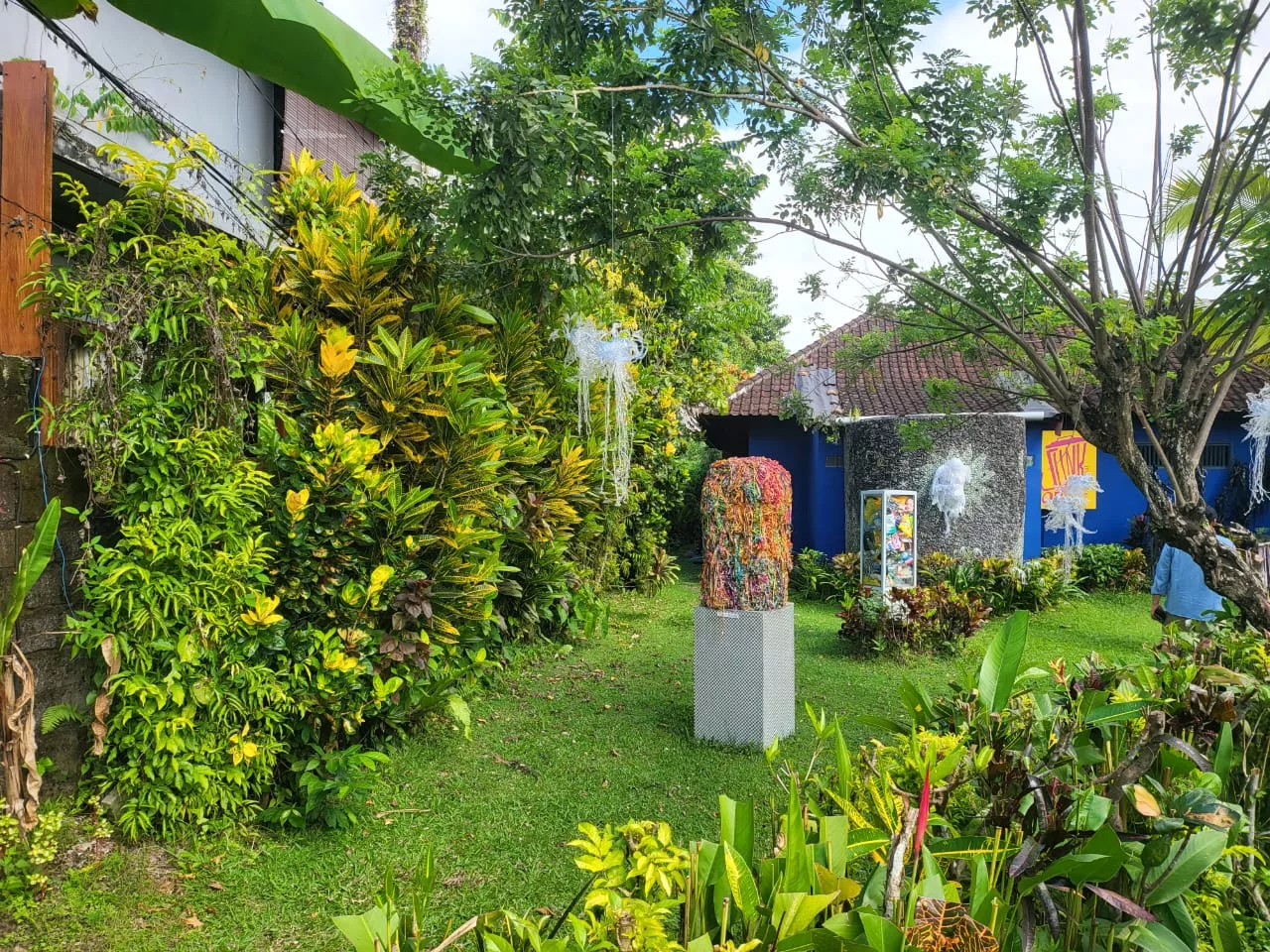
UBUD. The jellyfish has no business being here.
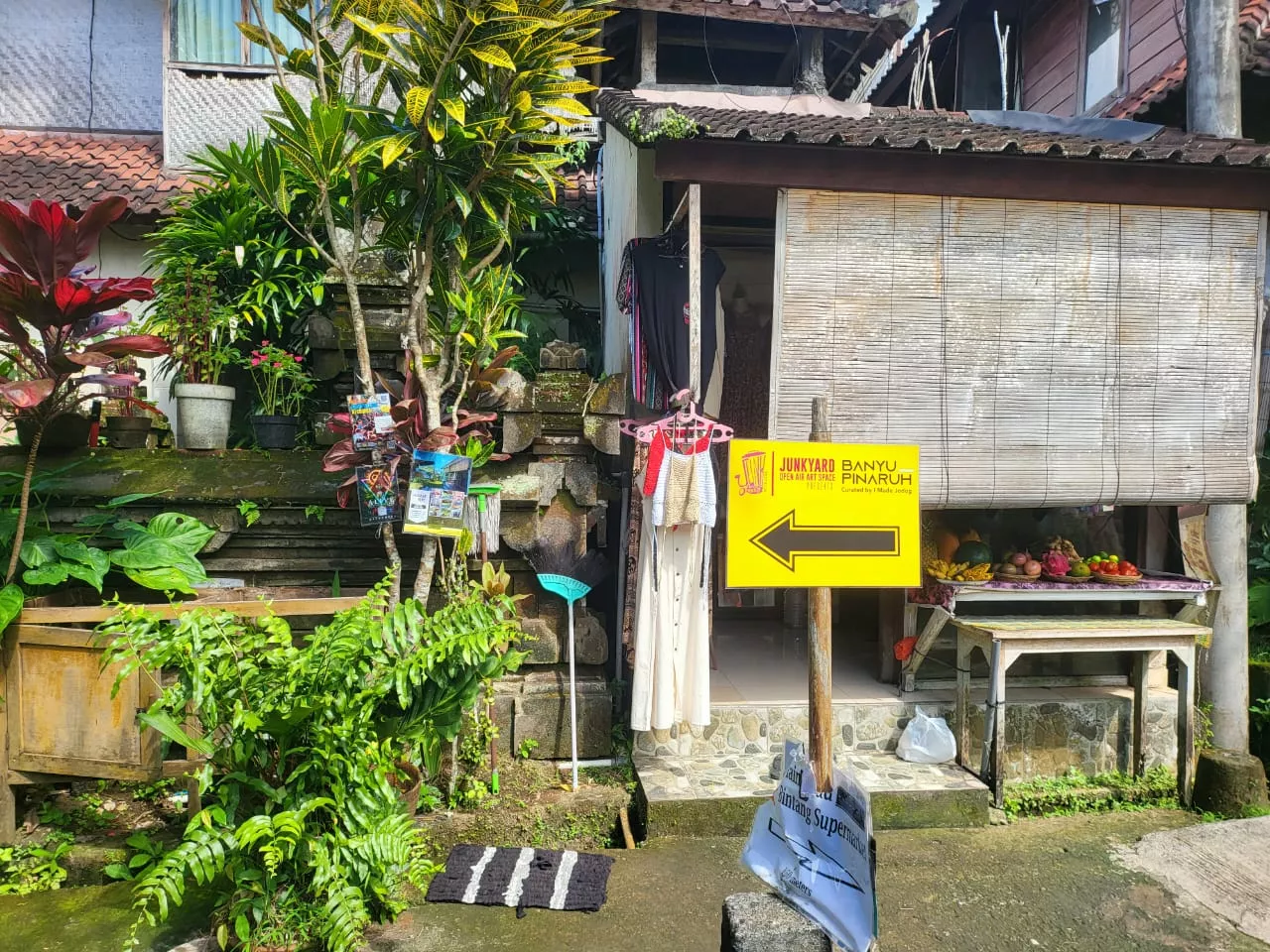
This is not the ocean. There is no salt water, no reef, no current. This is a narrow alley off Jalan Raya Sanggingan, behind a row of shops and cafes, in the middle of Bali’s most famous tourist town.
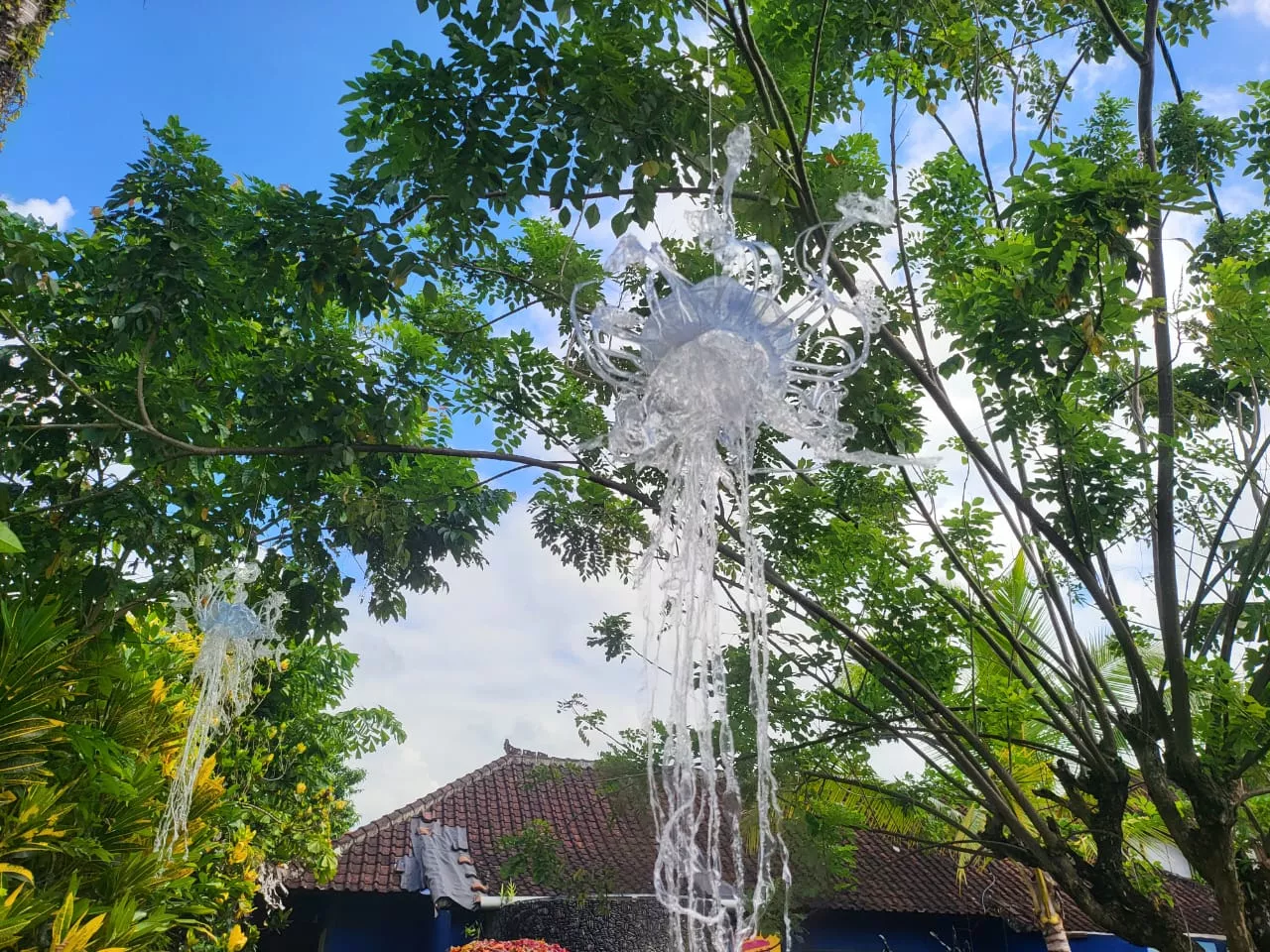
But the jellyfish floats anyway. It is massive. Translucent. Beautiful in the way that dangerous things often are.
It is made entirely from plastic bags.
A fan blows from below. The creature stirs. It drifts toward you. And if you stand still long enough to really look, something strange happens: you forget it is garbage.
That is the point.
Welcome to the Junkyard
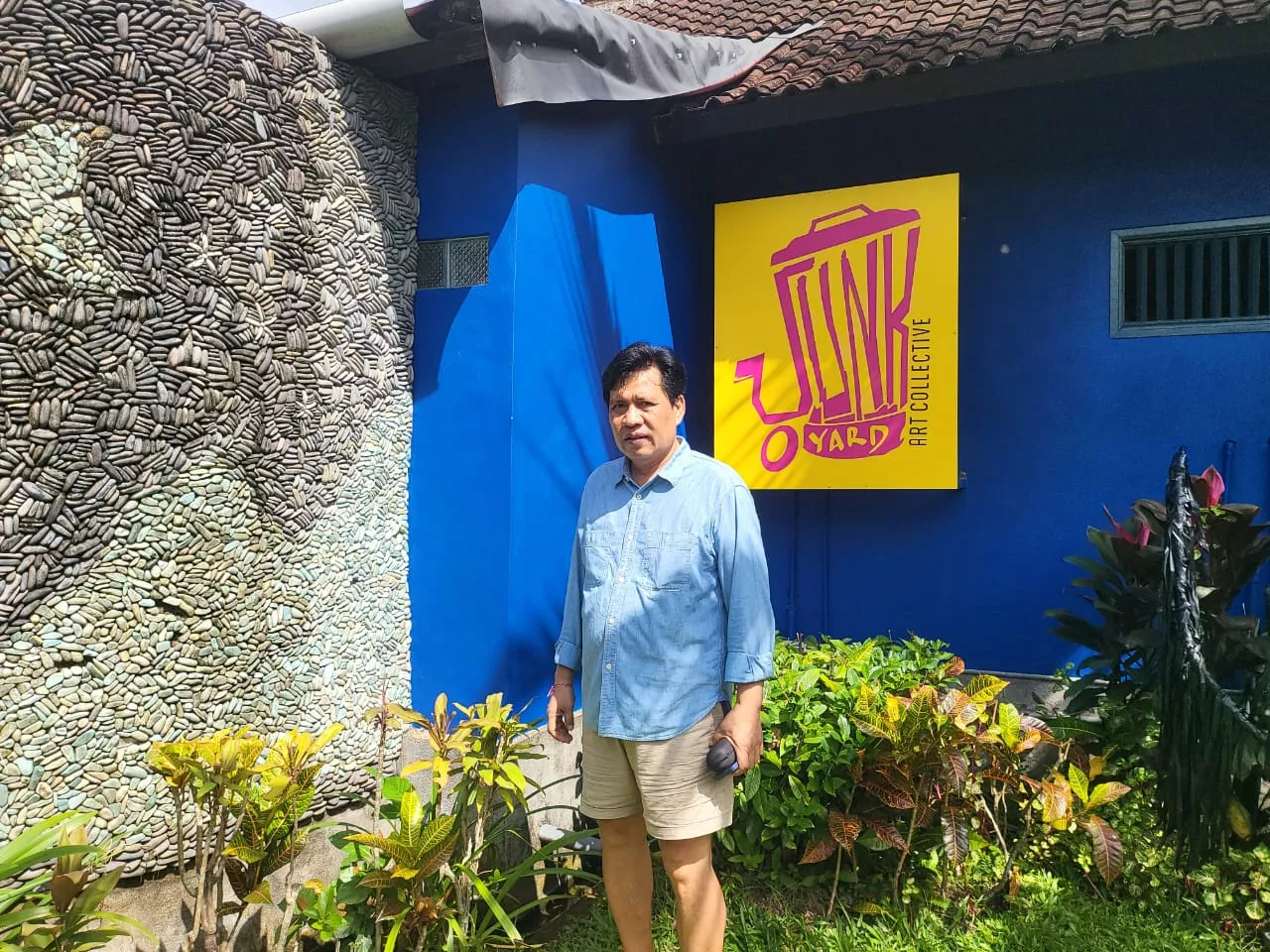
The sign outside is small. Easy to miss. No neon. No hype. Just a name: Junkyard Collective Bali.
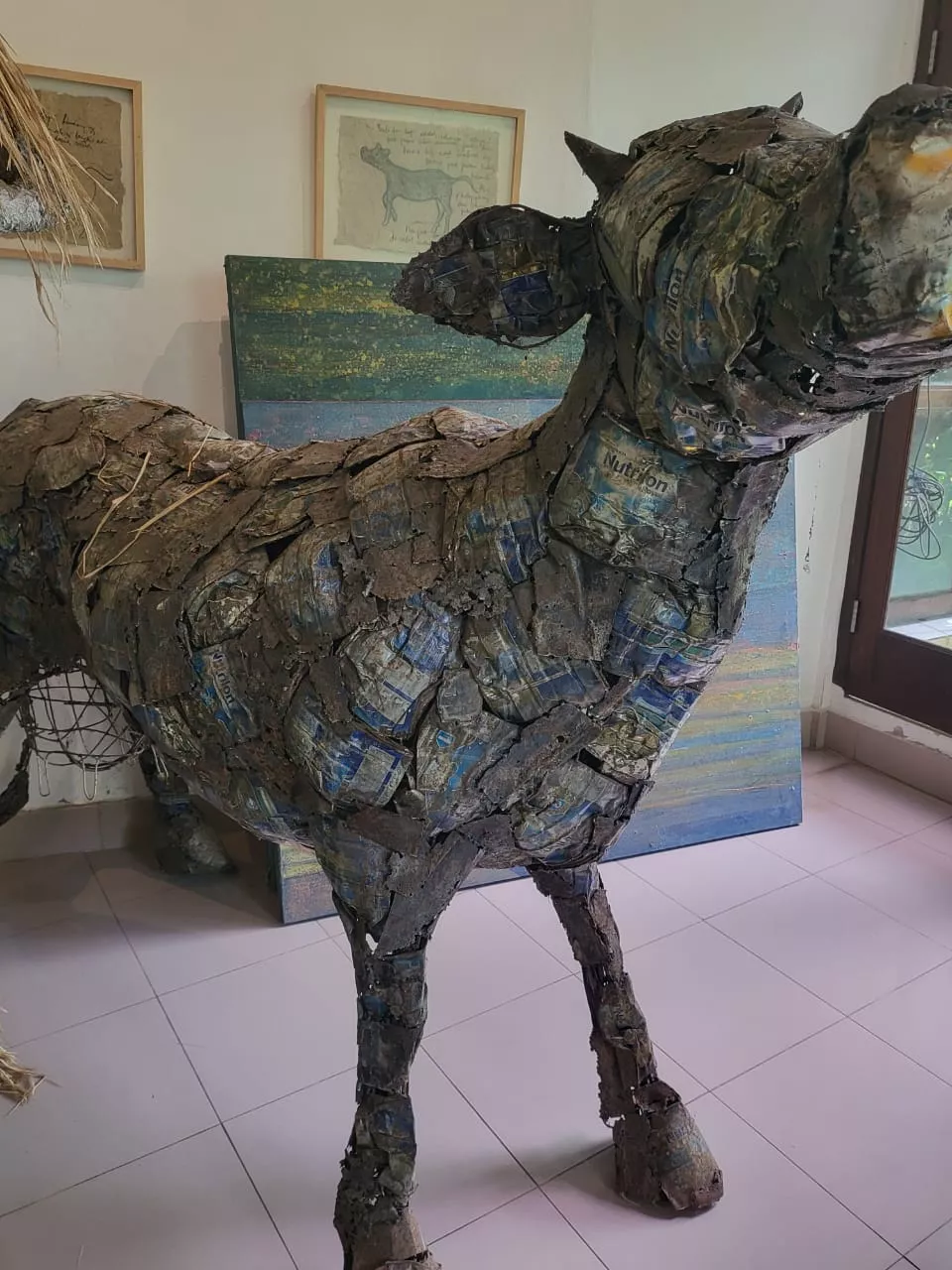
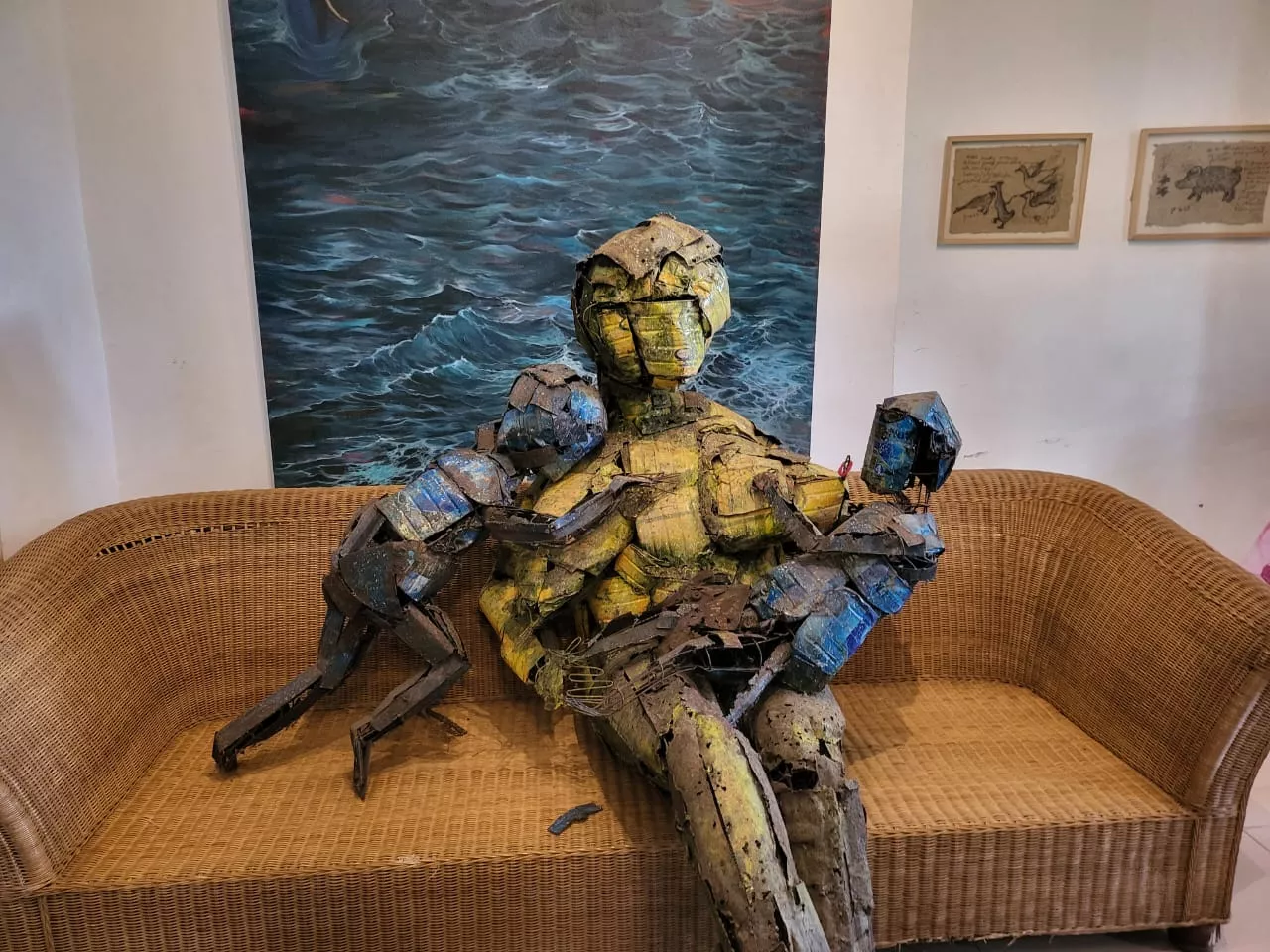
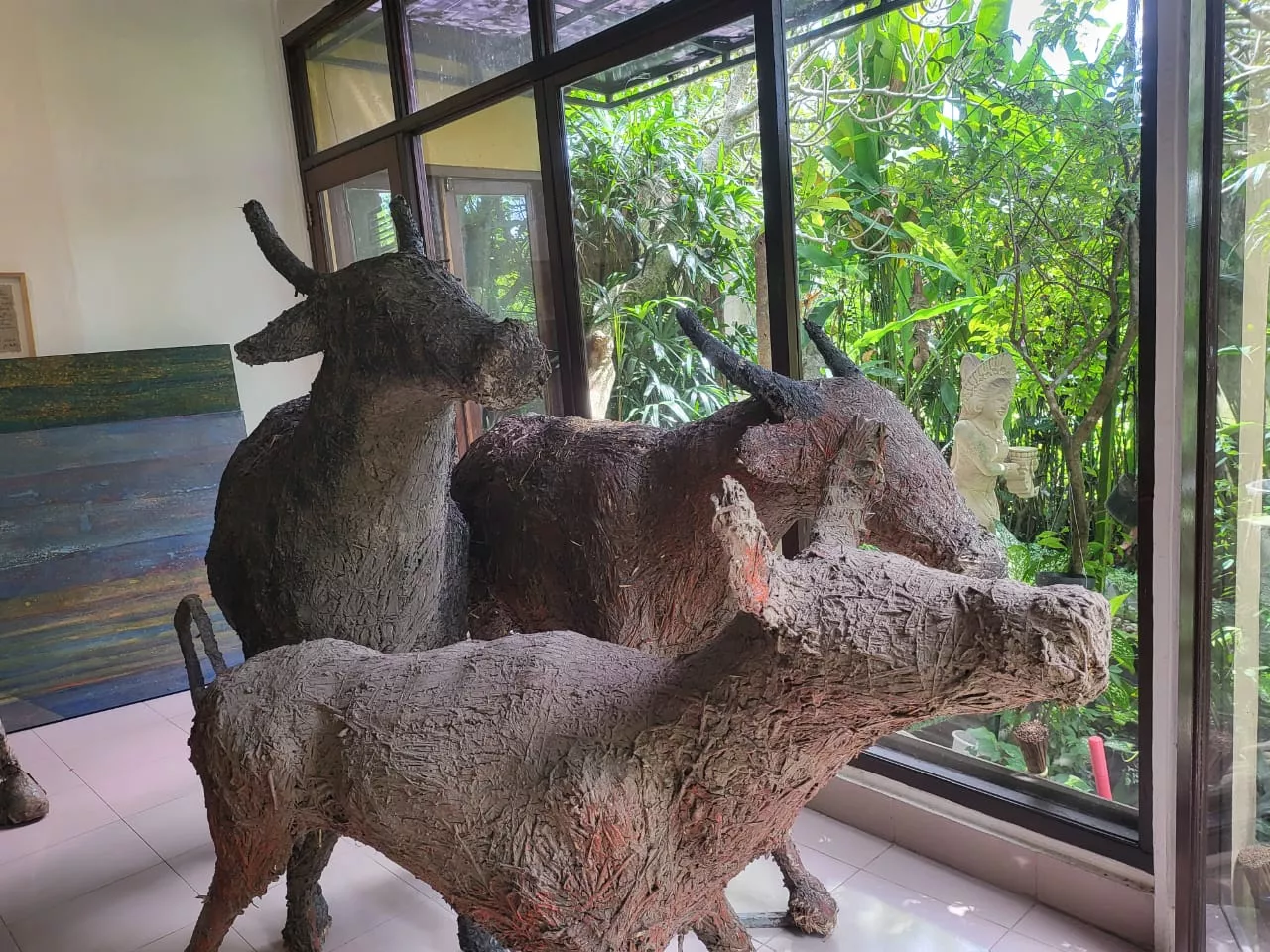
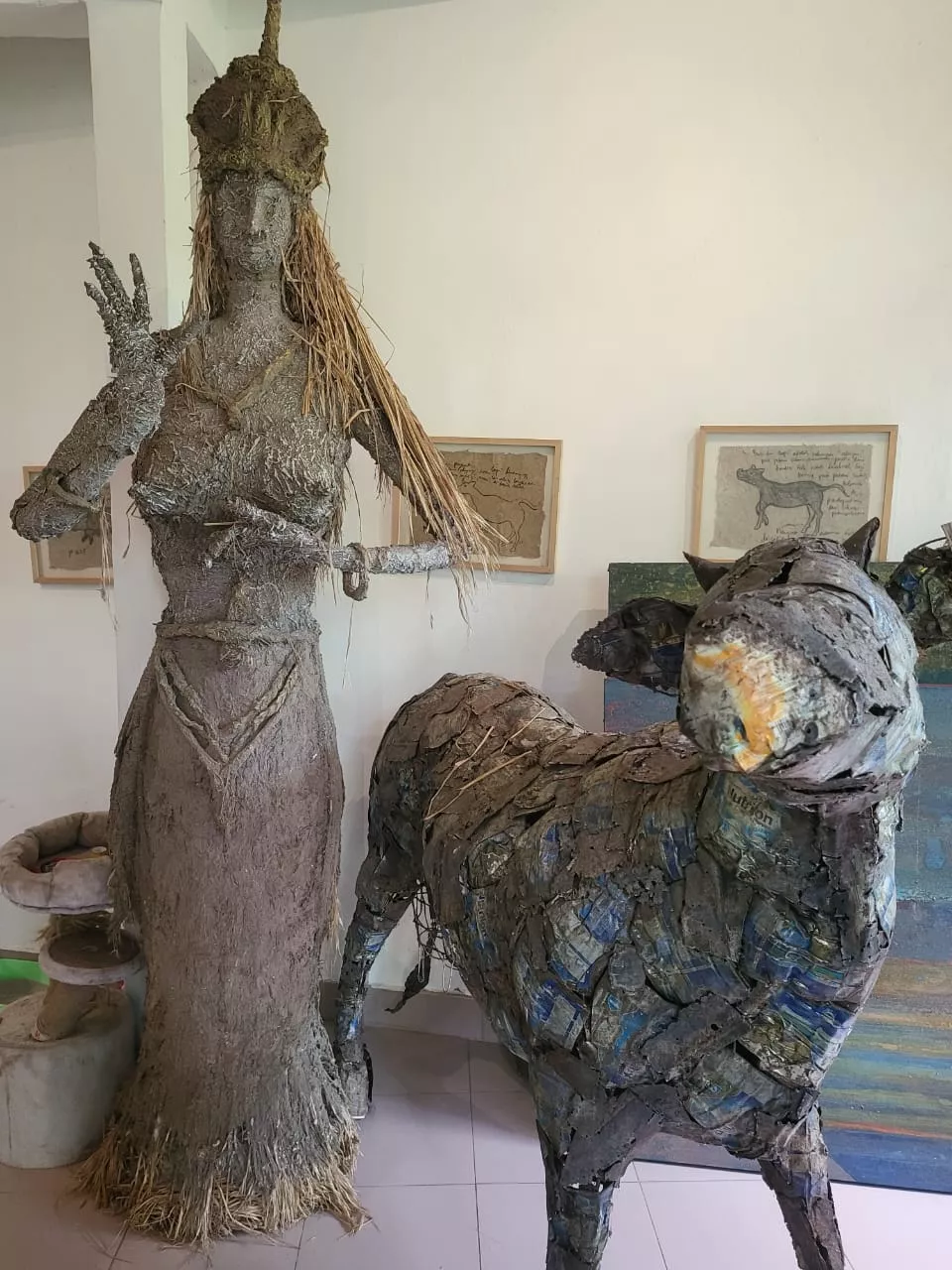
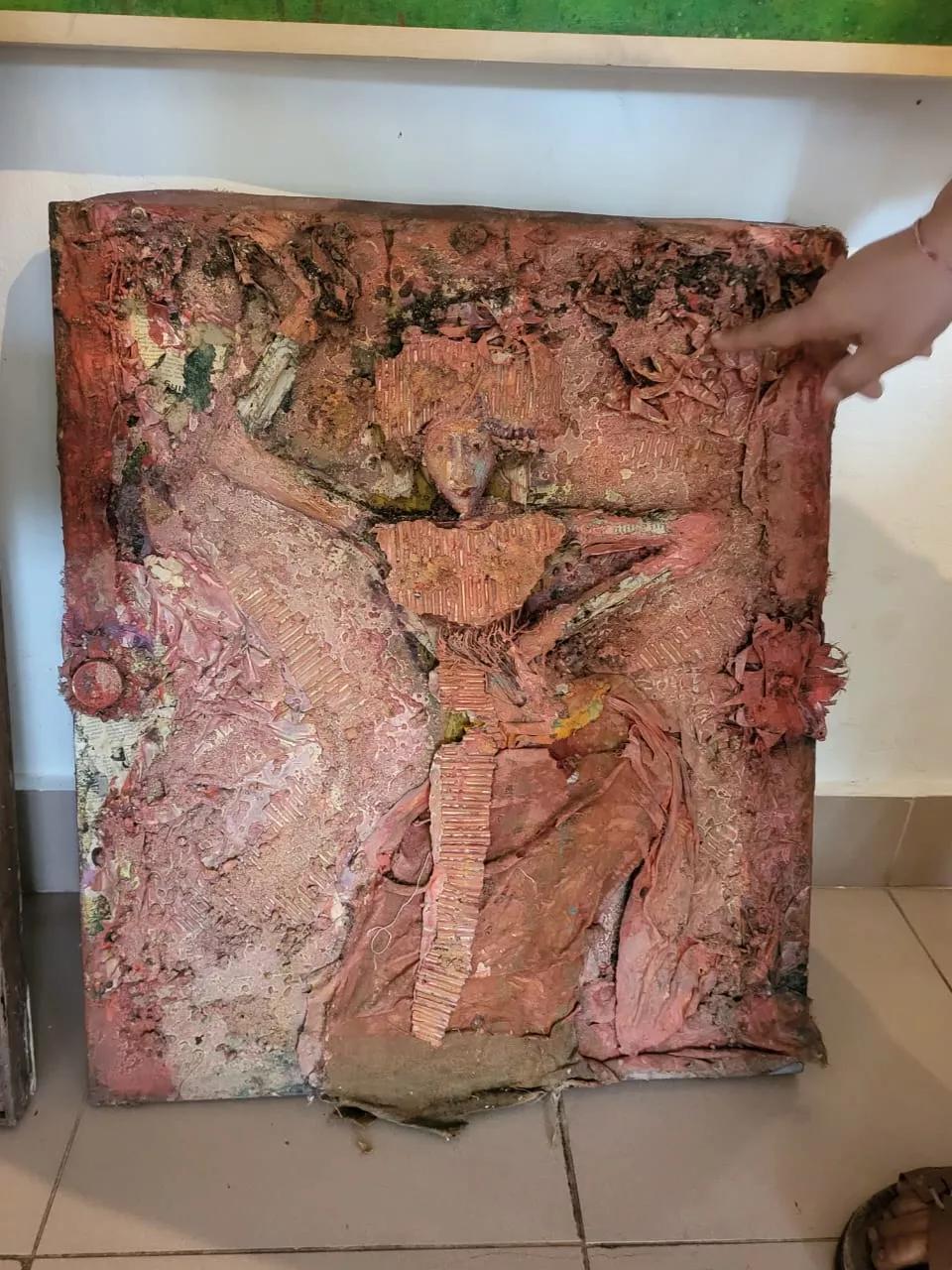
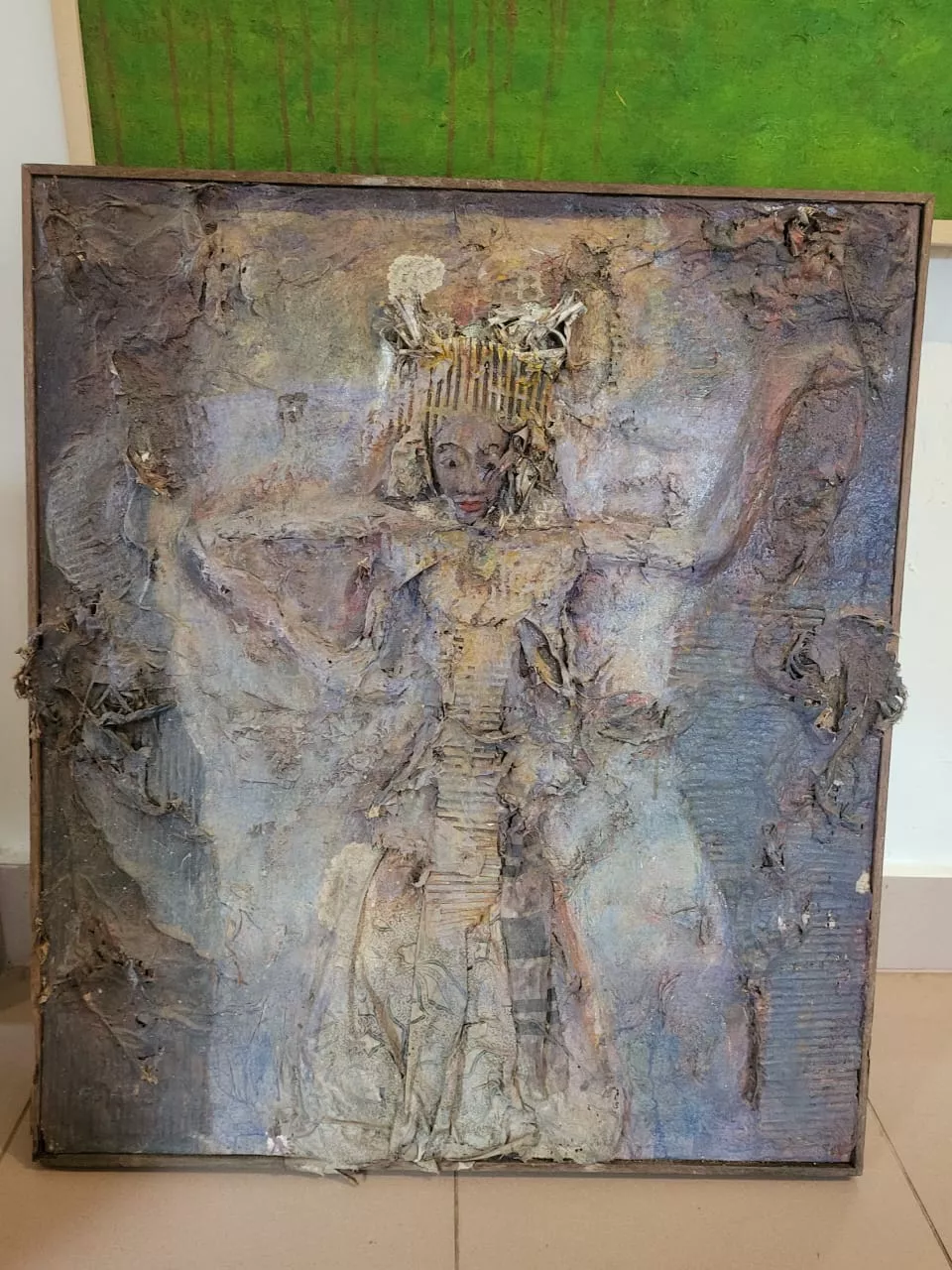
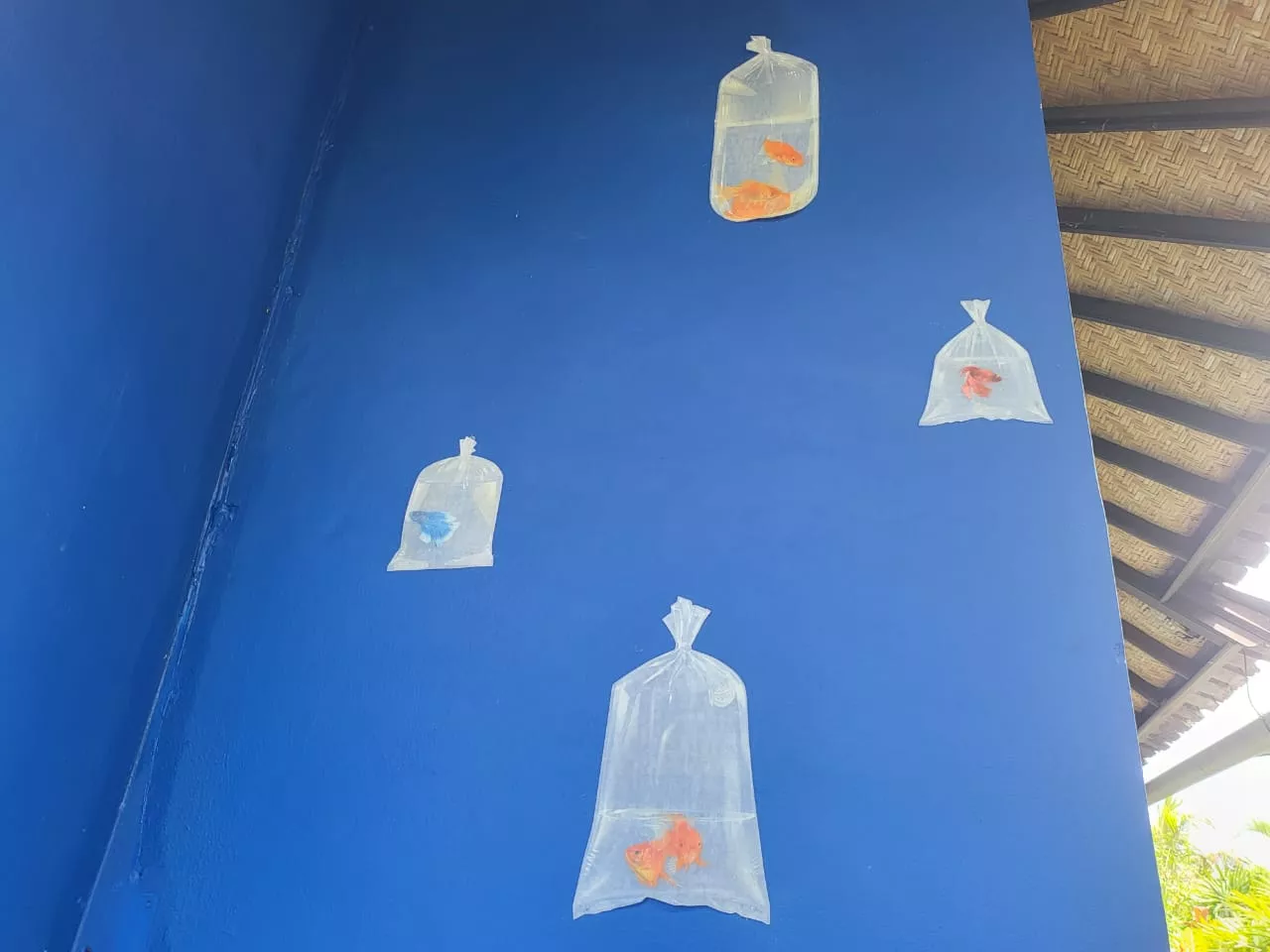
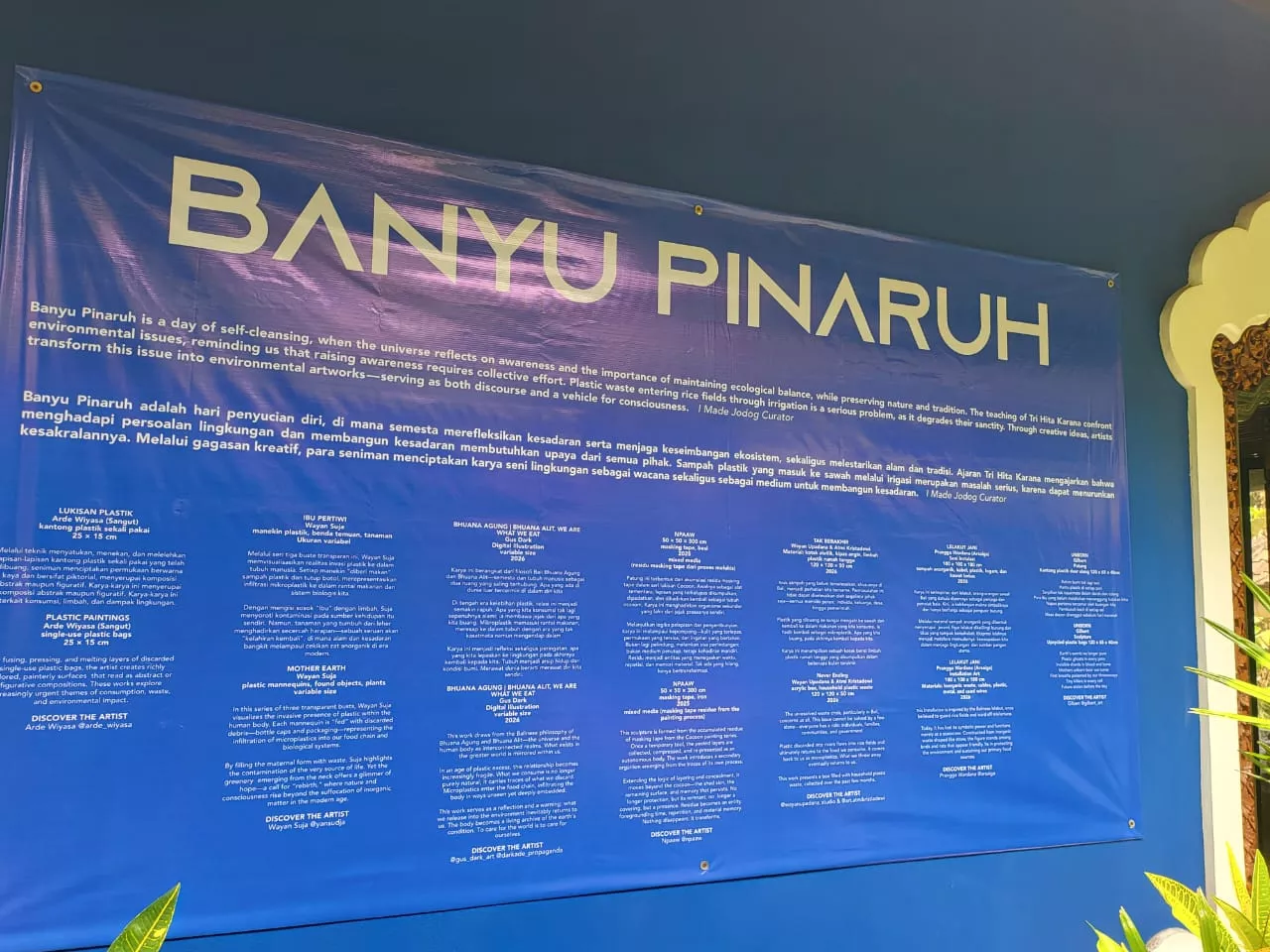
Inside, a single room. Walls covered in art. Sculptures hanging from the ceiling. A faded sofa in the corner. No reception desk. No cash register. No prices.
Eight artists, some Balinese, some from abroad, have turned this space into a gallery. But gallery is the wrong word. Gallery suggests commerce. Gallery suggests white walls and champagne openings.
This is something else.
This is a warning.
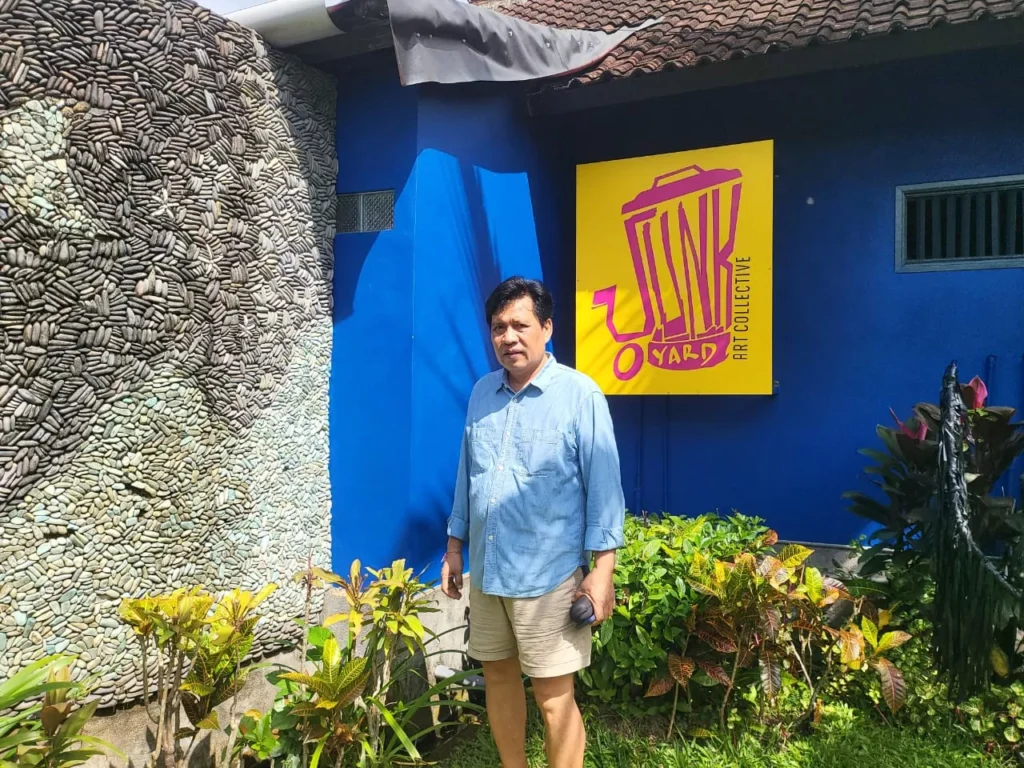
“We are not here to sell anything,” said Dr. I Made Jodog, a man who could easily be in a university office or an international art biennale but has chosen, instead, to stand in this small room on a Tuesday afternoon, explaining plastic to strangers.
Jodog is the Vice Rector of the Indonesian Institute of the Arts (ISI) Bali. He holds a doctorate. His sculptures have been exhibited overseas. He was an artist in residence in Perth.
He is also, for the past 25 years, obsessed with garbage.
The Long Unraveling
Jodog’s story begins in the late 1990s. He was young. He was elected to lead a youth organization in his village. The river below his family home was a ribbon of trash. Plastic bags tangled in the bamboo. Bottles floated past like slow motion disasters.
He organized cleanups. He educated neighbors. He watched tourists wrinkle their noses at the smell.
And he cleaned again. And again.
“The problem never went away,” he said. “It only got worse.”
At some point, he stopped thinking of plastic as waste. He started seeing it as material. He made sculptures from discarded bottles. Reliefs from shredded packaging. Paintings from the colorful wrappers that collect in drainage ditches after a storm.
He was not trying to be political. He was just making art. But the art kept circling back to the same question: where does all this plastic go?
The answer, he learned, is everywhere.
The Invisible Invader
Here is what Jodog wants you to understand.
Plastic does not disappear. It breaks down. Into smaller pieces. And smaller. And smaller. Until it becomes microplastic, invisible to the naked eye, but very much present.
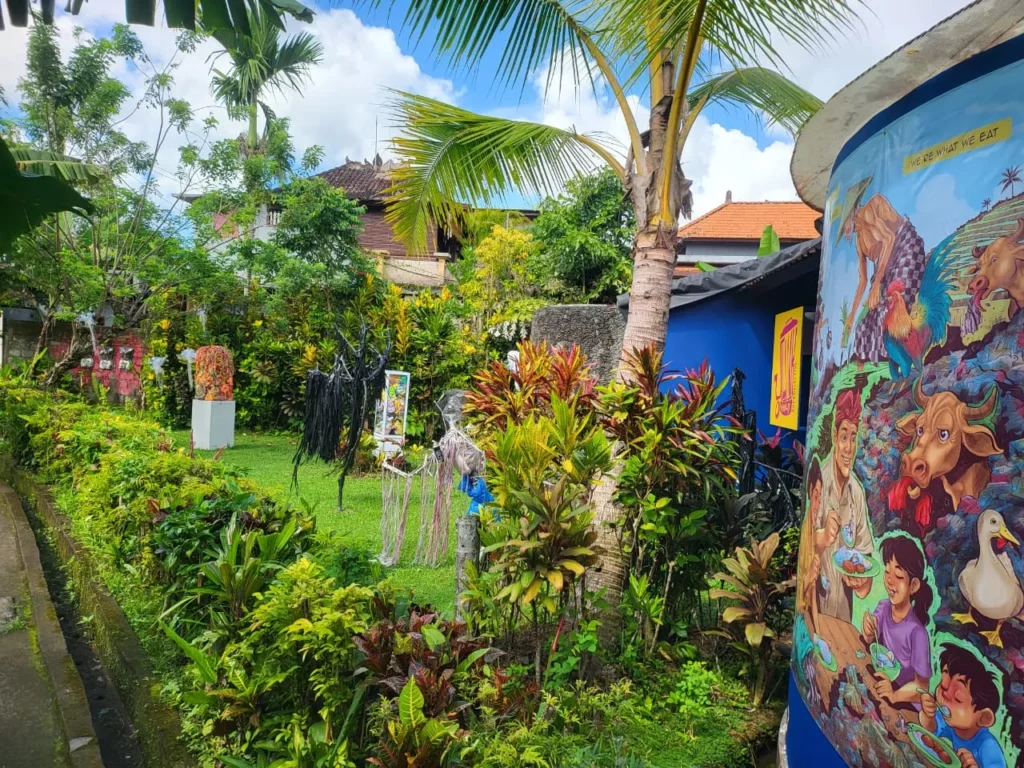
Rain carries it into rivers. Rivers carry it into rice fields. Rice fields are flooded for planting. The water soaks into the soil. Microplastics enter the roots. They travel up the stalks. They settle inside the grains.
Then the rice is harvested. Cooked. Served.
And eaten.
“Once it becomes microplastic, it is absorbed by the plants, enters the rice grains, and finally becomes our own food,” Jodog said. He did not raise his voice. He did not need to. The sentence was already terrifying enough.
In Bali, this is not an abstract problem for environmental scientists. Many farmers grow rice for their own families. The same person who throws a plastic wrapper into a ditch may, months later, serve rice from that same ditch to their own children.
“This is not just about pollution,” Jodog said. “This is about health. This is about survival. This is about the food you put in your mouth.”
Eight Voices
Jodog is the elder of the group. But he is not alone.
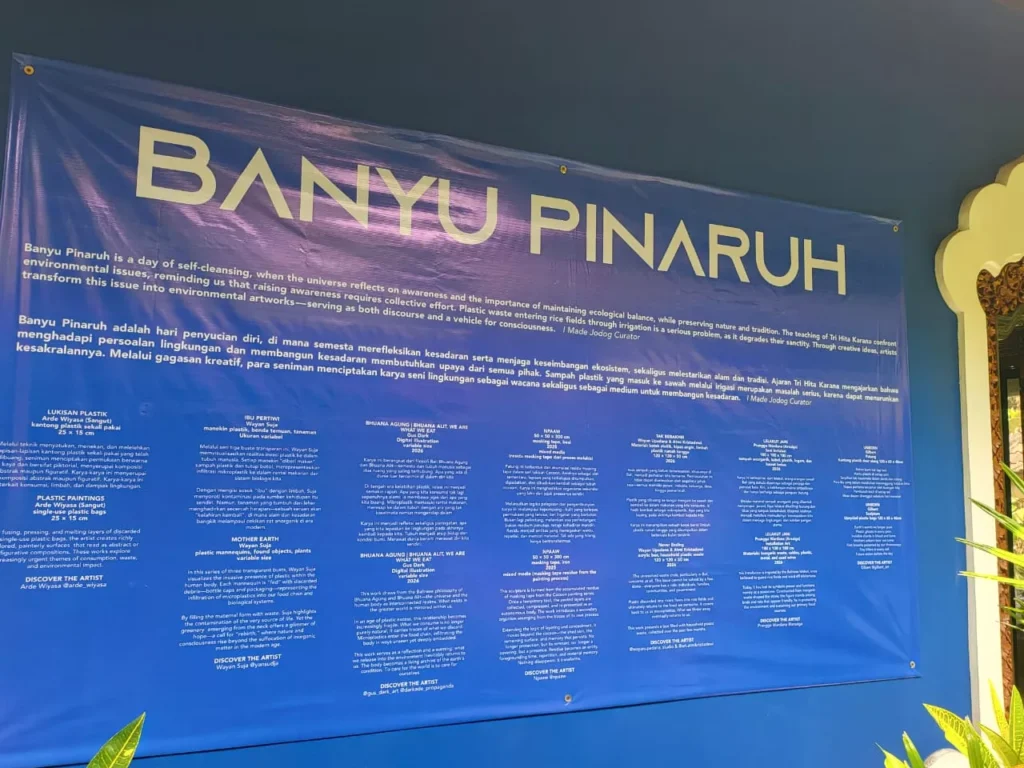
The Junkyard Collective brings together eight artists, each with their own language, their own medium, their own way of making you stop and think.
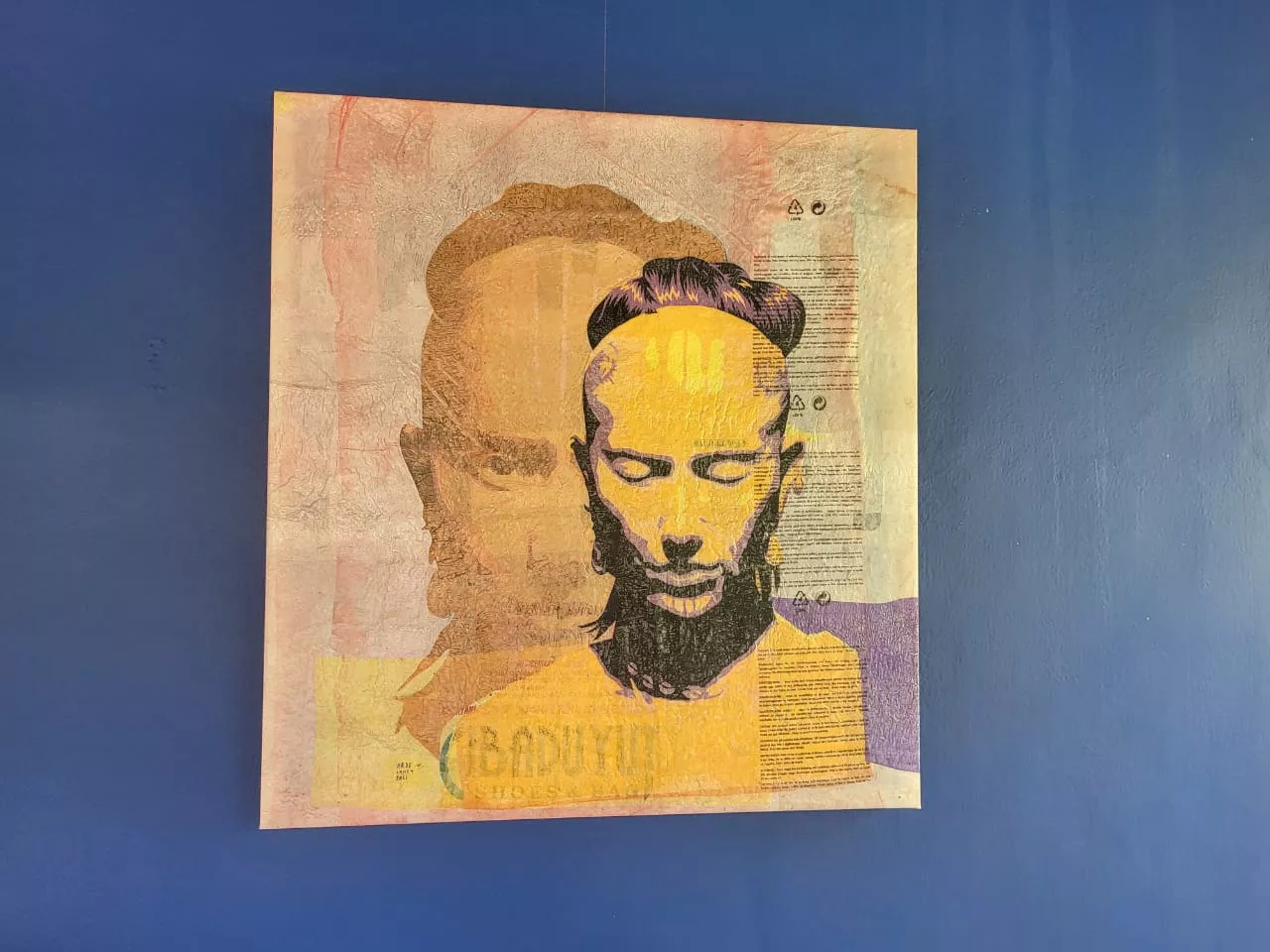
Arde, a former student of Jodog at ISI Bali, has spent years perfecting a technique of layering and heating plastic sheets until they fuse into something resembling painted canvas. His works are quiet, almost meditative. But the subject matter is not. A woman’s face. A child. A landscape. All rendered in material that was never meant to be beautiful.
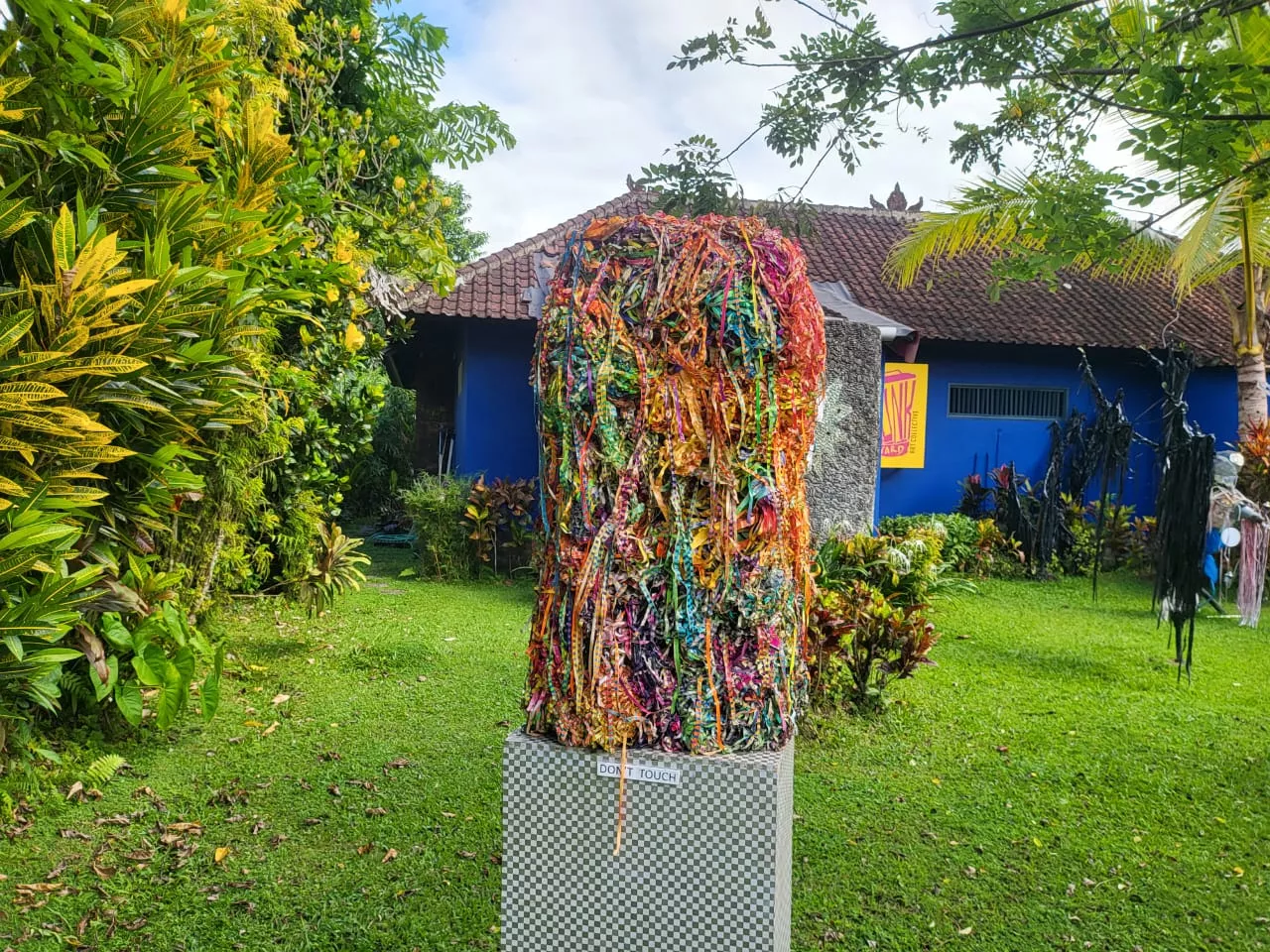
Arta Wijaya works differently. He collects trash from his immediate surroundings, his street, his neighbor’s yard, the drain behind his house, and arranges it into abstract compositions. The colors are startling: reds and greens and blues that should not work together but do. His message is simple: you do not need to travel far to find the problem. It is already at your doorstep.
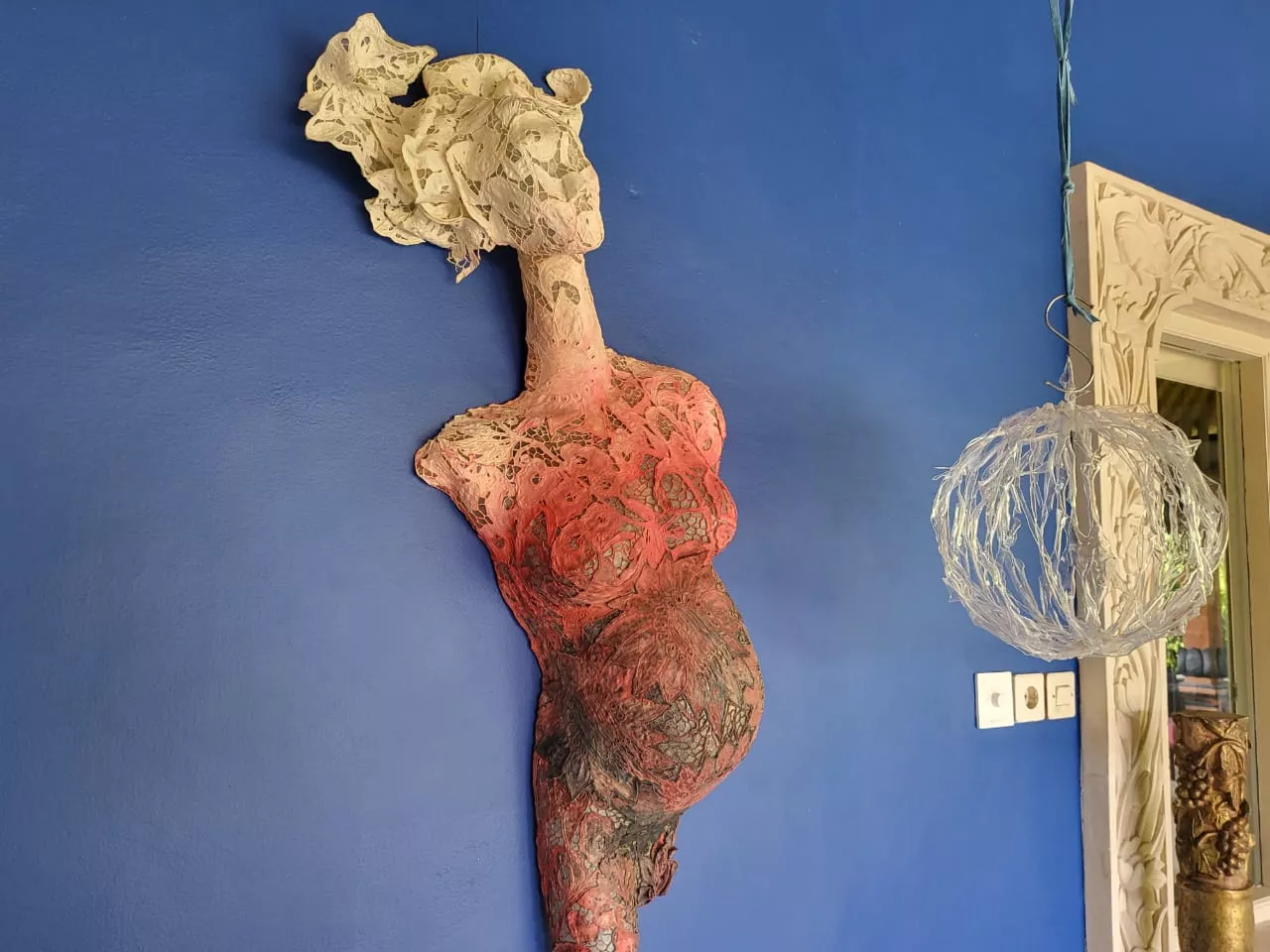
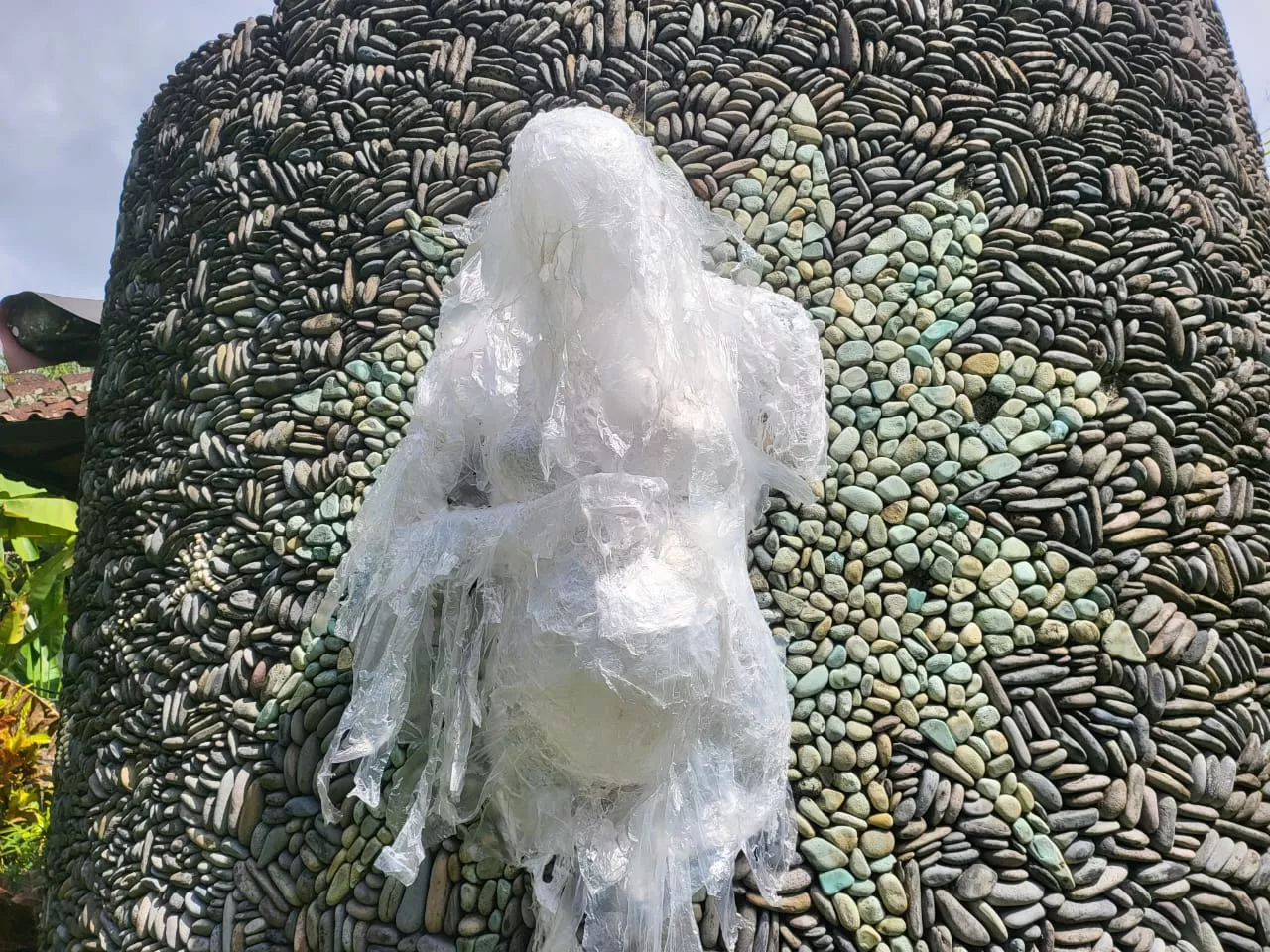
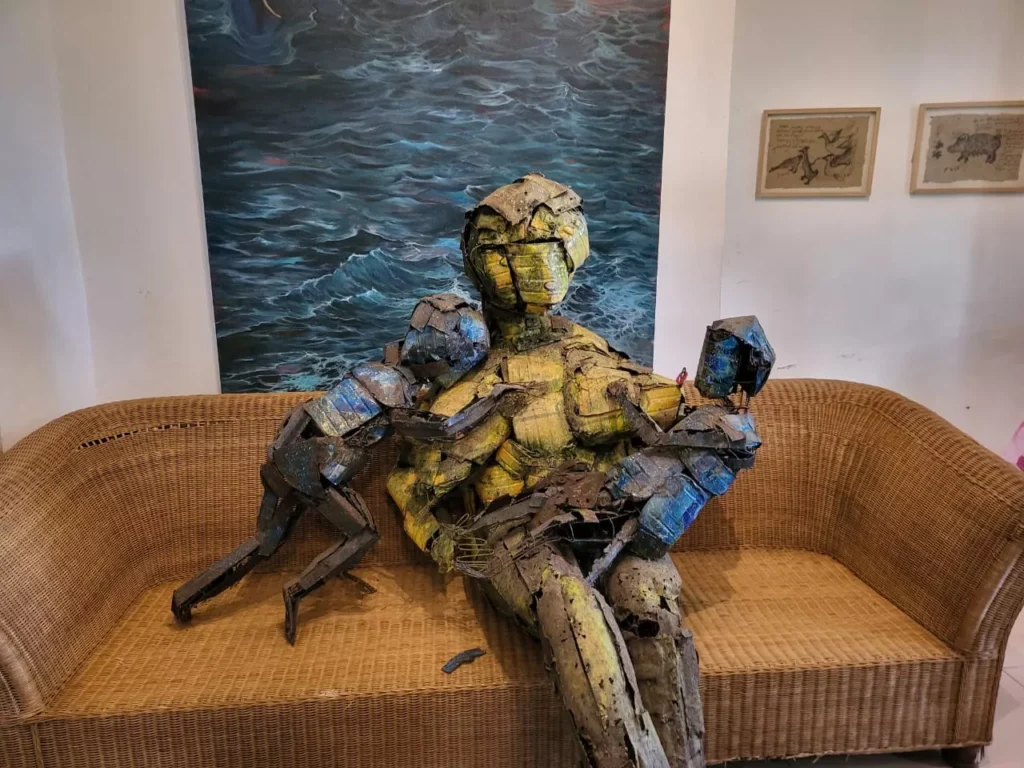
Wayan Suja builds female figures that represent the earth. The bodies are curved, fertile, maternal. But beneath them, plastic has taken root like weeds. The roots are tangled. Inevitable. And on top of the figures, Suja plants real vegetables, chilies and eggplants, that will grow while the exhibition is open. The message is unmistakable: the food we eat grows inside the waste we create.
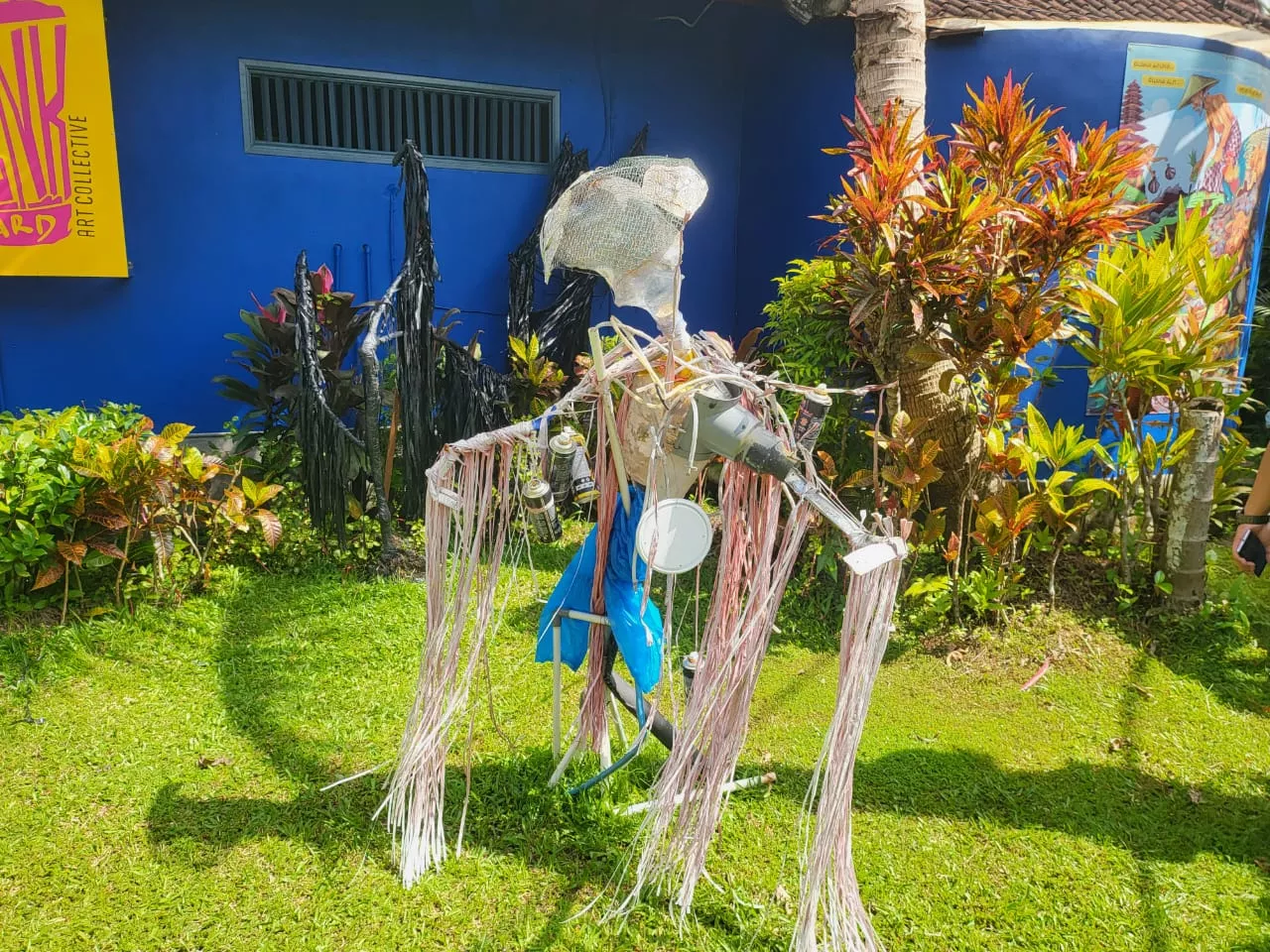
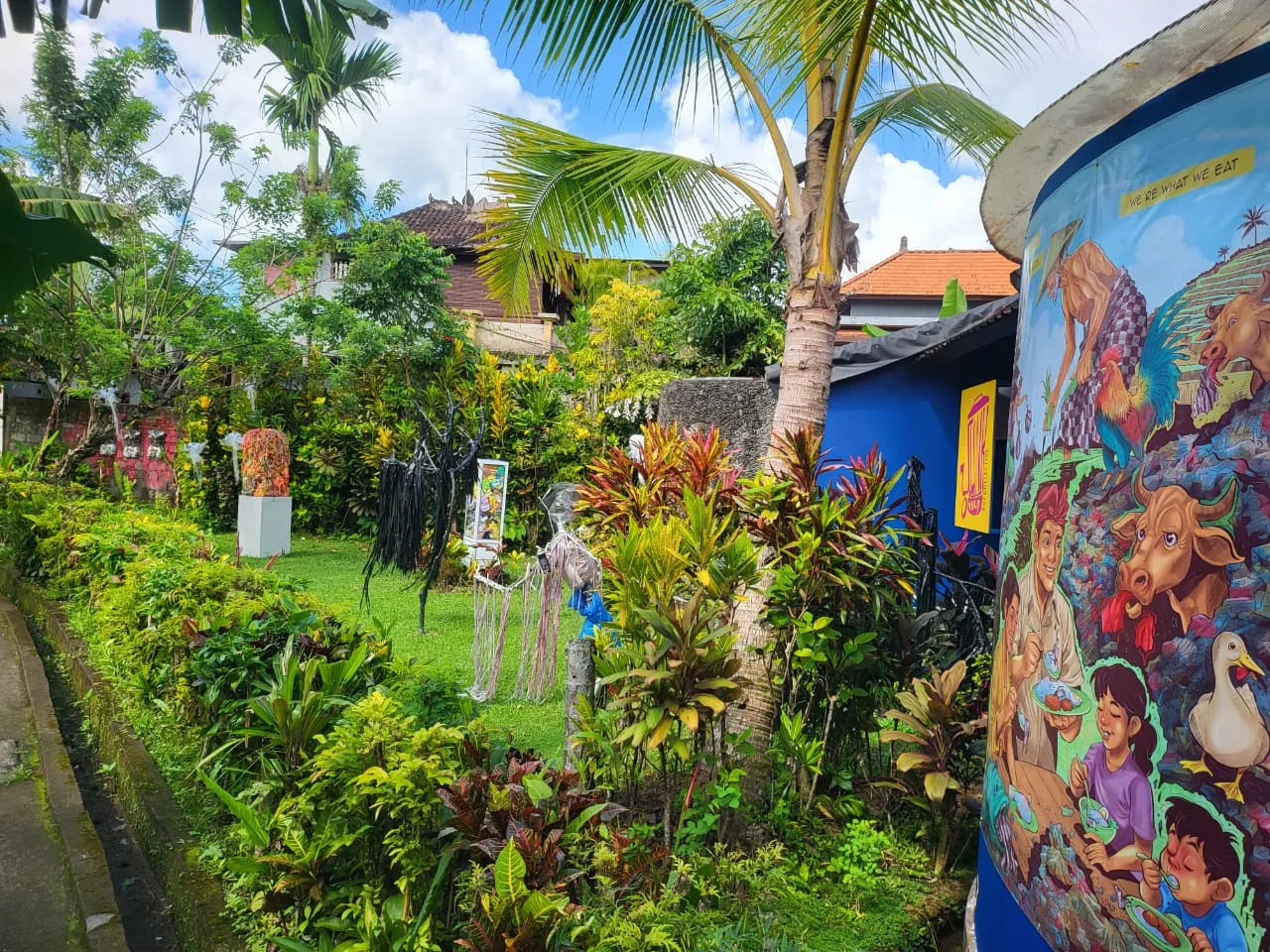
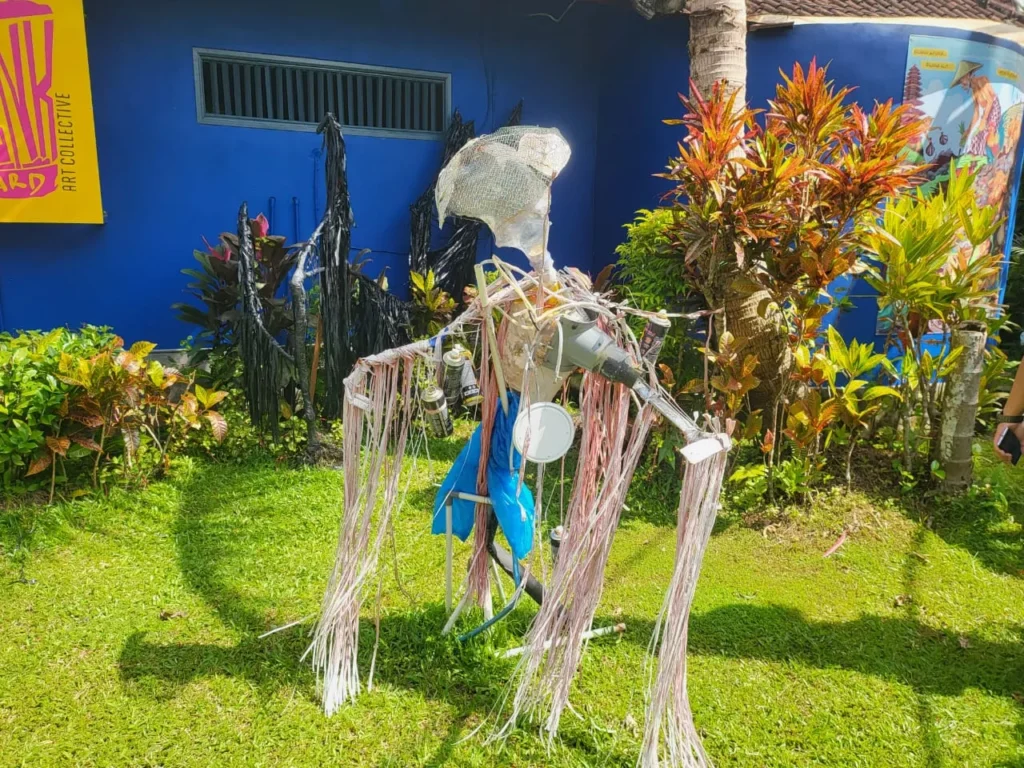
Prangawardana took a different approach. He built a lelakut, a traditional Balinese scarecrow, guardian of the rice fields, protector of Dewi Sri, the goddess of rice. But his lelakut is made from plastic. It stands in the corner of the gallery, watching. He wants to restore a sense of fear. Not terror. Just enough fear to make you hesitate before throwing a wrapper into a ditch.
Gustak creates illustrated manuscripts, almost like ancient scrolls, tracing the journey of plastic from field to table. The drawings are detailed, almost scientific. But there is something medieval about them, a warning, like a plague illustration, from a time when people believed that what you could not see could still kill you.
And then there is the jellyfish.
The Sting
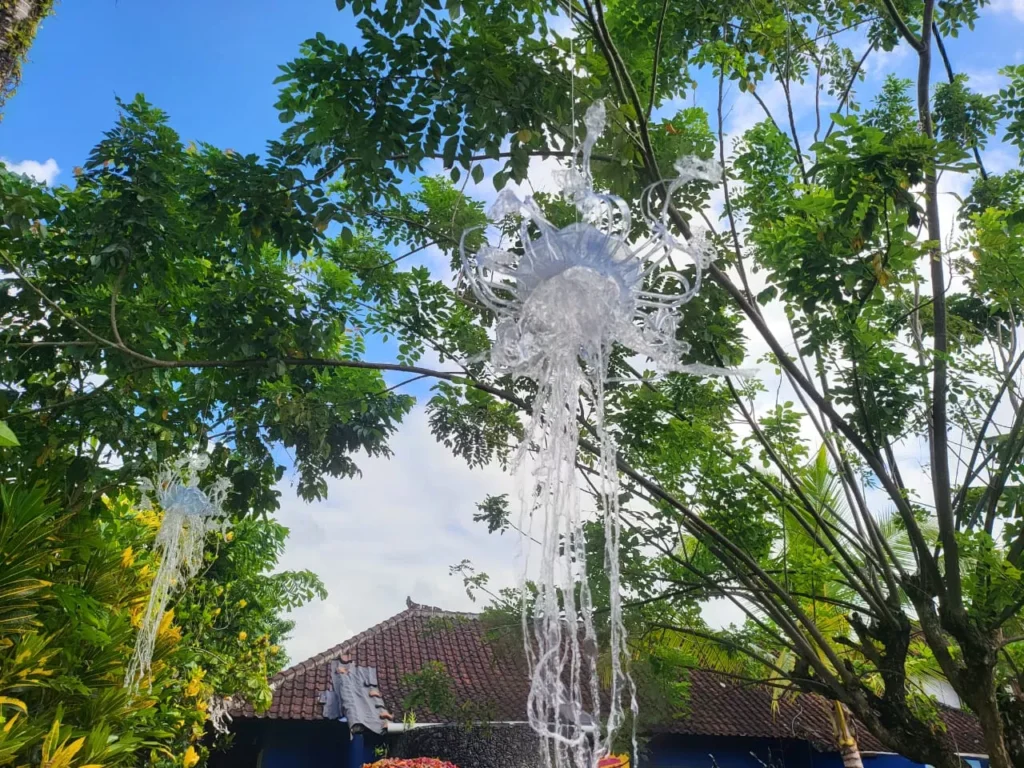
The jellyfish belongs to no single artist. It is a collective creation. Plastic bags, cut and shaped and suspended. A fan below. A slow, hypnotic dance.
Jodog watches it move. He is quiet for a moment.
“When a jellyfish stings you, you wake up,” he said. “This jellyfish is meant to sting your consciousness.”
He paused.
“Most people walk past plastic every day and do not see it anymore. It has become invisible. We want to make it visible again.”
No Price Tags
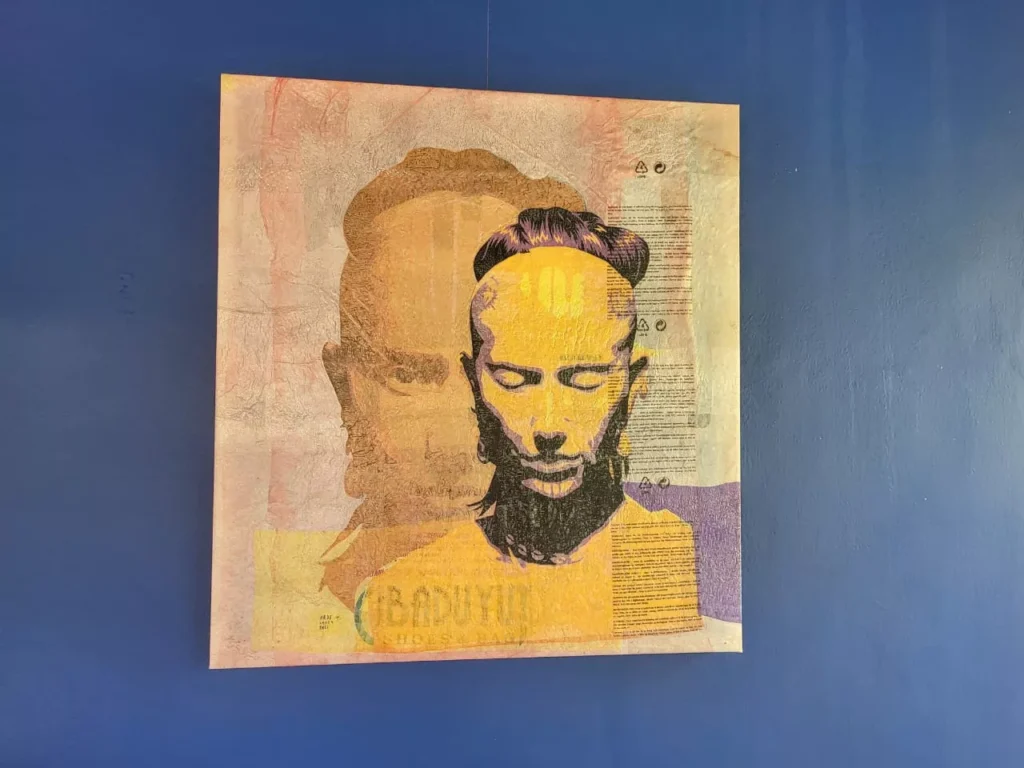
There is something almost defiant about the Junkyard Collective’s refusal to sell.
In Ubud, art is commerce. Galleries display paintings with discreet red dots. Sculptures come with price lists. The market determines value.
Not here.
None of the works are for sale. The artists fund the space themselves. They have day jobs. Some teach. Some freelance. Some are still students. They are not waiting for a collector from Singapore to walk through the door.
“We are not thinking about money,” Jodog said. “We are thinking about awareness.”
He hopes the collective grows. He hopes artists from other countries join. He hopes Junkyard Collective Bali becomes a movement, not just a gallery.
But for now, he is content if one person walks through the door. Stops. Looks. Asks a question.
And leaves with something heavier than when they arrived.
A Balinese Philosophy for a Plastic Age
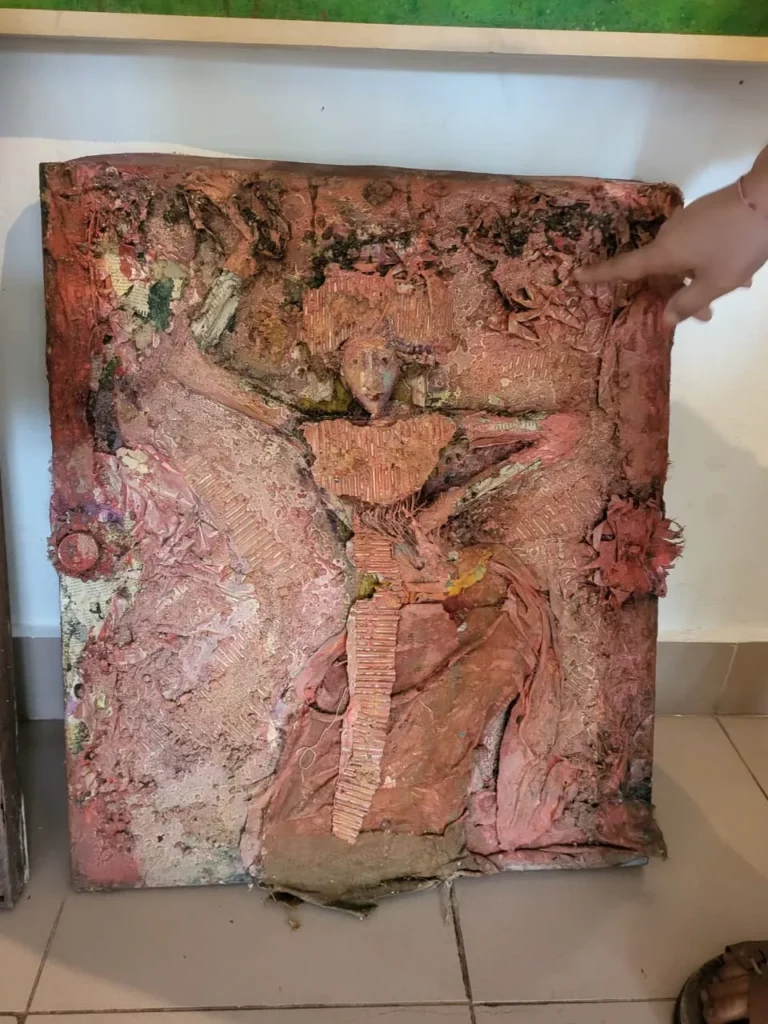
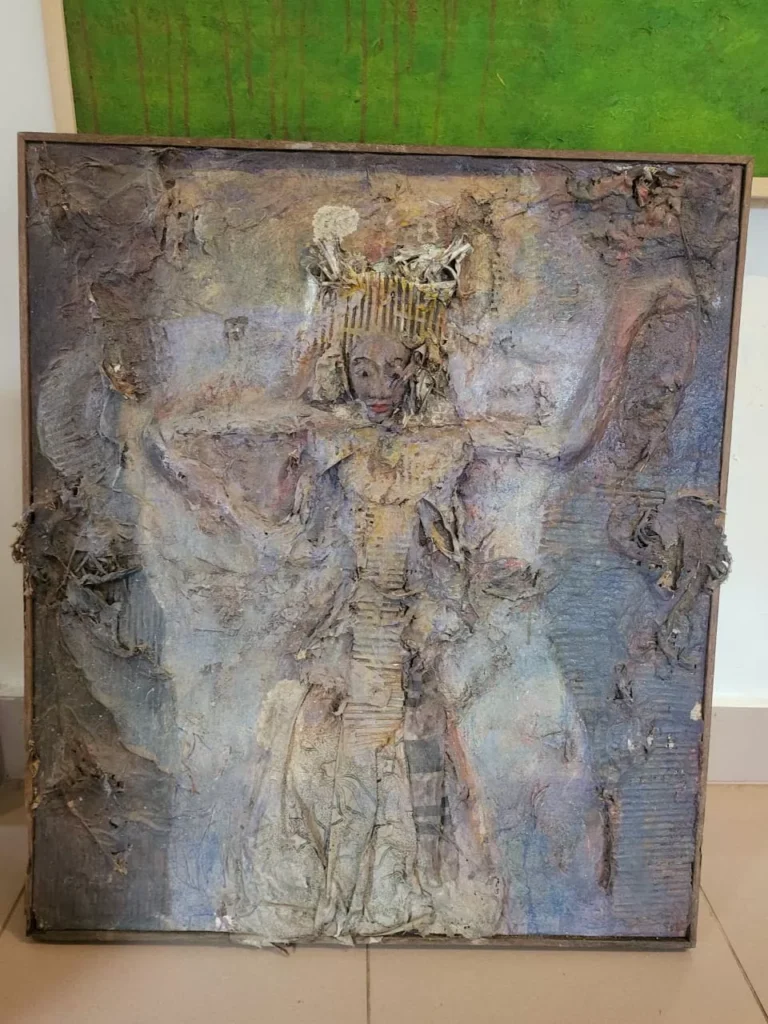
Jodog is a trained artist. But he is also a Balinese intellectual, steeped in the island’s spiritual traditions. He sees the plastic crisis not just as an environmental failure, but as a spiritual one.
In Balinese cosmology, mountains are not geological features. They are Purusa, the sacred head, the source of life, the place where gods and ancestors reside. Rice fields are not farms. They are living systems, connected to temples, water rituals, and the cycle of birth and death.
The old concept of Bhuta Hita teaches harmony between humans, nature, and the spiritual world. When that harmony breaks, imbalance follows. Disease. Suffering. Collapse.
“Plastic is a violation of that harmony,” Jodog said. “It does not belong in the rice field. It does not belong in the river. It does not belong in the body.”
He paused.
“Nature is not arrogant. Humans are the ones who forget.”
The Road Ahead
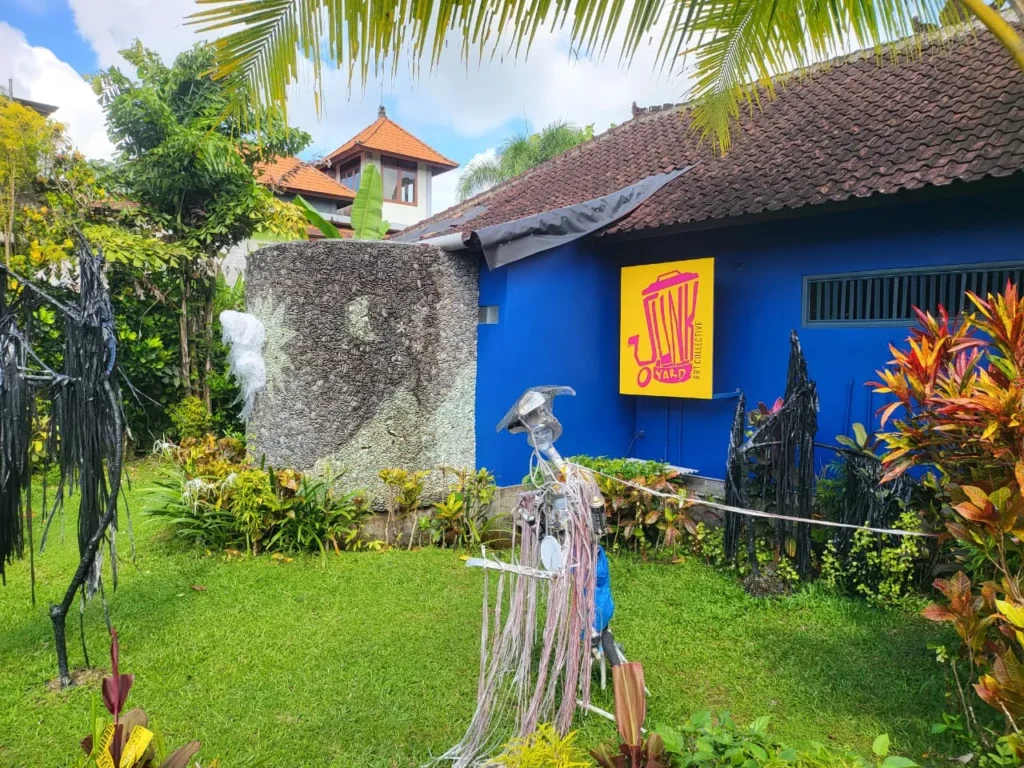
Junkyard Collective is still new. The gallery only opened recently. The artists are still figuring out what they want to be.
But they are already planning. More works. More artists. More conversations. They want to invite international creators to join, not to perform Bali, but to learn from it.
“We are open,” Jodog said. “Anyone who shares our vision, anyone who wants to raise awareness about plastic and ecosystems, is welcome.”
He imagines a future where Junkyard Collective is a hub, not just a gallery. A place where artists and scientists and farmers and tourists sit in the same room and talk about what is ending and what might be saved.
But for now, there is just this small room on a side street in Ubud. And a jellyfish made from plastic bags. And a warning that most people will walk past.
Some will not.
If You Go
Junkyard Collective Bali
Jl. Raya Sanggingan Gang Bintang, Ubud
Free. No tickets. No donations requested. No price tags.
Open to anyone, tourists, expats, locals, children, skeptics, believers, the already converted, and those who have not yet understood why they should care.
Come before the jellyfish stops floating.