
































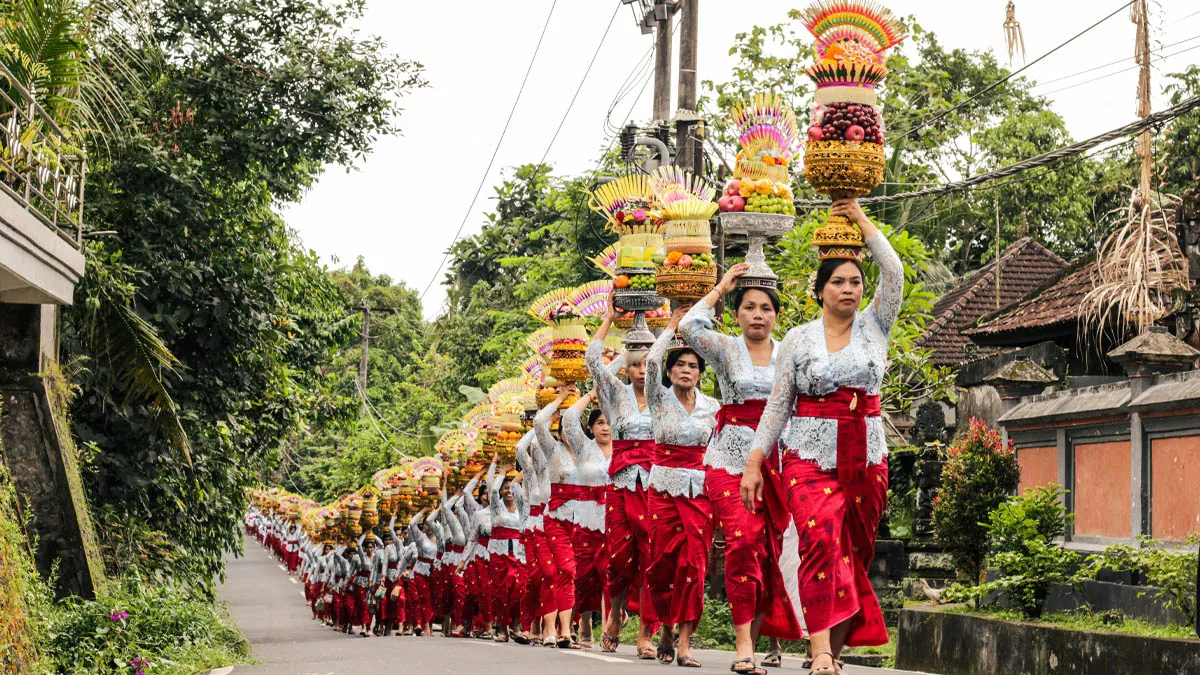
UBUD, Bali — Walk through Bali during Galungan and you’ll see the same image everywhere.
Towering bamboo penjor arching above village roads. Families dressed in ceremonial white and gold. Temples crowded with worshippers carrying baskets of offerings.
To most visitors, it appears to be a single holiday.
But according to Bali’s ancient manuscripts, Galungan is far more complex than many people realize.
In fact, traditional Balinese texts describe three different forms of Galungan, each with its own meaning, symbolism, and spiritual atmosphere.
Understanding the difference offers a rare glimpse into how Balinese Hinduism views time, balance, and the unseen world.
The Galungan Most People Know
The Galungan celebrated across Bali today is the one most residents and visitors recognize.
According to the Lontar Sundarigama, Galungan falls every 210 days on Buda Kliwon Wuku Dungulan, a date determined by Bali’s ancient Pawukon calendar.
For Balinese Hindus, Galungan marks the victory of dharma (good) over adharma (evil).
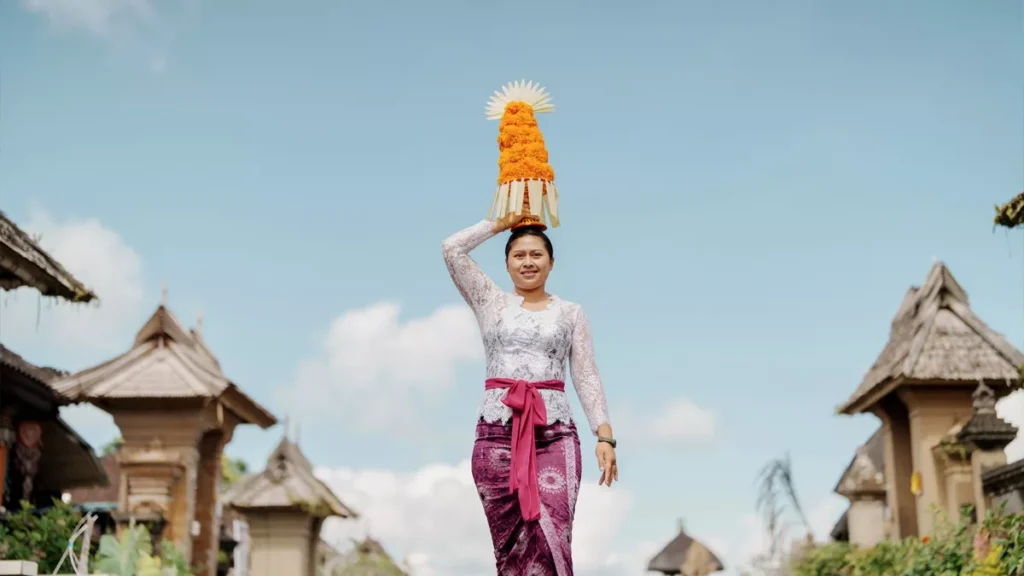
The celebration is symbolized by the triumph of Dewa Indra, representing righteousness and cosmic order, over Mayadenawa, the legendary king who rejected spiritual values and religious ceremonies.
It is one of the most important religious observances in Bali, often referred to as Rerahinan Gumi — a holy day that all Hindus are expected to observe.
For visitors, this is the Galungan they typically experience: vibrant penjors, family gatherings, temple ceremonies, and an island-wide atmosphere of devotion.
Yet this familiar celebration is only one chapter of a much older story.
Galungan Nadi: The Rare Full-Moon Galungan
Long before the modern celebration became widely known, Balinese texts describe a special form called Galungan Nadi.
According to the Lontar Purana Bali Dwipa, the first Galungan ever celebrated in Bali occurred in 804 Saka (882 CE) during Purnama Sasih Kapat, a full moon in the fourth lunar month.
The word Nadi refers to a Galungan that coincides with a full moon.
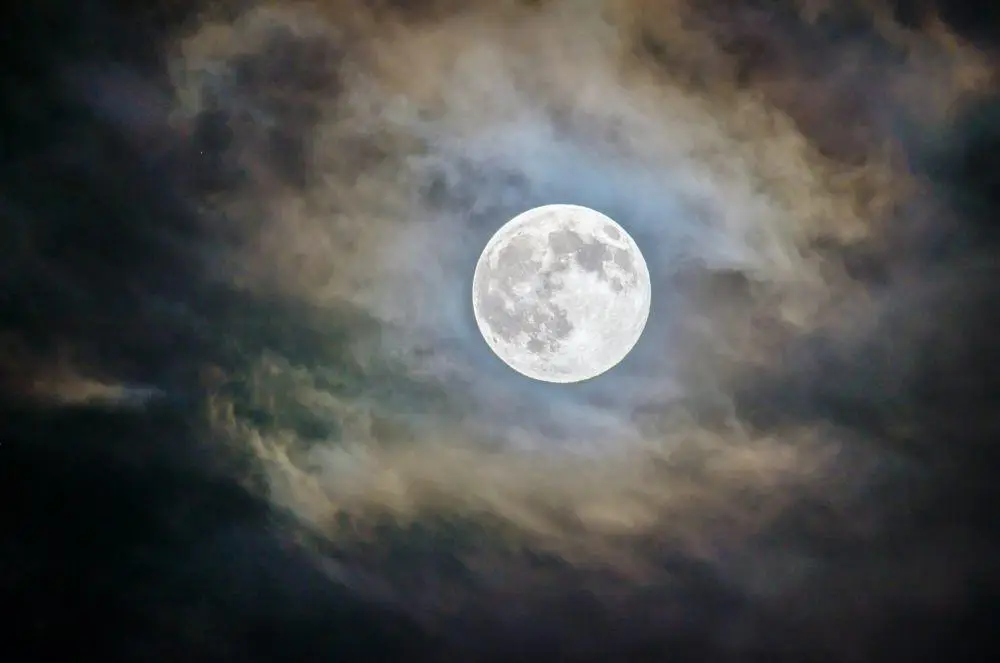
When this rare alignment occurs, Balinese tradition holds that the celebration receives the blessing of Sanghyang Ketu, often described as the deity of brilliance, radiance, and spiritual illumination.
Ancient texts compare the atmosphere of Galungan Nadi to Indra Loka, the heavenly realm of Dewa Indra.
In practical terms, this means a celebration believed to be especially auspicious, joyful, and spiritually powerful.
Because the Pawukon and lunar calendars rarely align in this way, Galungan Nadi may occur only once every decade or so.
For cultural observers, witnessing a Galungan Nadi would be comparable to experiencing a rare celestial event: familiar in form, but extraordinary in significance.
Galungan Nara Mangsa: When the Rituals Change
The third and perhaps most intriguing variation is Galungan Nara Mangsa.
According to the Lontar Sundarigama, this occurs when Galungan coincides with Tilem (the dark moon) during Sasih Kapitu or Sasih Kasanga.
Unlike ordinary Galungan, Balinese tradition teaches that this is not a time when divine forces descend to bless the world.
Instead, it is associated with the presence of Bhuta Kala — powerful forces representing chaos, imbalance, and the untamed energies of nature.
As a result, the rituals change.
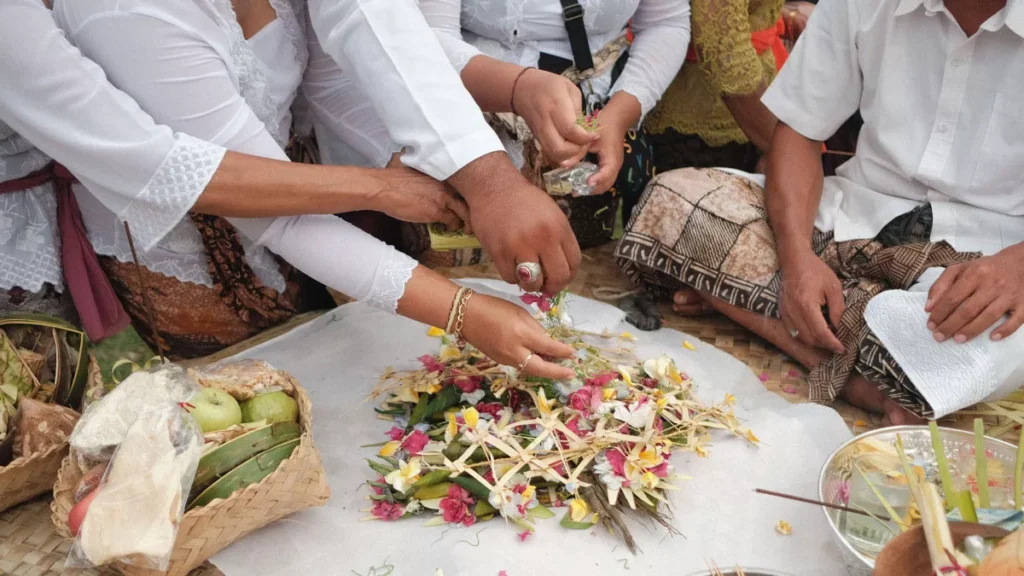
During Galungan Nara Mangsa, Hindus are traditionally prohibited from offering the familiar tumpeng Galungan, the cone-shaped rice offering commonly presented during the holiday.
Instead, they prepare a form of caru, consisting of chopped rice mixed with taro (nasi cacah bercampur keladi).
This practice reflects the concept of nyomia — a ritual intended to calm, harmonize, and neutralize disruptive forces so they do not disturb human life or cosmic balance.
For outsiders, the distinction may seem subtle.
For Balinese Hinduism, it represents a profound philosophical idea: harmony is achieved not only by honoring goodness, but also by acknowledging and balancing the forces that exist outside it.
More Than a Holiday
For most visitors, Galungan begins and ends with the sight of a penjor swaying above a village road.
For Balinese Hindus, however, the holiday exists within a much deeper spiritual framework shaped by centuries of tradition, sacred texts, and an intricate understanding of time.
Sometimes Galungan arrives as a celebration of victory.
Sometimes it arrives beneath a full moon believed to carry extraordinary blessings.
And on rare occasions, it arrives as a reminder that balance requires acknowledging both light and darkness.
That is why Galungan is more than a festival.
It is one of the clearest windows into how Bali understands the universe itself.