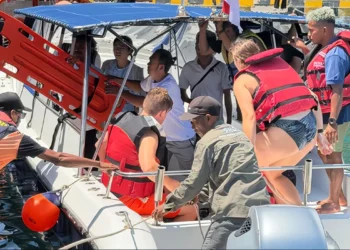


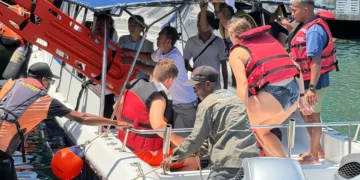































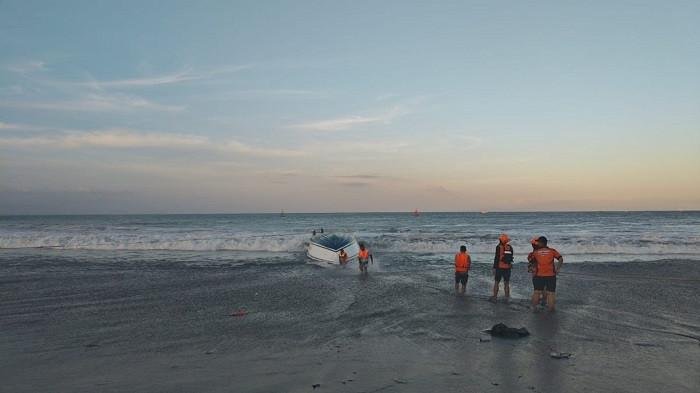
The captain of a fast boat that capsized while approaching Bali’s Sanur Harbor, killing two Chinese tourists and a crew member, is facing a 3½-year prison sentence after prosecutors argued the tragedy was the result of a series of avoidable safety failures.
The case, now before the Denpasar District Court, is being closely watched as a test of accountability in Bali’s busy maritime tourism industry, where thousands of visitors rely on fast boats every day to travel between the mainland, Nusa Penida, and the Gili Islands.
Prosecutors: The Disaster Was Preventable
During Tuesday’s hearing, prosecutors recommended a sentence of three years and six months in prison for I Kadek Ariawan, 28, who was serving as captain of Bali Dolphin Cruise 2 when it overturned at the entrance channel to Sanur Harbor on August 5, 2025.
According to prosecutors, Ariawan’s negligence directly contributed to the deaths of Yu Hanqing and Shi Guohong, both Chinese nationals, along with crew member Kadek Adijaya Dinata.
He has been charged under Article 474(3) of Indonesia’s Criminal Code, which covers negligence resulting in loss of life.
Alleged Safety Failures Before Departure
Prosecutors told the court that Ariawan failed to properly verify the number of passengers before departing from Banjar Nyuh Harbor in Nusa Penida for Sanur.
Instead, he allegedly relied solely on the passenger manifest, which listed 75 passengers.
Investigators later determined that the vessel was carrying 80 people in total, including 75 passengers and five crew members.
The prosecution also alleges that five passengers were not listed on the official manifest, while eight passengers were inside the wheelhouse, an area not intended for passenger occupancy during normal operations.
According to prosecutors, those discrepancies meant the captain failed to accurately assess the vessel’s loading before setting sail.

Entering the Harbor Too Soon
Court documents state that as the vessel approached Sanur Harbor at approximately 3:30 p.m., Ariawan initially reduced speed and waited for rough seas to subside.
However, prosecutors argue he chose to enter the harbor before conditions had fully improved.
Moments later, a large wave struck the vessel from behind, causing it to capsize and sink.
Given Ariawan’s experience navigating Sanur’s notoriously challenging harbor entrance, prosecutors argued he should have waited until it was safe to proceed.
Overloaded Beyond Its Certified Capacity
The prosecution also contends that the vessel exceeded its certified operating capacity.
According to the vessel’s safety certificate, Bali Dolphin Cruise 2 was authorized to carry 75 passengers and five crew members.
Despite this, prosecutors said Ariawan signed a sailing declaration indicating the vessel complied with its approved passenger limits, allowing it to obtain clearance to depart.
They argued the additional weight reduced the boat’s stability, making it significantly more vulnerable when struck by heavy waves.
Victims and Sentencing Factors
The deaths of three people were cited as a major aggravating factor in the prosecution’s sentencing request.
However, prosecutors also acknowledged several mitigating circumstances.
During the trial, Ariawan was described as cooperative and respectful throughout the proceedings. He admitted responsibility, had reportedly been forgiven by the victims’ families, and the operating company had provided compensation to the families of those who died.
After hearing the prosecution’s recommendation, Ariawan appealed directly to the judges for leniency.
“I deeply regret what happened. I ask the panel of judges for the lightest possible sentence because I am the head of my family,” he told the court.
The judges have not yet announced when they will deliver their verdict.
Why This Case Matters for Travelers
Fast boats are the primary link between Bali and nearby islands such as Nusa Penida, Nusa Lembongan, and the Gili Islands, carrying thousands of international visitors each week.
The prosecution’s allegations highlight several issues that go beyond this individual case: accurate passenger manifests, adherence to certified capacity limits, and the judgment of captains when navigating challenging sea conditions.
For travelers, the case serves as a reminder that maritime safety depends not only on weather but also on operational decisions made before a vessel ever leaves the dock. As Bali’s island-hopping tourism continues to grow, the outcome of this trial may influence how safety responsibilities are enforced across one of Indonesia’s busiest tourist ferry networks.