









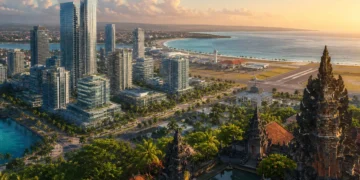













BADUNG, Bali — Across the island, the geometry of Bali’s landscape is quietly changing.
Rice terraces that once defined entire valleys are giving way, piece by piece, to villas, cafés, and roads built to serve a booming tourism economy. The shift is gradual, almost imperceptible at first glance. But over time, it adds up.
In the past eight years alone, Bali has lost roughly 3,000 hectares of rice fields.
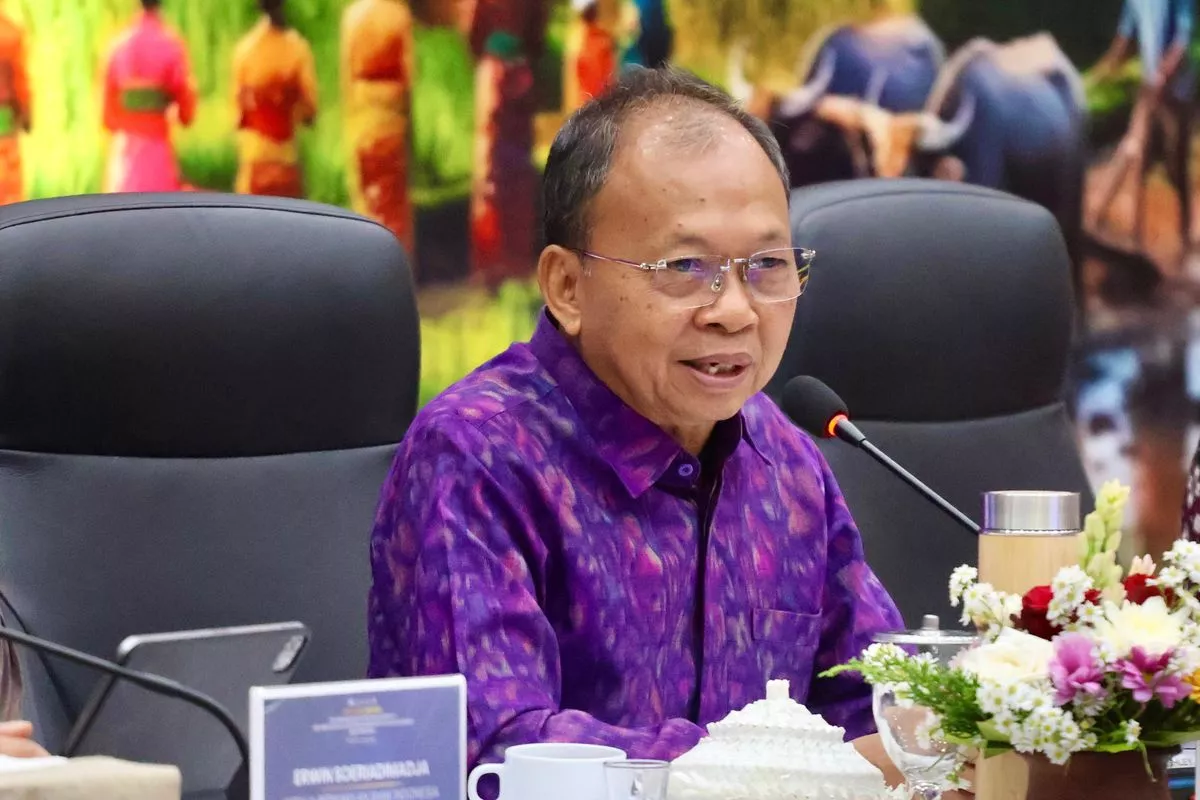
For Governor Wayan Koster, the trend is no longer just an environmental concern. It is a structural one—touching food security, cultural identity, and the long-term balance of the island’s economy.
A Decline Measured in Hectares—and in Identity
When Koster first took office in 2018, Bali had approximately 71,000 hectares of rice fields. Today, that figure stands closer to 68,000.
The decline is not sudden. It is cumulative—driven by years of land conversion as agricultural plots are repurposed for development, particularly in high-demand tourism zones.
In many areas, the economics are straightforward: land values tied to tourism now far exceed what rice farming can generate.
For farmers, the choice is increasingly stark—continue cultivating diminishing plots, or sell into a market that rewards conversion.
An Acceleration Toward Organic Farming
Facing those pressures, the provincial government is moving to redefine what remains.
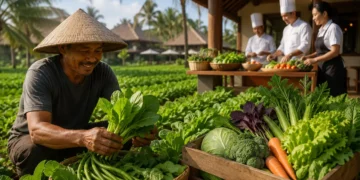
Koster has ordered an acceleration of Bali’s transition to organic agriculture, positioning it not only as an environmental policy, but as a strategy to sustain farming itself.
“We will accelerate the implementation of the organic farming system,” he said during a provincial parliamentary session. “It must be completed no later than 2028.”
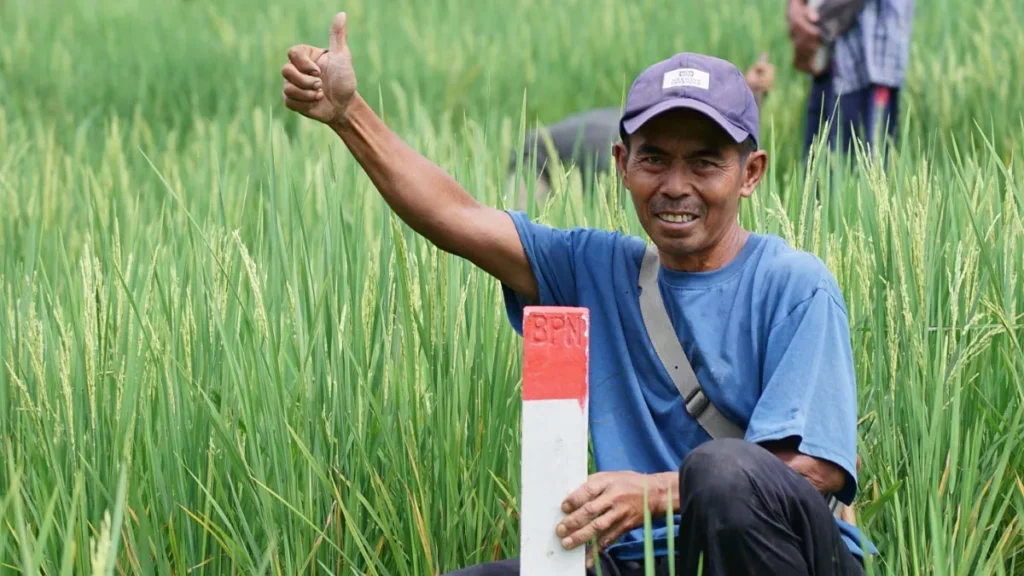
Currently, about 44,000 hectares—roughly 65 percent of Bali’s remaining rice fields—are already managed under organic systems. The goal is to extend that model across all districts.
Bali is, notably, the only province in Indonesia with a regional regulation mandating organic agriculture—a framework that has drawn support from the national Ministry of Agriculture.
The shift reflects a broader calculation: if farming cannot compete on scale, it may need to compete on value.
More Than Agriculture
The stakes extend beyond yield.
Bali’s rice fields are embedded in the island’s cultural fabric, sustained by the centuries-old subak irrigation system and tied to religious practices that shape daily life. Their disappearance is not only a question of land use, but of continuity.
At the same time, tourism—the island’s primary economic engine—continues to expand, placing increasing pressure on the very landscapes that contribute to its appeal.
The result is a tension that is no longer abstract.
It is visible in land transactions, in zoning debates, and in the narrowing space available for agriculture.
A Message to Businesses—and to the Market
Koster’s remarks extended beyond farming.
In a pointed message to businesses operating in Bali—including hotels, restaurants, and retail operators—he called for stronger integration with the local economy.
“All business actors must use local Bali products,” he said, emphasizing that economic growth should circulate within local communities.
He also warned against a pattern in which businesses benefit from Bali’s global appeal while remaining disconnected from its social and economic foundations.
“We must build together,” he said. “Not operate separately from the community.”
The message carries implications for investors as well.
The operating environment in Bali is evolving—not only through formal regulation, but through shifting expectations around land use, sourcing, and community engagement.
A Landscape in Transition
The loss of 3,000 hectares over nearly a decade may not, on its own, constitute a crisis.
But the trajectory is clear.
Bali is not halting development. Nor is it stepping back from tourism. Instead, it is attempting something more complex: to recalibrate how those forces interact with the island’s cultural and agricultural foundations.
Organic farming, stricter land-use control, and calls for local economic integration are all part of that effort.
What Comes Next
For investors, farmers, and policymakers alike, the question is no longer whether change is happening.
It is how that change will be managed—and what will remain when it is complete.
Bali’s land has always carried multiple roles: economic asset, cultural space, and shared resource.
As those roles come under increasing pressure, the island is entering a new phase—one where development is not only measured by what is built, but by what is preserved.
And where the future of its rice fields may determine more than just the shape of its landscape.