


































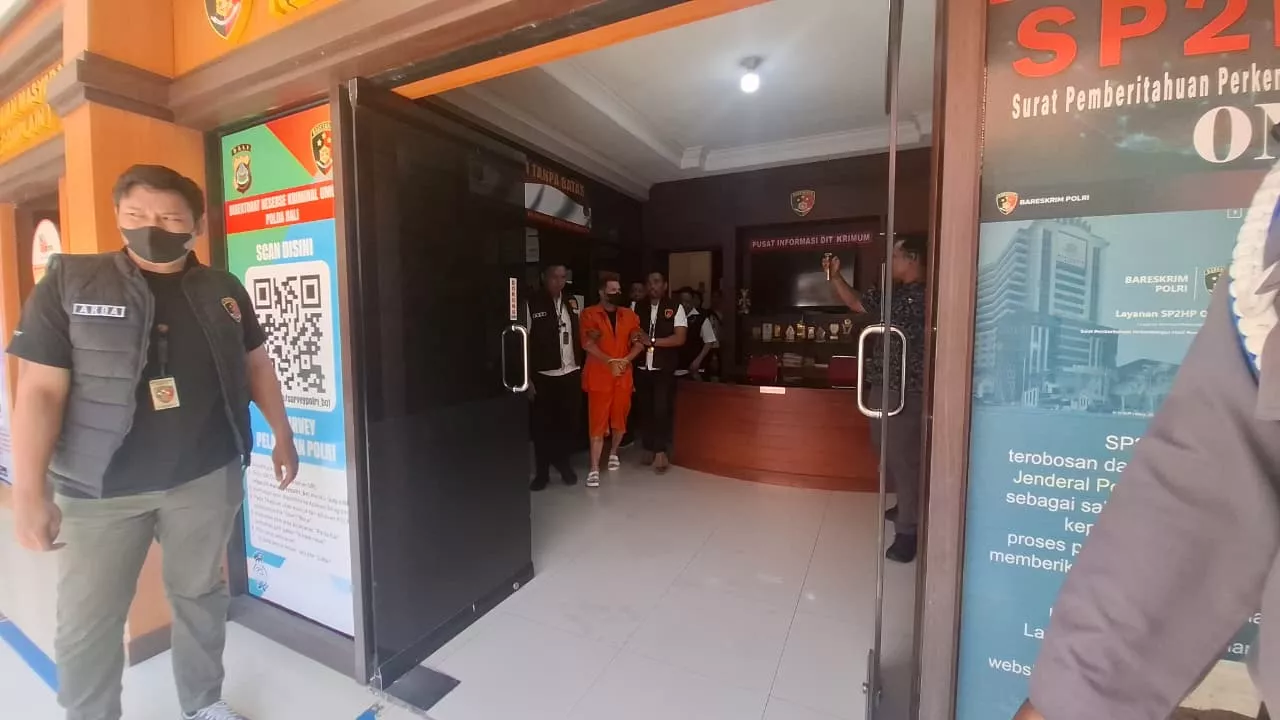
DENPASAR, Bali — At one of Southeast Asia’s busiest tourist gateways, a routine arrival turned into a quiet but decisive interception.
A British national listed on Interpol’s Red Notice was detained by Indonesian immigration officers at I Gusti Ngurah Rai International Airport shortly after entering Bali—an operation that underscores the growing sophistication of the island’s border control systems.
The individual was identified during standard immigration screening, where officers rely primarily on passport data. Despite the limitations of identity verification in cases involving multiple nationalities, authorities confirmed that the suspect entered Indonesia using a British passport.
“Immigration identifies individuals based on the passport presented at entry,” said Felucia Sengky Ratna, head of Bali’s regional office of the Directorate General of Immigration. “If someone holds multiple citizenships, it is not always immediately visible unless supported by system alerts.”
In this case, the system worked as intended.
A System That Doesn’t Miss
Upon scanning the passport, immigration officers received a match linked to an Interpol Red Notice—an international alert requesting the location and provisional arrest of a wanted individual.
The response was immediate.
Officers secured the individual and, following established protocol, handed him over to Indonesian police for further legal processing.
“When a Red Notice is confirmed, our role is clear. We secure the individual and transfer them to law enforcement,” Felucia said.
No disruption followed. No escalation was reported.
But the significance of the moment extended beyond the terminal.

Technology, Coordination, and Timing
The interception highlights a system that operates largely out of public view—one built on data integration, international cooperation, and rapid coordination.
Bali’s immigration network is supported by what officials describe as an integrated “hit system,” linking local screening processes with global databases, including Interpol. Behind each passport check lies a broader architecture of shared intelligence.
“Our system is supported by technology and international collaboration,” Felucia said. “This includes coordination with Interpol and domestic agencies.”
Equally critical is the human element.
Immigration officers at Ngurah Rai, often the first point of contact for millions of travelers each year, are trained not only in document verification but also in security response—balancing efficiency with vigilance.
An Island Open, but Not Unprotected
Bali’s global identity rests on openness. It is a destination built on movement—of people, cultures, and ideas.
But that openness comes with risk.
For authorities, the challenge is not to close the door, but to ensure that it remains monitored.
The arrest of a Red Notice fugitive at the point of entry sends a clear message: Bali is accessible, but it is not unguarded.

Beyond the Headlines
Cases like this rarely make noise. They unfold quickly, often without public disruption, and are resolved within procedural frameworks.
Yet they reflect something larger.
In an era where mobility is instantaneous and borders are increasingly porous, the ability to detect and act—within seconds—has become a defining feature of modern security.
For travelers, the process remains seamless.
For those attempting to evade the system, it is increasingly less so.
And in Bali, where millions arrive seeking escape, the message is becoming clearer:
You can arrive quietly.
But you will not go unnoticed.