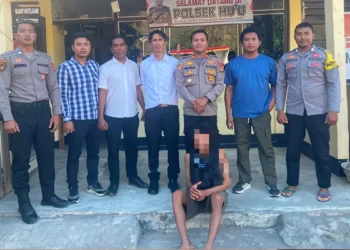

































BADUNG, Bali — In a single week, three foreign tourists reported being sexually assaulted in Bali. The victims, two from China and one from Australia, were in different areas—Pecatu, Seminyak, and Canggu. The alleged perpetrators held different jobs: a ride-hailing driver, a hotel security guard, and a front desk employee.
But the cases, police say, shared common elements: late-night hours, solitary travel, and encounters that began as offers of assistance.
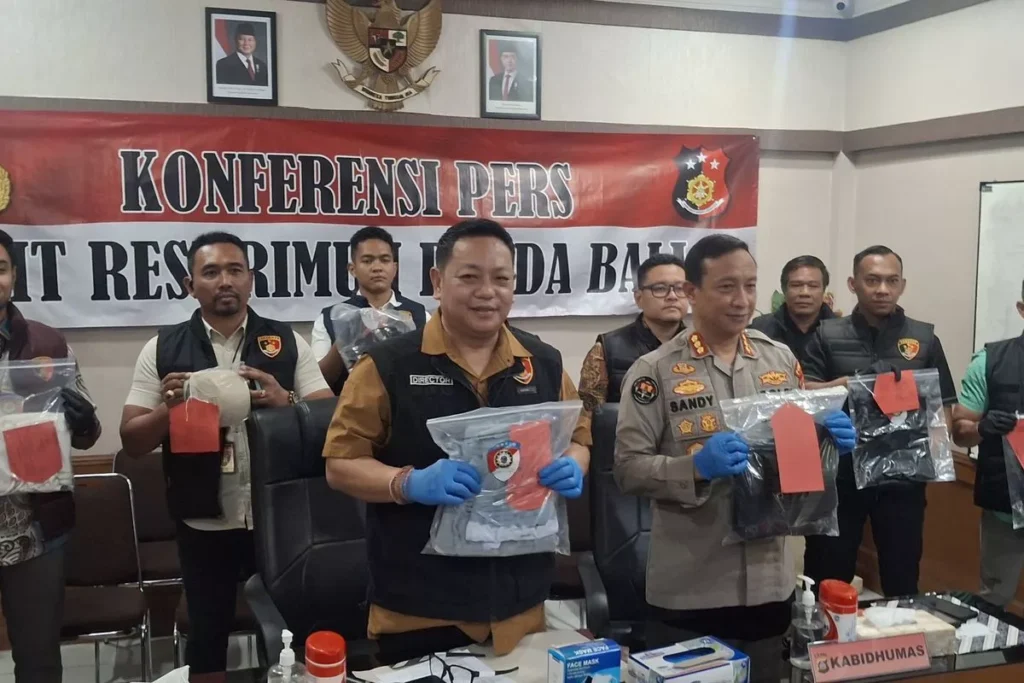
“These incidents occurred consecutively in several areas of Bali,” said Kombes I Gede Adhi Mulyawarman, director of general crimes for Bali Police. “All three cases have been handled, and the suspects are now in custody.”
The disclosures, made during a press conference on Friday, have drawn attention not only to the crimes themselves, but to the patterns they reveal—and the questions they raise about safety for visitors in one of the world’s most popular tourist destinations.
The Three Cases
Case 1: Pecatu
On March 23, a 23-year-old Chinese tourist reported being sexually assaulted after leaving a nightlife venue. Police say she had been drinking and had limited memory of how she ended up on a motorcycle with an unknown driver. The driver, identified as Sam, was arrested later that day. He allegedly took the victim to a secluded location, assaulted her, and took her phone before later returning it—and being apprehended.
Case 2: Seminyak
The following day, a 21-year-old Australian tourist reported being assaulted by a security guard at a nightlife venue. She had returned to retrieve a forgotten item, accompanied by the guard. Police say he led her to a restroom where the assault occurred. The suspect, identified as AMB, was arrested two days later.
Case 3: Canggu
On March 25, a Chinese tourist reported being assaulted by a front desk employee at her accommodation after returning from a night out. Unable to open her door, she encountered the staff member, who offered assistance. Police allege he instead pulled her into an empty room. The suspect, identified as KY, was arrested after a report was filed.
All three suspects are now in custody. Police have not indicated whether any of the individuals had prior records.
A Pattern, Not Yet a Trend
The three cases occurred in rapid succession—between March 23 and March 25—involving different areas, different perpetrators, and different circumstances. What they share, police said, is the timing and the context: each victim was returning alone in the early morning hours, each was approached by someone offering help, and each was vulnerable in ways that perpetrators exploited.
“In these cases, the victims were returning alone in the early morning,” Adhi Mulyawarman said. “They were given an opportunity. And where there is opportunity, intent can surface.”
His remarks, while intended to explain the dynamics of the incidents, also reflected a broader tension: between the need to inform the public and the risk of shifting responsibility away from perpetrators.
A Call for Deeper Reflection
Giostanovlatto, founder of Hey Bali and a longtime observer of the island’s tourism dynamics, said the clustering of three such cases within days demands more than individual responses.
“When you see three serious incidents in such a short span—involving different perpetrators, different locations, but the same pattern of exploiting vulnerability—it is no longer possible to treat them as isolated,” he said. “This is not about blaming the victims. It is about recognizing that something in the environment is enabling this.”
He pointed to the common thread across all three cases: individuals in positions of trust—a driver offering a ride, a security guard helping a guest, a front desk employee assisting with a locked door—who allegedly turned that trust into an opportunity for harm.
“The problem is not only the individuals who commit these acts,” Giostanovlatto said. “It is that the systems meant to protect visitors—transportation, hospitality, security—are being exploited by the very people placed within them. When that happens, the solution is not only better enforcement after the fact. It is redesigning the systems so that vulnerability is not left in the hands of those who may abuse it.”
He also noted that the language used to describe such cases matters. “When police say the victims were ‘given an opportunity,’ it can sound like the responsibility is being shifted. The responsibility belongs to those who committed the acts. But the industry’s responsibility is to ensure that such opportunities do not exist in the first place.”

The Legal Response
The suspects face charges under Indonesia’s 2022 Law on Sexual Violence and relevant articles of the Criminal Code. Sentences vary by case, with some carrying up to nine years in prison.
Police have emphasized that the cases were handled swiftly, with arrests made within hours or days of the reports.
A Wider Concern
For a destination that welcomes millions of visitors each year, the recurrence of such incidents—especially in such a short window—has prompted reflection.
Bali’s tourism economy depends on trust. Visitors must feel safe not only in their accommodations, but in the spaces between them—the transportation, the nightlife, the interactions that define a trip.
When that trust is violated, the damage extends beyond individual cases. It affects perceptions, and perceptions in tourism matter as much as statistics.
Giostanovlatto echoed this concern. “Bali’s reputation is built on hospitality. When visitors begin to question whether the people meant to help them are the ones they need to fear, that reputation erodes—not overnight, but incrementally. And once lost, it is very hard to rebuild.”
What Travelers Should Know
For those planning to visit Bali, the recent cases underscore a set of practical precautions:
- Use official transportation. Ride-hailing apps provide a record of driver, vehicle, and route.
- Be mindful of late-night hours. The cases all occurred in the early morning, when venues are emptying and streets are quieter.
- Travel with companions when possible. Solo travel increases vulnerability, particularly in unfamiliar settings.
- Be cautious of offers of assistance. Even individuals in trusted roles—security guards, hotel staff, drivers—should not be exempt from basic caution.
- Report incidents immediately. Prompt reporting allows authorities to act quickly, as seen in these cases.
A Broader Question
The three cases in one week are not, by themselves, evidence of a broader crisis. But they are evidence of a pattern that authorities say they are monitoring.
For police, the challenge is to respond not only to individual incidents, but to the conditions that allow such incidents to recur. That means stronger coordination between law enforcement, the hospitality industry, and transportation services—and a clearer message to visitors about where risks may lie.
For the tourism industry, it means ensuring that the spaces visitors rely on—hotels, nightlife venues, transport—are structured to minimize risk, not only to respond when things go wrong.

The Bottom Line
Three suspects are in custody. Three investigations are underway. And three tourists who came to Bali expecting safety have returned home with a different story.
The cases do not define Bali. But they do raise a question that the island’s tourism industry will need to answer: in a place built on hospitality, how do you ensure that the people visitors trust are worthy of that trust?
“The answer is not just better policing after the fact,” Giostanovlatto said. “It is building a culture of safety that starts long before a visitor ever arrives—and that holds every part of the industry accountable for the trust it asks for.”
Because in travel, as in life, the most vulnerable moments are often the ones that happen when you are alone—and the people who appear to help are not always the ones who will.
Hey Bali News encourages all visitors to use licensed transportation services, stay aware of their surroundings, and report any incidents to local authorities immediately. Support resources for survivors of sexual violence are available through local and international organizations.