
































HEYBALI– China is preparing to launch its most complex lunar mission to date within days, sending a spacecraft equipped with a lander, rover, and hopping robot to search for evidence of water ice buried in the Moon’s permanently shadowed south pole craters.
The mission, named Chang’e-7, will launch aboard a Long March 5 rocket from the Wenchang Satellite Launch Center on China’s Hainan Island. While China’s Manned Space Engineering Office has not confirmed an exact date, airspace closure notices point to a launch window opening on August 24.
A Robotic Trio Built for the Moon’s Most Extreme Terrain
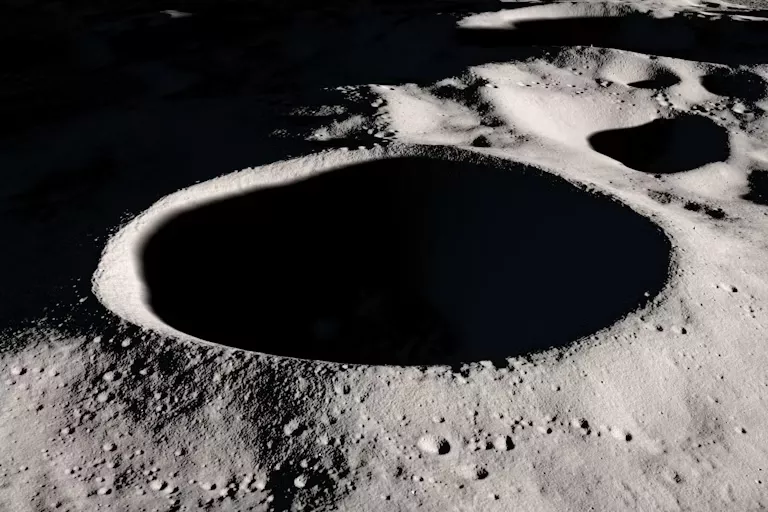
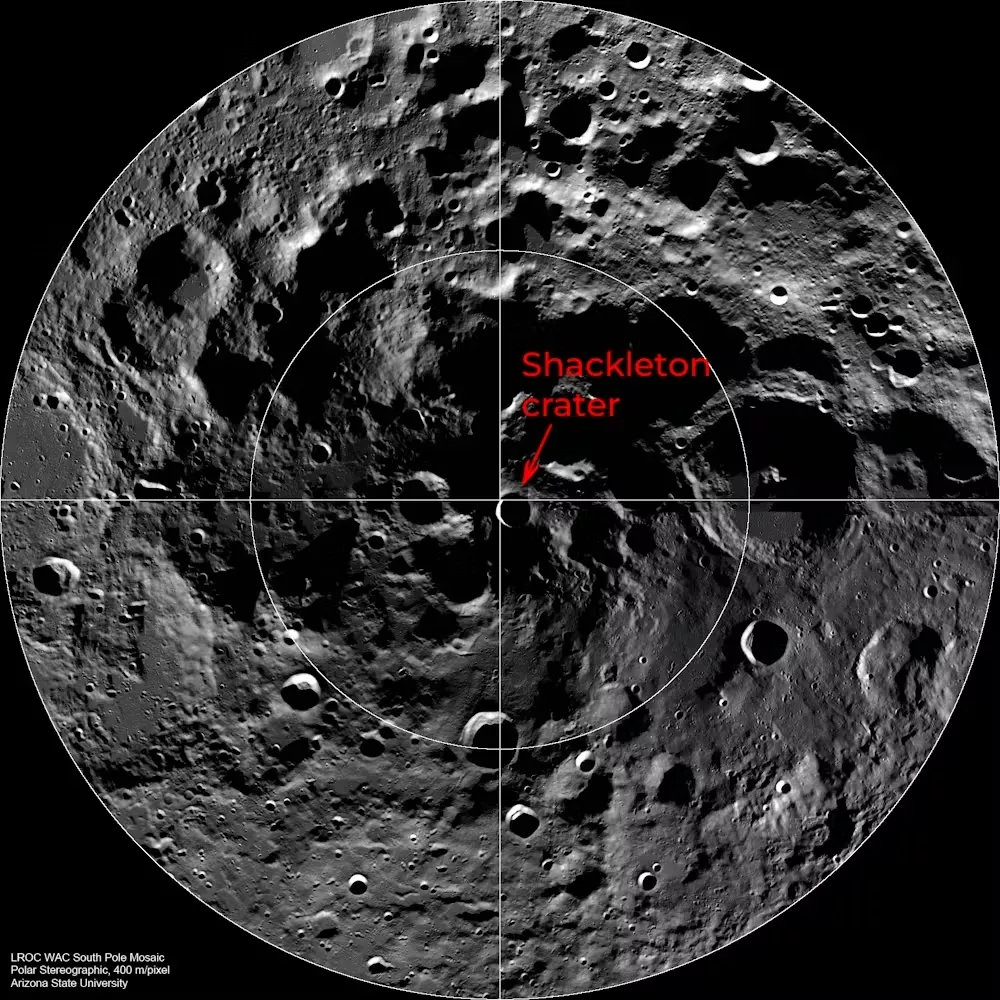
Once in lunar orbit, Chang’e-7 will survey candidate landing sites near the south pole before attempting its descent. One leading candidate sits near the rim of Shackleton Crater, a basin whose floor remains in permanent shadow while its rim stays almost continuously sunlit, an unusual combination that makes it both scientifically valuable and technically challenging to explore.
China has not released a full mission timeline, though space experts anticipate the landing attempt will take place in November. Following touchdown, the mission’s rover and hopping robot will begin surveying the lunar surface for signs of water.
Why Scientists Believe Water Ice Could Be Hiding There
The south pole’s permanently shadowed craters have gone without direct sunlight for billions of years, conditions scientists believe could allow them to function as natural cold storage, preserving water and organic compounds that would otherwise break down or evaporate elsewhere on the lunar surface. Temperatures in these craters can plunge to as low as minus 203 degrees Celsius, according to Reuters, cold enough to make them prime candidates for holding onto ancient ice deposits.
A Hopping Robot Built to Reach What Wheels Cannot
Shackleton Crater’s steep, sloped walls make it extremely difficult terrain for conventional rovers to navigate. To reach the permanently dark crater floor, Chang’e-7 will deploy a specialized hopping robot rather than relying solely on wheeled exploration.
The hopper is equipped with instruments for analyzing water molecules and six engines designed to propel it into the crater. It will touch down using six legs and is designed to return to the surface afterward to recharge using solar power, a capability that allows it to make repeated trips into the shadowed depths rather than a single one-way journey.
According to China’s state news agency Xinhua, the hopper is expected to make at least three separate leaps into the crater over the course of the mission. How long the mission will ultimately run remains unclear.
China’s Chang’e-7 lunar mission remains on track for launch in H2 2026. Reports indicate a potential launch window from around Aug. 24–31, though no date is official. The spacecraft and Long March-5 Y14 are in pre-launch assembly and testing. No delay has yet been reported.
— China Space Watch (@chinaspace.bsky.social) August 12, 2026 at 6:03 AM
[image or embed]
Laying the Groundwork for China’s 2030 Crewed Moon Landing
Data collected by Chang’e-7, along with its planned successor Chang’e-8 in 2029, will play a critical role in China’s broader ambition to land astronauts on the lunar surface by 2030. Together, the two missions are designed as stepping stones toward a longer-term goal: determining whether a permanent research station on the Moon is feasible.
If Chang’e-7 succeeds in confirming water ice deposits at the south pole, it would significantly simplify China’s future lunar ambitions. Water ice extracted on-site could theoretically be converted into drinking water, breathable oxygen for astronauts, and even rocket fuel, reducing the need to transport those resources from Earth for any future permanent lunar presence.