






















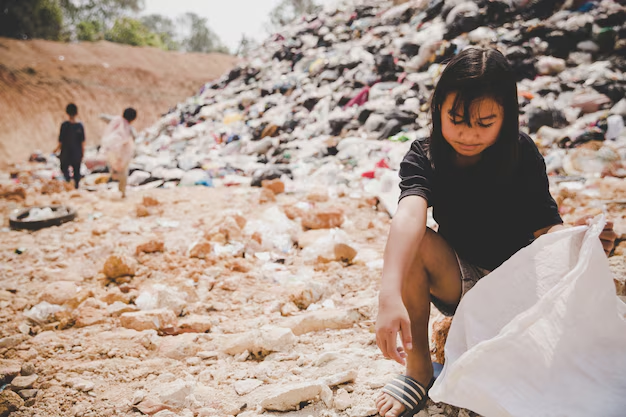
The long-awaited project aims to transform thousands of tonnes of waste into electricity as Bali seeks to protect both its environment and its tourism-dependent economy.
DENPASAR, Bali — After years of mounting criticism over plastic pollution and overflowing landfills, Bali has officially begun construction of its first large-scale Waste-to-Energy (WtE) facility, marking what officials hope will become a turning point in the island’s struggle with its waste crisis.
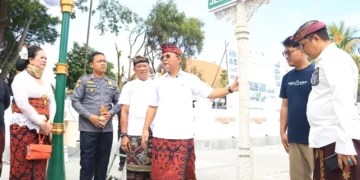
The project, valued at approximately Rp3 trillion (around US$185 million), broke ground on Wednesday in South Denpasar, where a six-hectare site will be transformed into a modern waste processing and renewable energy facility designed to meet European environmental standards.
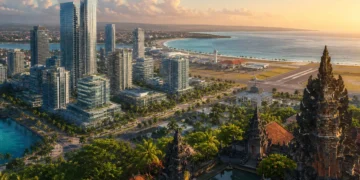
For millions of international visitors, Bali’s beaches, temples and rice terraces define the island.
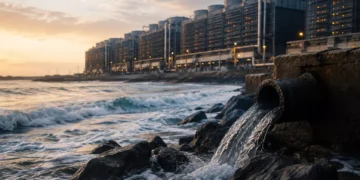
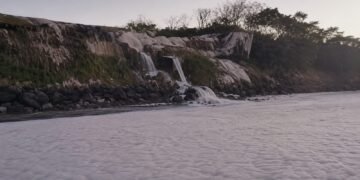
But in recent years, another image has increasingly appeared across international headlines and social media: coastlines covered with plastic waste during the monsoon season and overloaded landfill sites struggling to cope with the island’s growing population and tourism industry.
Officials believe the new Waste-to-Energy plant could become one of the most significant environmental infrastructure projects in Bali’s modern history.
“The Bali Waste-to-Energy Plant is designed to create real impact for waste management, green energy and the local economy while meeting European environmental standards,” said Pandu Patria Sjahrir, Chief Executive Officer of PT Danantara Investment Management (DIM).
Construction is expected to be completed during the first half of 2028.
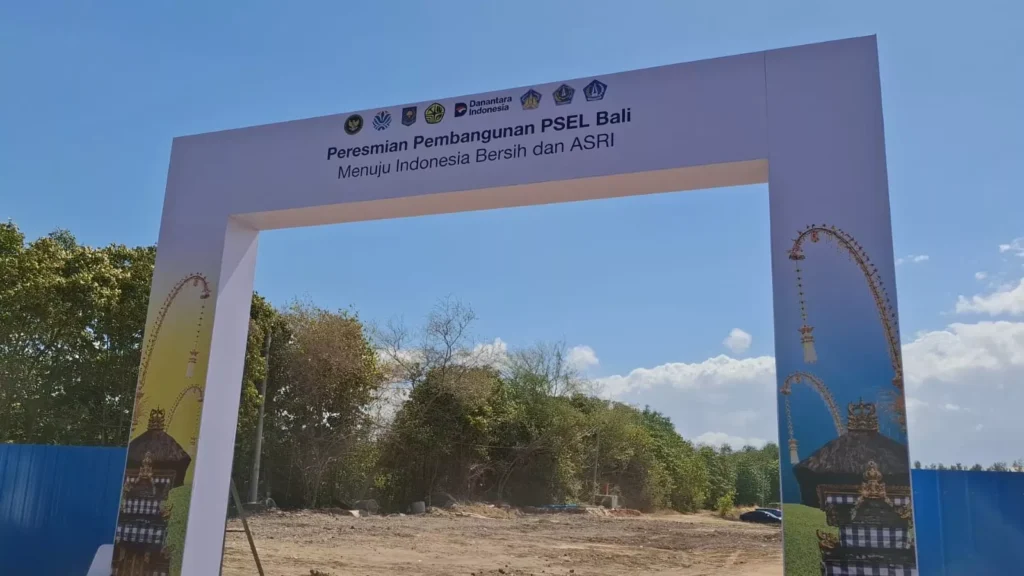
The project is the first Waste-to-Energy development undertaken by Danantara Indonesia, the country’s sovereign investment agency, through its subsidiaries PT Danantara Investment Management and PT Daya Energi Bersih Nusantara (Denera).
Danantara Indonesia CEO Rosan Roeslani said solving Indonesia’s waste problem has become an urgent national priority.
“Waste management is a challenge that must be resolved as quickly as possible so it does not become a burden for future generations,” Rosan said.
He added that the project would be implemented under strict governance and environmental standards.
Unlike conventional landfill systems, Waste-to-Energy facilities process municipal waste to generate electricity while significantly reducing the volume of waste sent to disposal sites.
Supporters argue the technology can help reduce landfill dependence, lower methane emissions and contribute to cleaner urban environments when operated under rigorous environmental controls.
The project has also reached a key milestone with the signing of a Power Purchase Agreement (PPA) with Indonesia’s state electricity company, PLN, ensuring that electricity generated by the facility can be supplied to the national grid.
Construction will be carried out by Zhejiang Weiming Environment Protection Co., Ltd., a Chinese environmental engineering company selected through a competitive tender process.
The Bali Provincial Government’s primary role has been to prepare the project site, which sits on land owned by Pelindo under a cooperation agreement with the Denpasar municipal administration.
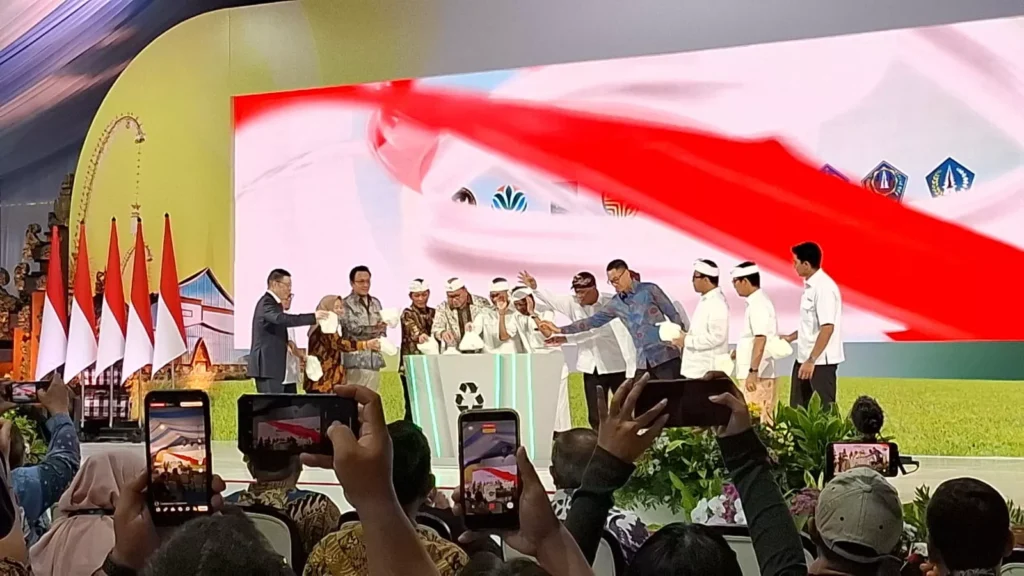
Governor Wayan Koster said construction is expected to take approximately 18 months.
Bali is the first of four priority regions selected by the Indonesian government for Waste-to-Energy development, alongside Yogyakarta, Bekasi and Surabaya, reflecting a broader national effort to modernise waste management infrastructure.
For residents, the project represents another attempt to address a problem that has affected daily life for years.
For international visitors, it could represent something even larger.
If successful, the facility may help reshape one of the world’s best-known island destinations from a place increasingly associated with seasonal waste problems into one investing seriously in environmental sustainability.
The challenge, however, will not simply be building the plant.
It will be proving that Bali can turn one of its biggest environmental liabilities into a model for cleaner, more sustainable tourism.