
































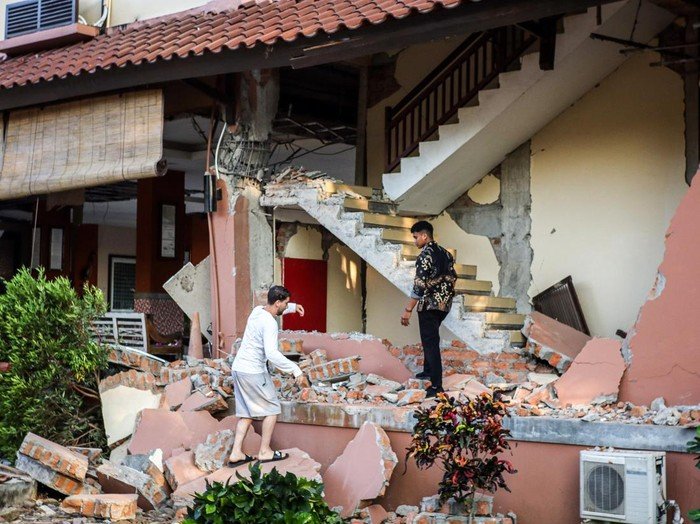
HEYBALI – More than three days after a magnitude 7 earthquake tore through East Nusa Tenggara, Indonesia’s central government has made a striking decision. As the death toll climbs and infrastructure lies in ruins across the region, officials are turning away offers of international assistance, insisting the country can manage the recovery alone.
Death Toll Rises to 70, Injuries Reach 132
Updated figures released Tuesday, August 18, put the confirmed death toll at 70, with 132 people injured following Saturday’s earthquake. The scale of destruction has continued to expand as rescue teams push into more remote areas of the affected region, yet the government’s position on outside help has not shifted.
“Not yet,” said State Secretary Minister Prasetyo Hadi on Monday, August 17, when asked whether Indonesia would open the door to foreign assistance, speaking to reporters at the Merdeka Palace in Jakarta.
Prasetyo said daily field reports reaching the palace have given officials confidence that the response is on track without external support. “Based on the daily reports we’re receiving from colleagues monitoring the situation on the ground, everything can still be handled well,” he said.
Missing Persons List Now Empty, But Search Teams Remain on Standby
In one piece of genuinely encouraging news, Indonesia’s National Disaster Management Agency, BNPB, confirmed that the list of missing persons had been cleared entirely as of August 17.
Despite that, search and rescue teams have not stood down. Berton SP Panjaitan, acting head of BNPB’s disaster data and communications center, said Basarnas personnel remain on full alert across all seven affected regencies.
“Basarnas teams are still on standby in the seven affected regencies. As of today, August 17, there are no more reports of missing residents in the affected areas. However, Basarnas teams continue their search efforts and are deploying personnel optimally across the affected areas,” Berton said during a press briefing Monday.
Hospitals Damaged, Field Facilities Deployed to Fill the Gap
Among the earthquake’s most consequential effects has been damage to the region’s medical infrastructure. Numerous hospital buildings and community health centers across the affected zone have been rendered non-functional, stripping already strained communities of emergency care capacity at the moment they need it most.
In response, Indonesia’s Ministry of Health has deployed two field hospitals, one in Ruteng in Manggarai Regency, and another in Nagekeo Regency, to provide emergency medical services while permanent facilities are assessed and repaired.
“We hope these hospitals can quickly begin serving residents affected by the earthquake who require evacuation and treatment,” Berton said.
Why This Matters for Bali’s International Community
For expats and travelers based in Bali, East Nusa Tenggara’s recovery carries more than passing relevance. The region includes Labuan Bajo, the gateway to Komodo National Park and a major draw for international tourism, and its overland and maritime supply chains connect closely with Bali’s own logistics networks. A prolonged recovery effort, particularly one being managed without outside assistance, could affect travel infrastructure, flight schedules, and local business operations across the region for months to come.
The government’s insistence on a self-managed recovery also means the coming weeks will be closely watched. Temporary and permanent housing construction, continued search operations, and the restoration of medical services are all now underway simultaneously, and how effectively Jakarta delivers on those commitments will determine whether its confidence in going it alone was justified.