


































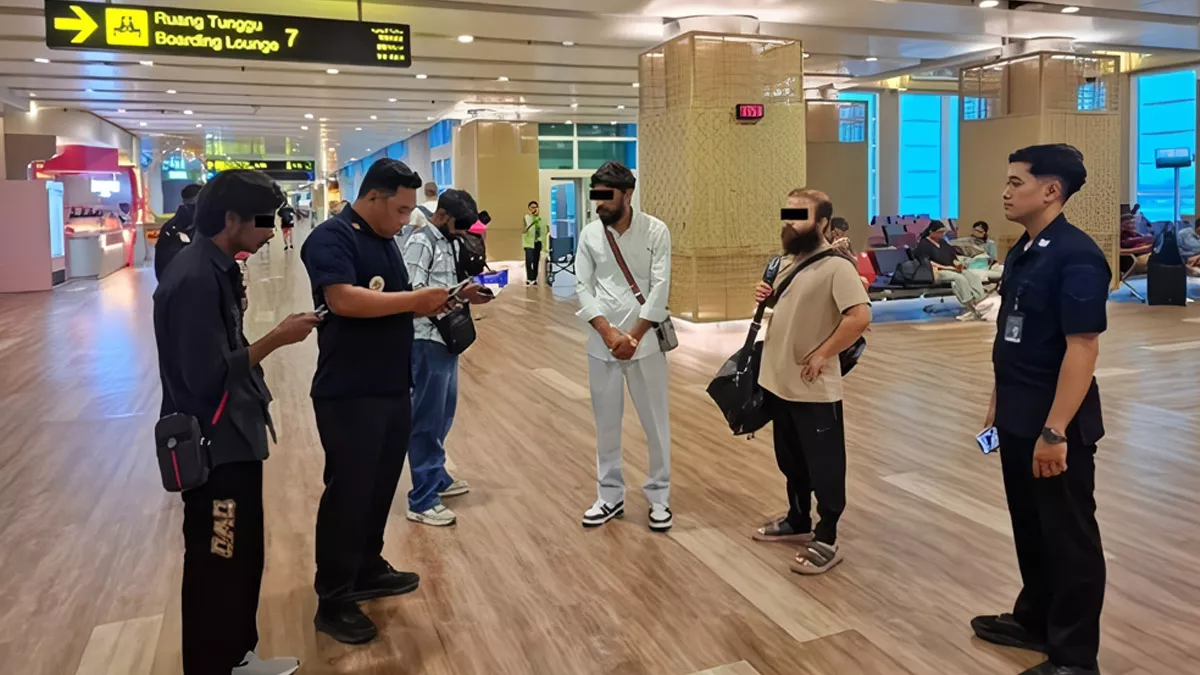
DENPASAR, Bali — For decades, Bali has sold itself as a place without consequences. A sun-soaked sanctuary where the cocktails are cheap, the rules are flexible, and everyone looks the other way.
Not anymore.
In a sharp escalation of its “quality tourism” crackdown, immigration authorities on the Island of the Gods have deported six foreign nationals in a single week. The charges read like a checklist of the worst expat and tourist stereotypes: running amok, smashing hotel rooms, skipping out on bills, and simply refusing to leave.
Officials are sending a blunt message to the digital nomads, budget backpackers, and long-stay retirees: Follow the rules, or you will be flown out on the next plane.
The Lineup: From Canada to India
The Detention House (Rudenim) in Denpasar confirmed the deportations late Friday. The six individuals hail from New Zealand, Canada, and India.
- The Canadian (FRP, 51): Accused of going on a destructive rampage at a housing complex in Buleleng, a quieter part of northern Bali. Police were called after he allegedly smashed property. He was arrested on May 9th and handed over to immigration.
- The Indian Tourist (SSP, 29): Arrested at a hotel on the bustling Monkey Forest Road in Ubud. The charge? He allegedly went into a rage, destroyed glasses and bottles, and then refused to pay his food and laundry bills.
- The Overstayers: The remaining four—a New Zealand woman (RNB, 54) and three Indian men (SS, GS, and BS)—were caught in a net for visa violations. The New Zealander overstayed her visit by 56 days. Her excuse, according to officials, was that she “didn’t know” her visa had expired. One Indian national had been hiding in plain sight for 70 days past his limit.
The ‘New Bali’ Doctrine
For expats living in Canggu or Seminyak, and for the tourists paying in Euros or Dollars, these deportations signal a seismic shift in the island’s temperament.
During the pandemic, Bali was desperate for visitors. Now, it is picky.
“The firm action is a real manifestation of Immigration’s commitment to the people,” said Teguh Mentalyadi, Head of the Denpasar Immigration Detention Center. “We are maintaining the security, comfort, and marwah (dignity) of the nation from foreigners who disturb public order.”
This is not just rhetoric. Under Indonesian immigration law (Article 75 and 78 of Law No. 6/2011), foreigners can be banned from re-entering the country for up to ten years—or even for life—if they are deemed a serious threat to public order.
A Warning for the ‘Monkey Forest’ Crowd
The deportation of the Indian national in Ubud is particularly significant. Ubud is the island’s spiritual heart, a haven for yoga retreats and wellness. It is also a flashpoint for bad behavior.
“The incident at the Monkey Forest hotel,” one local source noted, “is exactly the kind of behavior that locals are tired of.”
The “café cowboy” culture—where tourists act entitled, disrespect local customs, or assume their foreign passport grants them immunity—is evaporating.
‘I Didn’t Know’ Is No Longer an Excuse
Perhaps the most telling case is that of the New Zealand woman. She entered using a Visa on Arrival (VoA)—a document whose expiration date is stamped directly into the passport. She overstayed by nearly two months.
“In my opinion, ignorance of the law is no longer a defense here,” said a senior immigration source who spoke on condition of anonymity. “If you can afford a flight to Bali, you can afford to read your visa stamp.”
The six were escorted to Ngurah Rai International Airport and put on flights to their respective countries on June 10 and June 12.
The Bottom Line for Travelers
For the international reader planning a trip to Bali, the takeaway is clear: The era of the “long-term overstay” is over.
While Indonesia remains a welcoming destination—offering five-year visas for digital nomads and golden visas for investors—the grace period for bad behavior has expired.
As Mr. Teguh put it, the law allows for a “blacklist” ranging from five years to a lifetime.
“Paradise,” he seemed to imply, “has a price. And that price is compliance.”
Key Takeaways for Expats & Tourists:
- Visa Vigilance: Overstaying by even one day incurs fines (approx. $70 USD/day) and risks deportation and a re-entry ban.
- Behavior: Public intoxication, property damage, and refusing to pay hotel bills are now zero-tolerance offenses.
- The Ban: Deportation often comes with a blacklist of 5–10 years, or permanently.