

































A routine transatlantic flight faced a startling mechanical anomaly shortly after departure, showcasing the extensive safety protocols and built-in redundancies of modern long-haul aircraft.
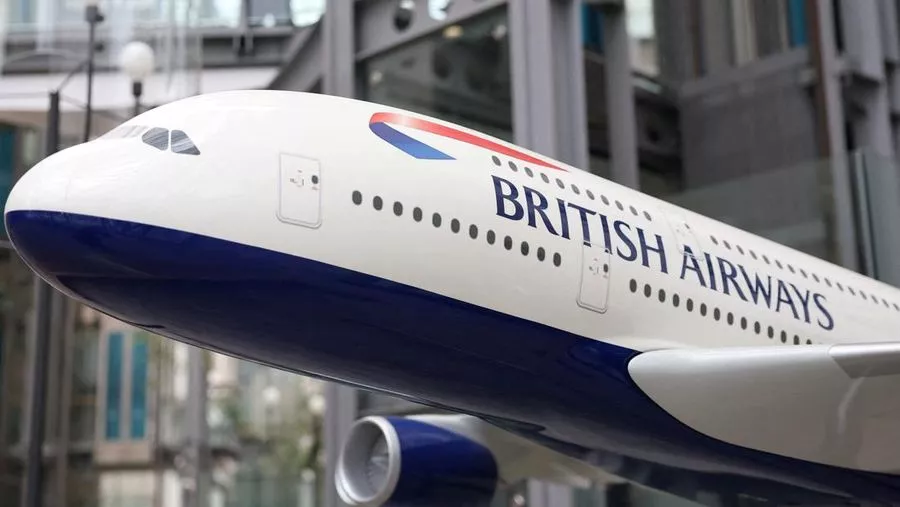
LONDON, United Kingdom — A British Airways Airbus A350-1000 operated a full nine-hour transatlantic flight and landed safely at London Heathrow on Monday after one of its landing gear wheels detached moments after takeoff from Las Vegas. The incident, which did not result in injuries on the ground or aboard the aircraft, highlights the rigorous engineering standards and procedural safeguards designed to handle such rare failures in modern aviation.
Flight BA274 departed from Harry Reid International Airport (LAS) at approximately 9:05 p.m. local time. Roughly 40 seconds after becoming airborne, witnesses observed sparks emanating from the right-side main landing gear. Aviation tracking service Flightradar24 confirmed the sequence: “As the aircraft took off from the airport and retracted the landing gear, the rear tire on the right main landing gear separated from the aircraft and fell.”
A Calculated Decision to Continue
Following the incident, the flight crew conducted initial assessments and, in consultation with ground-based engineers and safety teams, made the decision to continue the planned route across the Atlantic Ocean to London.
The Airbus A350-1000 is equipped with six main landing gear wheels, arranged in three pairs on each side. The redundancy designed into this system meant the aircraft retained full functionality on its remaining wheels. The pilots climbed to a cruising altitude of around 39,000 feet for the scheduled journey.
“Operational factors such as aircraft performance, fuel status, and redundancy in the landing gear system likely influenced that decision,” noted aviation analysis, pointing to the pre-planned protocols for such scenarios.
Uneventful Landing After a Tense Ascent
After a flight duration of 9 hours and 17 minutes, the wide-body jetliner, carrying several hundred passengers and crew, touched down without further incident at Heathrow Airport. The successful landing underscored the aircraft’s designed resilience and the crew’s trained response to a non-normal situation.
A Perspective for Bali’s Globally-Minded Community
For Bali’s international residents, expatriates, and frequent travelers—a community deeply familiar with long-haul flights connecting to destinations like London—this incident is a compelling case study in aviation safety.
It demonstrates that while mechanical issues are exceedingly rare, contemporary aircraft are built with multiple layers of backup systems. The event also illustrates the critical role of highly trained pilots and real-time ground support in managing unforeseen events, ensuring that safety remains paramount even when faced with a visually alarming malfunction thousands of miles from the intended destination.
The investigation into the cause of the wheel detachment is now underway, led by relevant aviation safety authorities. For the traveling public, the overriding narrative remains one of a system functioning as intended: a potential emergency was identified, managed, and resolved through technology and training, resulting in a safe outcome for all on board.