




















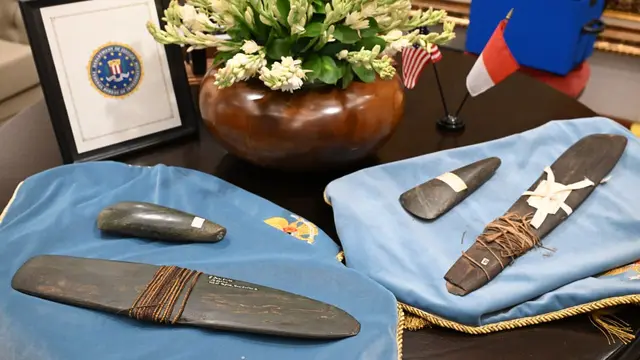
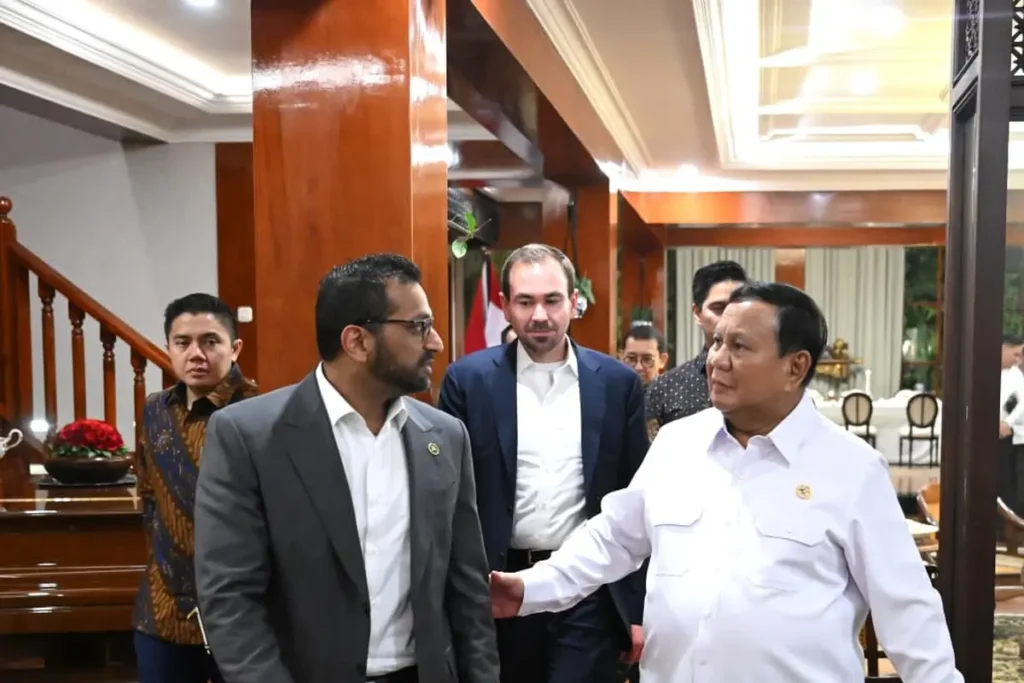
FBI Director Kash Patel personally handed over a collection of smuggled Indonesian cultural artifacts to President Prabowo Subianto during a courtesy visit to the president’s residence in Kertanegara, Jakarta, on Wednesday, July 22, 2026, in a gesture that underscores growing cooperation between Washington and Jakarta on recovering stolen cultural heritage.
The handover forms part of an ongoing collaboration between Indonesia and the United States aimed at repatriating cultural artifacts illegally smuggled out of the country.
Sacred Objects From Papua, Recovered and Returned
Indonesia’s Minister of Culture, Fadli Zon, said the visit combined both a personal meeting and an official presentation, with Patel bringing the artifacts as a direct result of collaboration between Indonesia’s Ministry of Culture and the FBI.
“Alongside the conversation as friends, he also officially brought cultural artifacts that were the result of cooperation between the Indonesian government, through the Ministry of Culture, and the FBI, the return of cultural objects and artifacts that had been illegally smuggled into the United States and, following provenance research into their origins, were then returned and personally brought by Mr. Kash Patel to President Prabowo Subianto,” Fadli Zon said, quoted from a press release issued by the Presidential Secretariat on Thursday, July 23, 2026.
Fadli explained the repatriated artifacts originate from Papua, representing the cultural heritage of the Dani, Asmat, and Lake Sentani communities. According to him, the objects carry significant historical and cultural value for Indonesia.
“I believe these are extremely valuable objects, because this repatriation process is part of our effort to restore our cultural sovereignty,” he said.
A Growing Partnership Between Indonesia and the FBI
Fadli said cooperation between Indonesia and the FBI on returning cultural artifacts has been ongoing for some time. The FBI has previously assisted in repatriating multiple stolen Indonesian cultural objects, including bronze statues and artifacts recovered from various historical sites.
“We hope this cooperation with the FBI, particularly regarding the repatriation and restitution of cultural objects, will continue to strengthen going forward, supported also by the State Secretariat and the Ministry of Foreign Affairs,” Fadli said.
Where the Artifacts Will Go Next
Fadli confirmed the returned artifacts will eventually be exhibited at Indonesia’s National Museum, allowing them to be studied and appreciated by the wider public. He described the repatriation as part of the government’s broader commitment to restoring national cultural sovereignty while enriching public understanding of Indonesia’s historical heritage.
“I believe this is part of our effort to restore our cultural sovereignty, to complete our cultural knowledge, and we will certainly exhibit these at the National Museum,” Fadli said.
A High-Level Meeting
President Prabowo was accompanied at the meeting by State Intelligence Agency (BIN) Chief M. Herindra, National Police Chief General Listyo Sigit Prabowo, Minister of Culture Fadli Zon, State Secretary Minister Prasetyo Hadi, Cabinet Secretary Teddy Indra Wijaya, and Deputy Chairman of the Gerindra Party Faction at the House of Representatives, Budi Djiwandono.
Why This Matters Beyond Jakarta
For anyone following Indonesia’s broader push to reclaim cultural heritage scattered across foreign collections, this handover adds to a growing pattern of international cooperation on repatriation, following similar recent returns from institutions and governments in Europe. It also places a spotlight on Papua’s indigenous cultural heritage, communities whose artifacts have historically been underrepresented in conversations about Indonesian cultural restitution compared to more widely known collections from Java and Bali. Once exhibited, the Dani, Asmat, and Lake Sentani objects are expected to offer visitors to the National Museum a rare, tangible connection to some of Indonesia’s most remote and culturally distinct regions.