







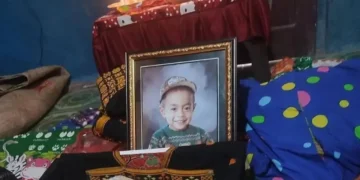



























A member of Indonesia’s Regional Representative Council has stepped directly into the fallout from this week’s fatal mob attack in Tabanan, delivering a blistering public rebuke to those responsible and making a personal pledge that has since spread as widely online as the tragedy itself.
Shri I Gusti Ngurah Arya Wedakarna Mahendradatta Wedasteraputra Suyasa, the Bali senator widely known as Arya Wedakarna, addressed the case in a video posted to his official Instagram account, @aryawedakarna, condemning the killing in unusually direct terms and vowing both criminal accountability for those involved and financial support for the victim’s surviving children.
“This Is Not Hindu. This Is Not Dharma.”
Speaking directly to the Balinese community, Wedakarna framed the killing as a moral failure demanding urgent reflection, not just a criminal case.
“This is a lesson, for the people of Bali, for our Balinese brothers and sisters who have long been quick to show bravado against their own kind. This is a lesson for us,” he said. “There has been a human tragedy. That is not Hindu, that is not Dharma, dragging someone, killing someone, just because a hungry father, with a child waiting at home… a child waiting for money, waiting to be provided for.”
A Promise of Legal Consequences
Wedakarna did not stop at moral condemnation. He pledged to personally ensure those responsible for the killing face serious legal consequences.
“I will make sure of this, the DPD RI will make sure that those responsible rot in prison. We will use layered charges against them,” he said, referencing Indonesia’s legal provision for stacking multiple criminal charges in a single case, typically used to secure harsher sentencing outcomes.
A Personal Pledge to the Victim’s Children
In the video’s most widely shared moment, Wedakarna turned his attention to KD’s surviving family, addressing the victim’s children directly and making a personal financial commitment to their futures.
“To the younger siblings, to the family, to all the children, Aji will cover your school costs through university, from elementary school all the way to a bachelor’s degree. Be patient, alright,” he said, using “Aji,” a Balinese honorific term denoting a protective, fatherly figure, to address the children directly.
A Case That Has Moved Well Beyond a Police Report
Wedakarna’s intervention marks a striking third act in a story that began with a single sentence in a police statement and has since evolved into a national conversation about vigilante justice in rural Bali.
KD, a man from Singaraja, North Bali, was beaten to death by a crowd of residents in Banjar Dinas Juwuk Legi, Batunya Village, Baturiti District, Tabanan, on the night of July 24, after allegedly being caught stealing a fighting rooster belonging to a local resident. His motorbike was also set on fire during the attack. Police recovered the rooster, a machete, and a bag containing tools, a slingshot, and cash at the scene, and say they are continuing to investigate the incident.
The case took on a far more human dimension days later, when a video showing KD’s youngest daughter, still in elementary school, sobbing beside her father’s body went viral across Indonesian social media. I Made Sutama, head of Sidatapa Village in Buleleng, where KD was originally from, described the moment he personally collected the body and returned it to the family. “There are three children,” Sutama said. “The eldest is already married, the second just started 10th grade, and the youngest is in first grade… when I saw his child sobbing uncontrollably, I felt genuinely heartbroken.” Sutama had also urged the public not to take justice into their own hands, no matter the offense: “If someone is guilty, report it to the authorities. Don’t take the law into your own hands to the point of taking someone’s life, just because of a stolen chicken.”
Why a Senator’s Intervention Matters
Wedakarna’s public statement adds political and cultural weight to a case that might otherwise have remained a local crime story. As a prominent Balinese public figure known for invoking Hindu religious and cultural values in political commentary, his explicit framing of the killing as a violation of Dharma, rather than simply a criminal matter, carries particular resonance within Bali’s Hindu-majority community, potentially shaping how the case, and future cases like it, are discussed and prosecuted.
His pledge to fund the children’s education through university also transforms a story about violence into one about accountability and restitution, offering the family a concrete promise at a moment when their immediate future had otherwise been thrown into uncertainty.
What’s Next
Police have not yet announced any arrests connected to the mob attack itself, and it remains unclear how many individuals may ultimately face charges. With a sitting senator now publicly committed to pursuing “layered charges” against those responsible, the case is likely to draw sustained legal and media attention in the weeks ahead, well beyond the village where it began.