



































DENPASAR, Bali — Bali’s governor has dismissed concerns following a travel warning issued by South Korea, insisting the island remains safe—even as foreign governments flag rising crime risks in key tourist areas.
“Aman (Safe), it’s already being handled by the police,” Governor Wayan Koster said briefly on April 7, referring to the Bali Police (Polda Bali).
He declined to elaborate further.
Instead, Koster suggested the situation would resolve itself over time.
“Just leave it. When conditions improve, the travel warning will go away on its own,” he said.
A Warning From Abroad
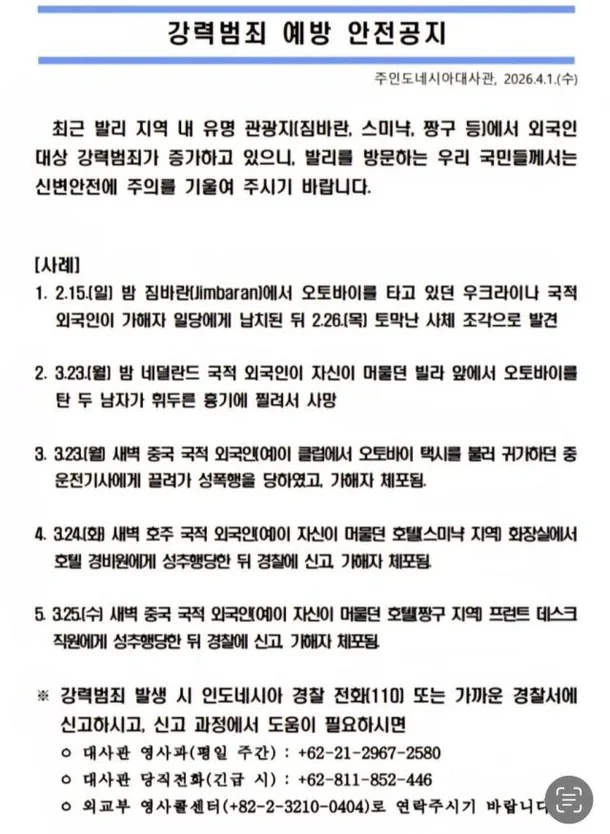
The statement comes days after South Korea’s embassy issued an official advisory urging its citizens to exercise increased caution while visiting Bali.
The notice, published on April 1 under the title “Security Warning on the Prevention of Serious Crimes,” cited a recent rise in serious crimes targeting foreign nationals.
The advisory specifically named several of Bali’s most popular tourist areas: Jimbaran, Seminyak, and Canggu.
“We ask citizens visiting Bali to pay attention to their personal safety,” the embassy stated.
The warning was also reported by Korean media, including Chosun Ilbo, amplifying its reach beyond diplomatic channels.
A Measured Response—or a Minimal One?
Koster’s response was notably restrained.
He did not issue additional safety guidance for visitors, nor did he address the specific concerns raised in the advisory. Instead, he emphasized that the matter falls within the jurisdiction of the tourists’ home government.
“There’s no need. Let their government decide,” he said when asked whether Bali would provide specific advisories to South Korean visitors.
The governor acknowledged a slight decline in arrivals from South Korea but described it as minimal.
“Not significant,” he added.
The Gap Between Perception and Policy
For international travelers and expatriates, the contrast is difficult to ignore.
On one side, a foreign government publicly warns of increasing crime risks in Bali’s core tourism zones.
On the other, local leadership offers reassurance—but limited detail.
The issue is not whether Bali is safe in absolute terms.
It is how risk is communicated.
Travel advisories are rarely issued lightly. They reflect patterns—reported incidents, diplomatic assessments, and perceived vulnerabilities.
Local responses, however, often balance reassurance with economic considerations in a tourism-dependent region.
What This Means for Visitors
For most travelers, Bali remains accessible and operational. There are no restrictions tied to the advisory.
But the warning serves as a reminder that awareness matters—even in destinations known for hospitality and leisure.
In practical terms:
- stay alert in crowded tourist areas
- avoid leaving valuables unattended
- use trusted transport and accommodation providers
These are not new precautions. But they are increasingly emphasized.