
































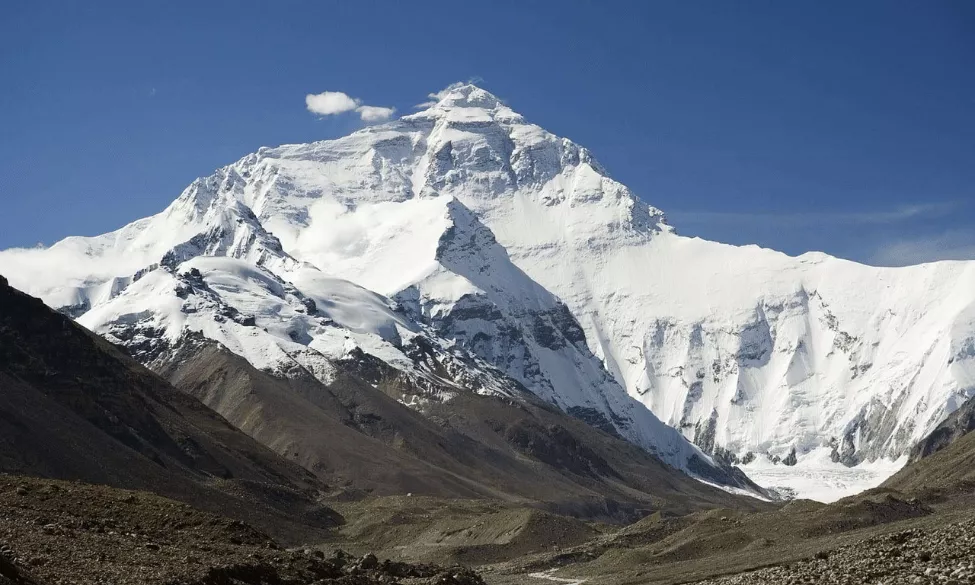
BALI – As Bali grapples with rising temperatures and shifting weather patterns, scientists say another climate milestone is unfolding thousands of kilometers away in Papua. Indonesia’s last tropical glacier, perched high on the Jayawijaya Mountains, may vanish completely by late 2026 or early 2027, marking the end of an extraordinary natural landmark that has survived for thousands of years.
According to Indonesia’s Meteorology, Climatology and Geophysics Agency (BMKG), the glacier has been shrinking at an alarming pace, driven by global climate change and recurring El Niño events that have made Indonesia hotter and drier.
The warning is more than a scientific update. Researchers say the disappearance of the glacier would symbolize the accelerating impact of climate change across the Indonesian archipelago, including popular tourist destinations such as Bali, where extreme heat, changing rainfall patterns, and coastal pressures are becoming increasingly noticeable.
A Glacier Reduced to Just Two Percent of Its Former Size
BMKG data shows the glacier has suffered a dramatic decline over the past few decades.
In 1988, the tropical ice field covered approximately 4.3 square kilometers. By September 2025, only 0.09 square kilometers remained, representing roughly 2% of its original extent.
The glacier’s thickness has also collapsed.
Monitoring conducted by BMKG found that ice measuring around 32 meters thick in 2010 had thinned to approximately 4 meters by 2023. More recent observations indicate that ice at the monitored location has now melted completely.
Scientists estimate the glacier has been losing between 2 and 2.5 meters of thickness every year since 2016, leaving little chance of long-term survival.
One of the World’s Rarest Tropical Glaciers
The glacier atop the Jayawijaya Mountains in Papua is one of the very few tropical glaciers remaining anywhere on Earth.
Unlike glaciers found in polar regions, tropical glaciers exist only at extremely high elevations near the equator, making them exceptionally vulnerable to even small increases in global temperatures.
Climate experts now believe the remaining ice could disappear entirely within months if current melting trends continue.
More Than Ice: A Cultural and Environmental Loss
For many Indigenous Papuan communities, Puncak Jaya is not simply Indonesia’s highest mountain. It holds deep cultural and spiritual significance, and the disappearing glacier represents the loss of an important part of their ancestral heritage.
The glacier also plays a role in supporting local mountain ecosystems and water balance. Scientists warn that its disappearance could affect alpine habitats, biodiversity, and surrounding agricultural areas that depend on stable environmental conditions.
While the glacier itself is located far from Bali, experts say it serves as one of Indonesia’s clearest visual indicators that climate change is no longer a distant prediction but an ongoing reality.
A Climate Warning Visible Across Indonesia
BMKG says the rapid melting is being driven by the combined effects of long-term global warming and periodic El Niño events, which increase temperatures and reduce rainfall across much of Indonesia.
The agency warned that today’s generation may become the last to witness permanent tropical ice within Indonesian territory.
The disappearance of the glacier comes as Indonesia experiences more frequent climate-related challenges, including prolonged dry seasons, extreme rainfall events, coastal erosion, coral bleaching, and increasing pressure on water resources in several regions.
What BMKG Says People Can Do
Although reversing glacier loss is no longer considered possible, BMKG says individuals can still help slow the pace of climate change through everyday actions, including:
- Using public transportation where possible.
- Conserving water and electricity.
- Planting trees.
- Recycling household waste.
- Choosing environmentally friendly products.
For millions of people visiting or living in Indonesia, including Bali’s large international community, the fading white peak of Papua’s mountains stands as a stark reminder that climate change is reshaping even the world’s most unexpected landscapes.