































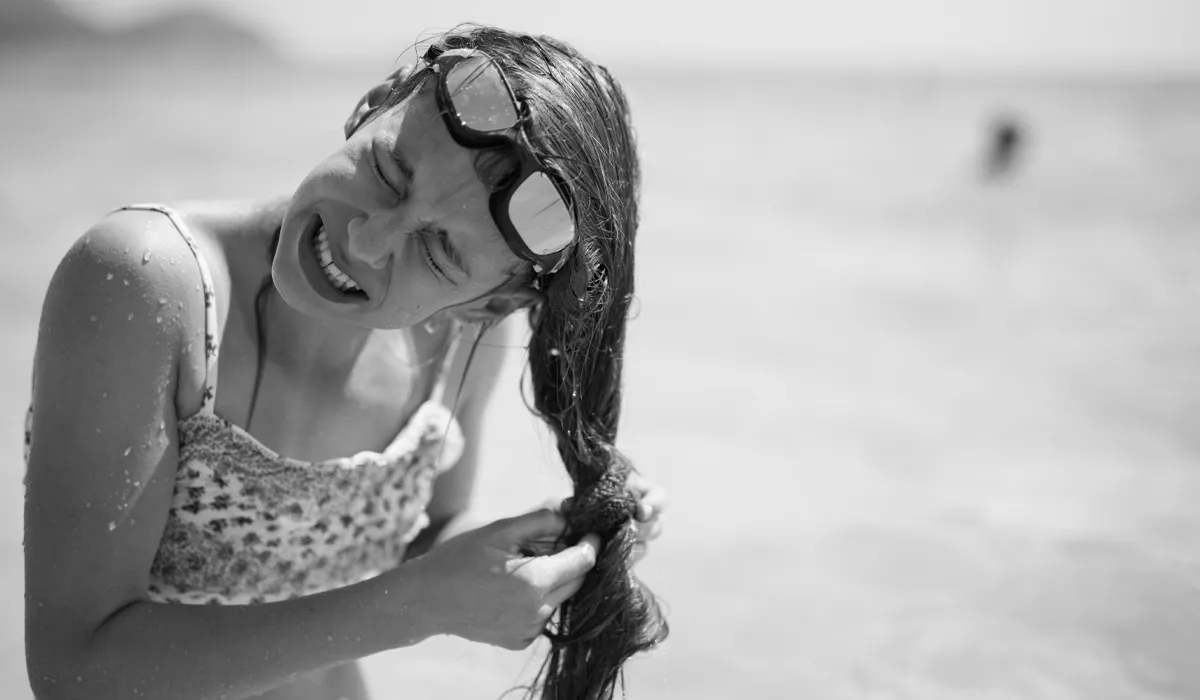
Spend an afternoon bodysurfing at Batu Bolong, let your hair dry naturally on the walk back to your Canggu villa, and by evening it feels less like hair and more like straw dipped in glue. That crunchy, tangled, slightly gritty texture isn’t just sand. It’s basic chemistry playing out on your scalp.
The Osmosis Behind the “Beach Hair” Feeling
Healthy hair holds roughly 12-15% water, which is what gives it softness and flexibility. Seawater, by contrast, contains a far higher salt concentration than your hair does. According to hair science research compiled by Magic Sleek, this difference triggers an osmotic reaction: water naturally moves from an area of lower salt concentration (your hair) toward an area of higher salt concentration (the seawater), essentially pulling moisture out of each strand.
That single mechanism explains almost everything that happens to hair after a swim in the ocean, the dryness, the frizz, and yes, the sticky, stiff texture that sets in once the salt water evaporates and leaves its mineral residue behind on the hair shaft.
Why “Sticky” Is the Right Word, Not Just a Feeling
The stickiness itself has a specific chemical explanation. When salt dissolves in water, it separates into electrically charged particles called ions. According to a breakdown of the phenomenon by PostureInfoHub, these ions interact with one another through a force called electrostatic attraction, which is what physically makes seawater, and anything coated in it, feel tacky to the touch. It’s the same reason a day at the beach leaves not just your hair, but your skin, feeling slightly clingy well after you’ve dried off.
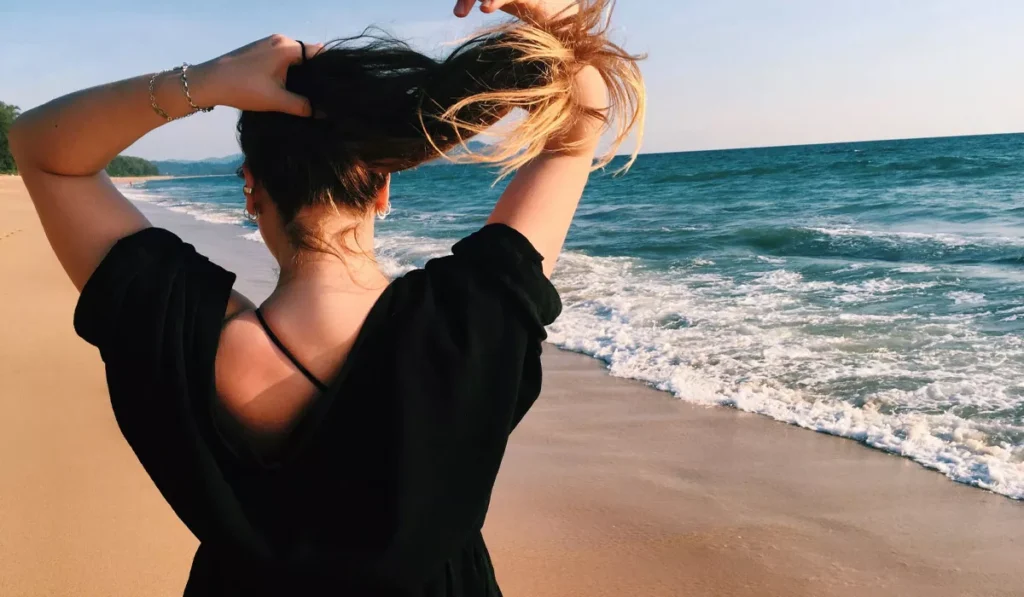
Why It Also Makes Hair Frizzy and Tangled
Once seawater draws moisture out of the hair shaft, the outer layer of each strand, called the cuticle, opens up rather than lying flat. According to Magic Sleek’s research summary, dehydrated hair then tries to pull moisture back in from the surrounding air, causing strands to swell and frizz. Left-behind salt crystals compound the problem, according to Hårklinikken, a hair health resource, creating friction on the cuticle that allows both moisture and hair product to escape more easily, while also making tangles more likely, and more painful, to brush out.
Dr. Rachel Falkner, an assistant professor in the University of Alabama at Birmingham’s Department of Dermatology, notes that ocean water carries roughly 10 times the salt concentration of a standard saltwater pool, meaning a swim in the actual ocean, like Bali’s Indian Ocean coastline, delivers a considerably stronger dose of this drying effect than a backyard pool ever would.
The “Wow” Fact: The Same Salt That Damages Your Hair Is Also Why Beach Waves Look So Good

Here’s the twist dermatologists point to: the very same salt crystals responsible for that sticky, tangled feeling are also what gives hair its coveted “beachy wave” texture. According to hair research from Scandinavian Biolabs, salt and other minerals in seawater create additional crosslinks within the hair’s keratin structure, subtly altering each strand’s shape into a wavier, fuller-looking texture, the effortless look sea-salt sprays are specifically formulated to imitate.
In other words, the appealing tousled texture and the damage are the same process, just observed at different points in time. A little salt water lifts the cuticle and adds texture. Prolonged, unrinsed exposure, repeated daily for a Bali holiday, pushes that same mechanism into dryness, breakage, and dulled hair color.
Why This Matters More on a Bali Trip Than an Average Beach Day
For travelers spending a week or more moving between Uluwatu’s surf breaks, Nusa Dua’s calmer shores, and Sanur’s beachfront, the cumulative effect compounds day over day, especially when combined with Bali’s intense equatorial sun, which independently dries out hair and fades color. Dermatologists specifically flag color-treated hair as most vulnerable: according to DCSI dermatology research, salt water strips color molecules directly from the hair shaft, meaning a fresh balayage or vibrant dye job can visibly fade faster after just a few unprotected days of Bali beach hopping.
How to Actually Deal With It

The fix dermatologists recommend consistently across sources is simple and doesn’t require skipping the ocean.
Rinse with fresh water immediately after swimming. According to hair health resource Hårklinikken and dermatologist guidance from Hims, hair absorbs water somewhat like a sponge, meaning a quick freshwater rinse (most Bali beach clubs and villas have outdoor showers for exactly this reason) limits how much salt has the chance to fully dry and crystallize on the strand.
Apply conditioner or a leave-in treatment before rehydrating. Restoring moisture after a salt water swim directly counteracts the osmotic effect that pulled hydration out in the first place.
Consider a pre-swim protective layer. Some dermatologists recommend applying a light oil or leave-in conditioner before entering the ocean, creating a barrier that reduces how much salt directly contacts the hair shaft.
Watch for signs of deeper damage. According to UAB Medicine’s dermatology team, symptoms like excessive hair breakage, shedding, or areas of scalp thinning after repeated swim exposure warrant a dermatologist visit rather than just a change in hair care routine.
Why Salt Water Affects Your Hair: A Quick Breakdown
| What’s Happening | The Science | The Result |
| Osmosis | Water moves from low-salt hair to high-salt seawater | Hair loses internal moisture, becomes dry and brittle |
| Electrostatic attraction | Dissolved salt ions create charged particles | The sticky, tacky feeling on hair and skin |
| Cuticle disruption | Dehydrated hair cuticles lift instead of lying flat | Frizz, tangling, and increased breakage |
| Mineral crosslinking | Salt and magnesium create extra bonds in keratin structure | The “beachy wave” texture (short-term) |
| Color stripping | Salt pulls color molecules from the hair shaft | Faster fading of dyed or highlighted hair |

What This Means for Your Next Bali Beach Day
That crunchy, tangled texture after a swim at Padang Padang or Balangan isn’t just sand in your hair, it’s saltwater physically pulling moisture out of every strand through osmosis, then leaving charged mineral particles behind that make hair feel sticky to the touch. The good news: a quick freshwater rinse and a bit of conditioner is usually all it takes to turn “salt-crusted beach hair” back into hair that actually feels like hair again, no reason to skip the swim, just rinse before you head back to the villa.
FAQ: Salt Water and Hair Damage
Does salt water damage colored or dyed hair more than natural hair?
Yes. Salt water strips color molecules directly from the hair shaft, causing dyed or highlighted hair to fade noticeably faster than untreated hair, especially with repeated, unprotected exposure over several days.
Is it bad to let salt water dry naturally in your hair?
Generally, yes. Letting salt water dry without rinsing allows salt crystals to fully form on the hair shaft, increasing dryness, tangling, and the sticky texture. A quick freshwater rinse shortly after swimming significantly reduces this effect.
Can salt water actually be good for your hair?
In small, occasional doses, yes, salt water can add texture and volume, which is why sea-salt sprays are popular. The damage comes from prolonged, repeated exposure without rinsing or conditioning afterward.
How often is it safe to swim in the ocean without damaging hair?
There’s no universal number, but dermatologists suggest the key factor is aftercare, not frequency. Rinsing and conditioning after each swim allows even daily ocean swimming to be manageable for most hair types.
Should I wet my hair with fresh water before swimming in the ocean?
Yes. Pre-wetting hair with fresh water, or applying a leave-in conditioner or light oil, creates a barrier that reduces how much salt water your hair actually absorbs during a swim.