

































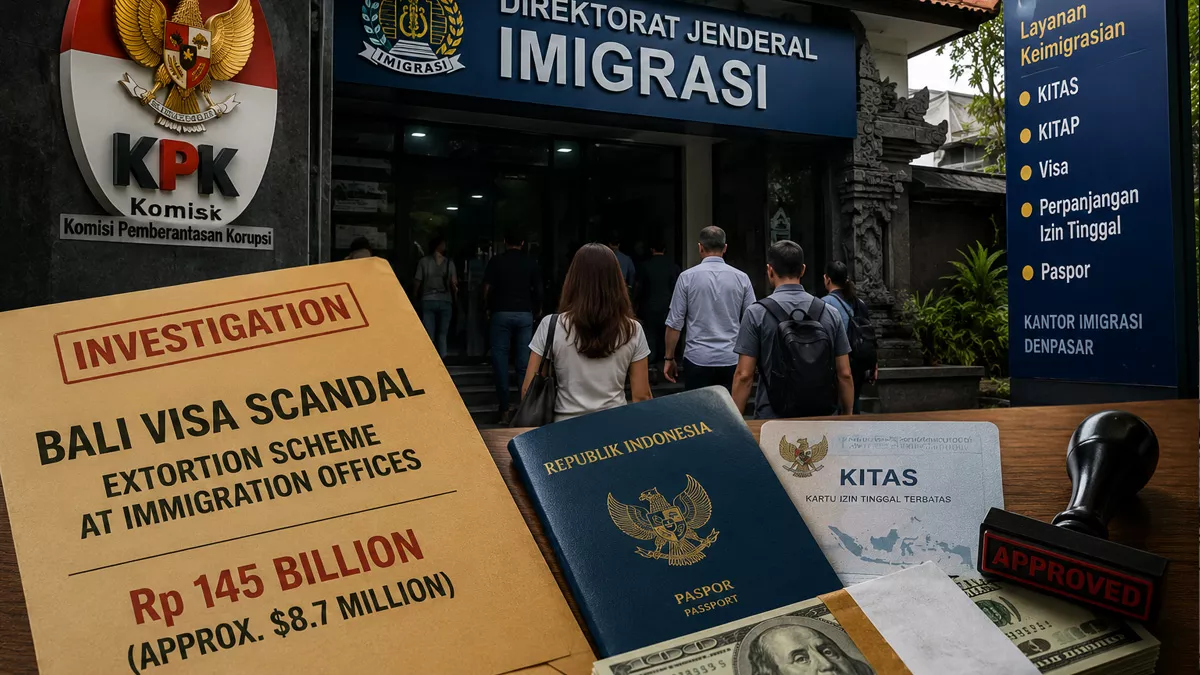
DENPASAR, Bali – In a sweeping crackdown that has sent shockwaves through Bali’s expatriate community, Indonesia’s Corruption Eradication Commission (KPK) has intensified its investigation into an alleged extortion ring operating within the country’s immigration directorate. Over the past two days, investigators have conducted marathon questioning of 12 witnesses on the island, uncovering a scheme that reportedly funneled at least 145 billion rupiah (approximately $8.7 million) in illicit payments from visa agents to rogue immigration officials.
The interrogations, which took place on Wednesday and Thursday at the Denpasar Police headquarters, signal the KPK’s determination to root out systemic corruption in the processing of residence permits for foreign nationals—a lifeline for the thousands of expatriates, digital nomads, and retirees who call Bali home.
A System Held Hostage
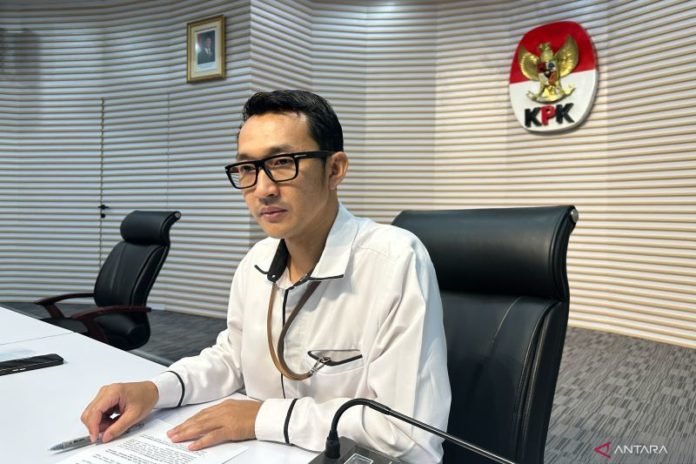
According to KPK spokesman Budi Prasetyo, the investigation centers on allegations that visa agents were coerced into making payments well above official state levy rates to ensure that applications for KITAS (temporary residence permits), KITAP (permanent residence permits), and other immigration documents were processed.
“The agents were effectively forced to pay these extortionate fees at the service counters,” Budi explained. “If they refused, their applications would be deliberately stalled or left ‘unclicked’—never approved.”
The alleged practice, which investigators believe persisted from 2022 through mid-2026, targeted both the Ngurah Rai Immigration Office and the Denpasar Immigration Office—two of the busiest processing hubs in the country.
Agents as Victims, Not Perpetrators
In a significant legal distinction, the KPK has framed the case under Article 12(e) of Indonesia’s Anti-Corruption Law, which addresses extortion by public officials. This construction positions the visa agencies not as co-conspirators, but as victims of systematic abuse of power.
“The legal framework here is clear,” Budi stated. “We are investigating allegations of unlawful conduct in which officials abused their authority to compel payments for personal or institutional gain.”
Among those questioned on Thursday were key figures from CV Visa Agung Bali, a prominent visa processing agency, including its director, I Gede Arya Wijaya, and several staff members. A day earlier, investigators had summoned representatives from Visa4Bali Luwuk and PT MSI Service Indonesia.
Agency Denies Operational Involvement
Following the interrogation, legal counsel for CV Visa Agung Bali, F. Yanuar Siregar, insisted that his client was a victim of the alleged scheme, not a participant. He also moved to distance the agency from direct operational misconduct, stating that the company had outsourced field-level processing to third parties.
“We want to make it clear that CV Visa Agung Bali was not aware of the technical processes on the ground,” Yanuar said. “Ni Luh Gede Ratih Wijayastuti, for example, is not an operational staff member of our company.”
He reaffirmed the agency’s full support for the KPK’s investigation, expressing hope that the probe would lead to long-overdue reforms in the immigration system and the elimination of practices that fall outside standard operating procedures.
Implications for Bali’s Expat Community
For the tens of thousands of foreign nationals navigating Indonesia’s notoriously complex immigration bureaucracy, the revelations are unlikely to come as a surprise. Whispers of “fast-track” fees and unofficial charges have long circulated within expatriate circles. However, the scale of the alleged operation—and the KPK’s aggressive pursuit of the case—marks a watershed moment in the fight against graft on the island.
The KPK’s investigation is ongoing, with officials signaling that more witnesses and potential suspects may be called in the coming weeks. The case has also drawn attention from diplomatic missions in Jakarta, many of which have expressed concern over the treatment of their citizens in visa-related matters.
As Bali continues to recover from the pandemic and rebuild its tourism economy, the integrity of its immigration system remains a critical component of its appeal to international visitors and investors. This investigation, if pursued rigorously, could either restore confidence in the system—or expose the depth of its dysfunction.
For expats and visitors: The KPK has established a whistleblower hotline for those with information related to this case. Foreign nationals who believe they may have been affected by irregular practices in visa processing are encouraged to contact the commission through its official channels. The investigation is ongoing, and further developments are expected in the coming days