













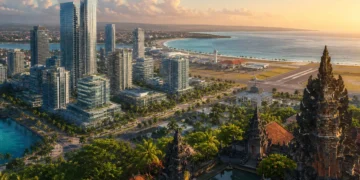

















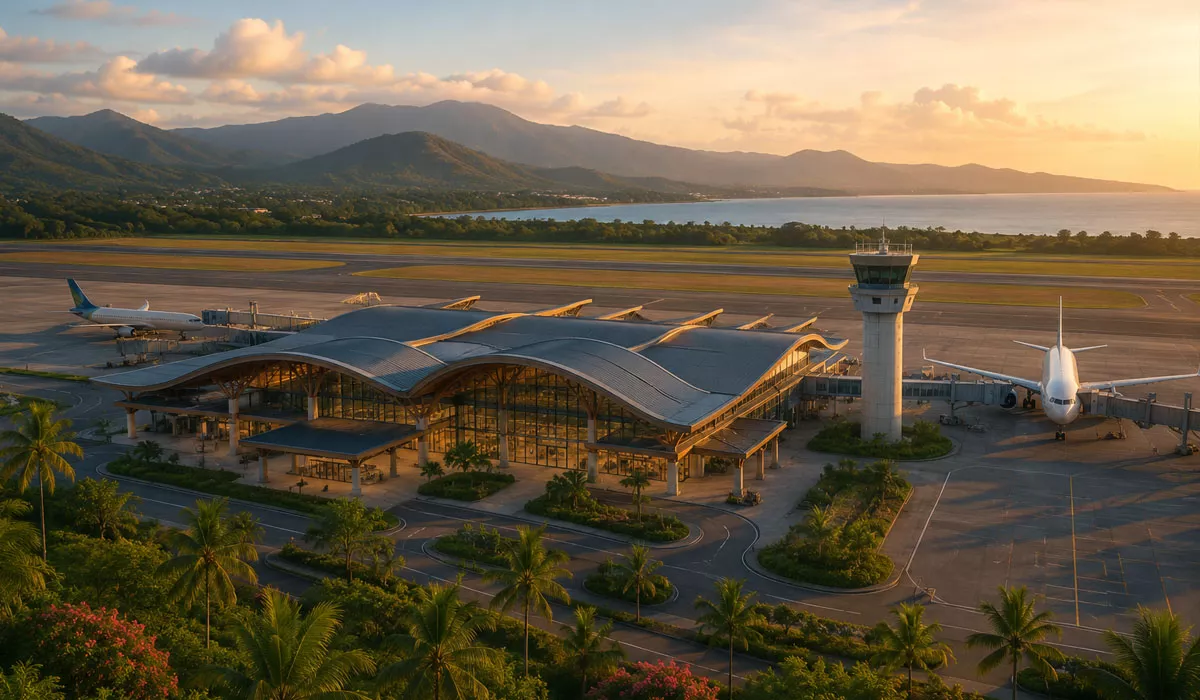
Indonesia’s government is renewing its push to accelerate construction of Bali’s second international airport, a long-delayed project in Kubutambahan, Buleleng Regency, that officials now say is designed to accommodate wide-body aircraft including the Boeing 777 and Airbus A380.
The renewed commitment emerged from a meeting between President Prabowo Subianto and Baringin Panggabean, President Commissioner of PT Pembangunan Bali Mandiri (Pembari), the company behind the project, at the President’s residence in Hambalang, West Java, on Tuesday, July 14. State Secretary Minister Prasetyo Hadi also attended the meeting.
A Project Already Written Into National Planning
During the meeting, Prabowo received a briefing on the project’s progress. The North Bali Airport is already formally included in Indonesia’s 2025-2029 National Medium-Term Development Plan (RPJMN) under Presidential Regulation Number 12 of 2025. Prabowo expressed his support for fast-tracking the project’s realization.
Why Bali Needs a Second Airport, According to the Government
The government argues that Bali’s need for a second international airport has become increasingly urgent, driven by rising tourist arrivals and the limited capacity of I Gusti Ngurah Rai International Airport, the island’s sole gateway.
A new airport in northern Bali is intended to relieve operational pressure on Ngurah Rai while opening broader access for tourists heading to destinations across North Bali, a region long overshadowed by the south’s dominance in tourism infrastructure and investment.
Built for Wide-Body Aircraft
Among the technical questions Prabowo raised was whether the new airport would be capable of handling wide-body aircraft such as the Boeing 777 and Airbus A380, planes typically reserved for long-haul international routes and high passenger volumes.
Baringin Panggabean confirmed that the airport’s design has, from the outset, been engineered to accommodate wide-body operations. According to him, the design is based on a feasibility study that has already received approval from the Directorate General of Civil Aviation at Indonesia’s Ministry of Transportation.
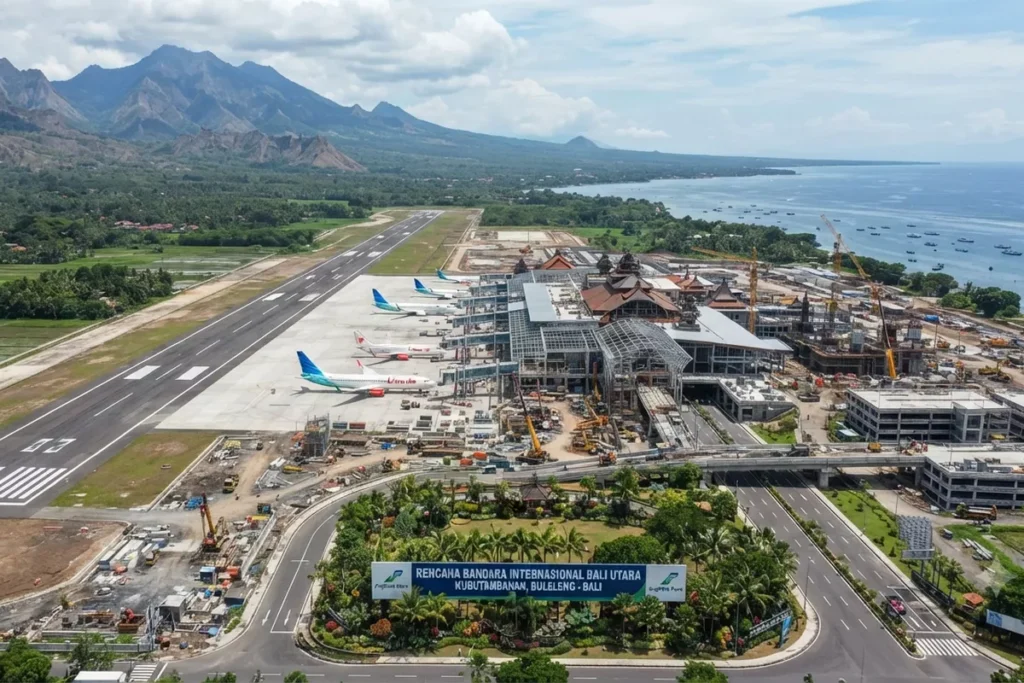
Privately Financed, No State Budget Involved
The North Bali Airport in Kubutambahan is structured to be funded entirely through private investment, meaning it will not draw on Indonesia’s national state budget (APBN) or regional budget (APBD). Under this financing model, the government hopes construction can proceed more quickly without placing financial strain on either national or regional government finances.
A Bid to Rebalance Bali’s Economy
The airport is positioned as a potential engine for new economic growth across northern, western, and eastern Bali. Beyond improving connectivity, the project is expected to help redistribute economic activity that has historically concentrated in southern Bali, home to Kuta, Seminyak, Canggu, and Nusa Dua.
The new airport is also expected to generate jobs and stimulate growth in tourism, trade, and services, particularly in Buleleng Regency and surrounding areas. Through this infrastructure investment, the government aims to accelerate more balanced development and improved welfare for communities across northern Bali.
What This Means for Travelers and the Island’s Future
For international travelers and Bali’s expat community, a second airport would mark one of the most significant shifts in the island’s tourism infrastructure in decades, potentially easing the congestion and long queues that have become synonymous with Ngurah Rai during peak season, while opening far easier access to North Bali’s temples, diving sites, and volcanic landscapes that currently require lengthy drives from the south.
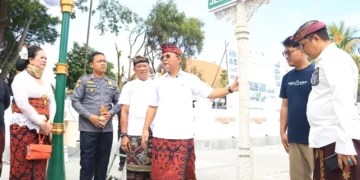
The project’s momentum also follows recent public pressure from Balinese community leaders, including a delegation of the island’s traditional royal families who traveled to Jakarta earlier this month specifically to press the government on this same commitment.
What’s Next
No specific construction timeline or groundbreaking date has been announced. Given the scale of the project, previous statements from project stakeholders have suggested a construction period of three to five years once building begins. For now, the presidential meeting signals renewed political will behind a project that has spent years moving through planning and feasibility stages, without yet breaking ground.